← All women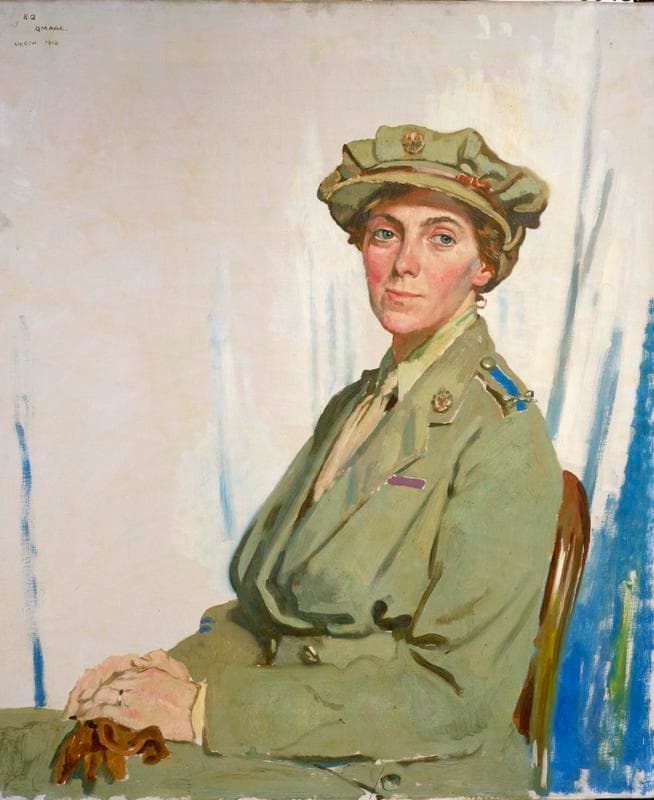
British · Science · Politics · Aviation
Helen Gwynne-Vaughan
January 21, 1879 – August 26, 1967
Early Life and Background
Helen Charlotte Isabella Gwynne-Vaughan (née Fraser) was born on 21 January 1879 in Westminster, London, into an aristocratic Scottish family with strong military and literary connections.[1][6][10][12] Her father, Charles Arthur Fraser, was an army captain, and her mother, Florence Fraser, wrote fiction, giving Helen early exposure to both disciplined service and intellectual pursuits.[10][12] Growing up in late Victorian Britain, she inhabited a social world in which upper‑class women were expected to become decorative wives and hostesses rather than professionals.[10] These expectations ultimately became the background against which she forged a very different path.
Helen was educated privately before entering university-level study at a time when higher education for women was still relatively new. In 1899, aged twenty, she enrolled on a combined botany and zoology course at King’s College London, one of the first generations of women students at the institution.[5][10] Her choice of scientific subjects, rather than the more traditional arts or teacher-training routes, already marked a departure from gender norms.
At King’s she developed a strong interest in mycology, the study of fungi, which became the core of her scientific career.[2][5][10] Her lecturers and mentors included prominent biologists of the period, and she soon showed particular aptitude for laboratory research and microscopy. Helen graduated in 1904 with an honours degree in botany from King’s College London, establishing herself as a trained scientist at a time when women’s access to such qualifications was limited.[2][5][10]
Academic Career Beginnings and Development
After graduation, Helen continued research in mycology and fungal cytology, working across several London colleges.[2][10] She focused on the behaviour of nuclear material and chromosomes in fungi, a topic of considerable interest in the years following the rediscovery of Mendelian genetics. Her early work led to a Doctor of Science (D.Sc.) degree in 1907, making her one of the relatively few women in Britain to hold a senior scientific doctorate at that time.[10][13]
Helen’s growing reputation enabled her to secure leadership roles in academia. In 1909, aged thirty, she was appointed head of the Botany Department at Birkbeck College, University of London.[2][10][13][14] This position gave her responsibility for teaching, research direction, and departmental administration—an exceptional level of authority for a woman scientist in the Edwardian period. At Birkbeck she developed a research school in fungal cytology, supervising students and building up facilities for microscopic and genetic studies.
Throughout the 1910s, she published papers on the cytology and genetics of fungi, examining such topics as nuclear division, spore formation, and chromosomal behaviour. Her work contributed to what would later become cytogenetics, the study of chromosomes and inheritance at the cellular level.[2][9][10] Although operating in a male‑dominated discipline, she carved out a niche in which her expertise was widely acknowledged.
In addition to her scientific work, Helen became increasingly involved in university and public affairs. She took part in suffrage and women’s rights organisations and was active in the University of London Suffrage Society, supporting campaigns to extend voting rights and professional opportunities for women.[10][14][17] These commitments foreshadowed her later role in advocating for women within the armed forces and committees of government.
Personal Life and Marriage
On 9 September 1907, Helen married David Thomas Charles Gwynne-Vaughan, a botanist and paleobotanist who had previously headed the Birkbeck Botany Department.[1][13][14] She adopted his surname, becoming Helen Gwynne-Vaughan, the name under which her scientific and military achievements would be recorded. The couple shared academic interests, and for a period their work intersected in plant science.
Accounts differ slightly on the subsequent course of the marriage. Some sources note that Helen later separated but did not formally divorce.[1] Others emphasise that David died in 1915 from tuberculosis after four years of marriage and that the couple had no children.[13][14] In any case, Helen remained personally and professionally independent for most of her life, living alone in London and sustaining her career as an academic and later as a military administrator.
In 1915 she moved into Flat 93, Bedford Court Mansions in Bloomsbury, an address she maintained until 1964.[5][14] The flat became both a domestic base and a symbol of her unconventional life as a single, professionally active woman in central London. Decades later, English Heritage would commemorate this residence with a blue plaque recognising her dual identity as “Botanist and leader of the first women’s army corps.”[5]
First World War: WAAC and WRAF
The outbreak of the First World War in 1914 fundamentally reshaped Helen’s career. In 1917, faced with acute manpower shortages, the British War Office invited her and physician Alexandra Chalmers Watson to help create the Women’s Army Auxiliary Corps (WAAC), designed to employ women in non‑combatant roles and release more men for the front.[2][10]
On 1 March 1917, Helen was appointed Chief Controller (Overseas) of WAAC, responsible for women serving in France and Belgium.[10] She oversaw recruitment, training, discipline, and welfare for thousands of women employed as clerks, cooks, drivers, telephonists, and mechanics. Later that month, she and Watson led the organisation of what became Britain’s first officially organised all‑female military unit, a landmark in the history of women’s military service.[4][5][10]
Under her leadership, WAAC quickly expanded to around 10,000 recruits in France, making a significant contribution to the British Expeditionary Force’s logistical and communications capacities.[2][10] Helen insisted on strict discipline and clear regulations, struggling against scepticism and sometimes hostility from male officers unused to women in uniform. Her organisational skill and uncompromising standards won respect and demonstrated that women could function effectively within the army’s hierarchical structure.[4][10]
In recognition of her work, Helen was created a military Dame Commander of the Order of the British Empire (DBE) on 1 January 1918, becoming the first woman to receive a military DBE and one of the first women to wear the insignia of a Military Commander of the Order.[1][12][16] This honour symbolised the state’s acknowledgement of women’s wartime leadership and elevated her profile nationally.
As the war progressed, her responsibilities expanded. On 1 September 1918, she was appointed Commandant of the Women’s Royal Air Force (WRAF), the newly formed women’s service supporting the Royal Air Force.[1][2][4] The WRAF employed women in clerical, technical, and mechanical roles associated with aviation. Gwynne-Vaughan was tasked with transforming this fledgling organisation into a disciplined and efficient corps.
She introduced training programmes, codified regulations, and worked to secure better living conditions for WRAF personnel.[4][15] Under her command, the service grew rapidly and women took on increasingly specialised duties in aircraft maintenance and communications. Her tenure, which lasted until 31 December 1919, coincided with the demobilisation and eventual disbandment of the WRAF, but the organisational model she established influenced later women’s air services.[1][2][4]
Interwar Academic and Public Life
After leaving the WRAF at the end of 1919, Helen returned to academia. At Birkbeck College she resumed her research in mycology and continued to build the Botany Department. In 1921, she was appointed Professor of Botany, becoming Birkbeck’s first female professor and one of the earliest women professors in the University of London.[2][10][16]
Throughout the 1920s, she published extensively on fungal cytology and genetics, contributing to theories of nuclear organisation and chromosomal behaviour in fungi. Her research clarified aspects of meiosis and spore formation, helping to establish fungi as important model organisms in genetics.[2][9][10] She also wrote textbooks and review articles that disseminated mycological knowledge to students and colleagues.
Helen’s stature within the scientific community was recognised through leadership roles in professional societies. She served as President of the British Mycological Society in 1928, underscoring her position at the forefront of British mycology.[2][10][17] As president, she promoted systematic mycological research and encouraged the study of fungi as both ecological agents and objects of genetic analysis.
Her public service extended beyond science. Helen was active in politics, standing as a Conservative candidate for the North Camberwell constituency and participating in numerous committees and advisory bodies.[2][10] She served on government panels related to education and military affairs and contributed to University of London governance, including the Senate and relevant committees.[10][12] In these roles she often advocated for women’s rights and representation.
On 1 January 1929, in recognition of her combined contributions to science and public life, she was appointed Dame Grand Cross of the Order of the British Empire (GBE), the order’s highest grade.[1][2][5] This honour placed her among a small number of women to receive such distinction and further solidified her status as a national figure.
Second World War and the Auxiliary Territorial Service
With the onset of the Second World War, Helen was once again called to military service. On 1 September 1939, the day Britain entered the war, she was appointed the first Director and Chief Controller of the Auxiliary Territorial Service (ATS), the army’s new women’s corps.[1][2][10] Her rank was equivalent to that of a major‑general, an exceptional level for a woman in the British military hierarchy.
The ATS built on earlier experiences with WAAC but operated on a much larger scale. Under Helen’s leadership, it rapidly expanded to hundreds of thousands of members, with women serving as drivers, clerks, telephonists, radar operators, and in various specialist roles.[2][9][10] She was responsible for recruitment, training, discipline, and allocation of duties, striving to ensure that women’s work was both effective and respected.
Helen’s professionalism and insistence on high standards played a crucial role in changing male attitudes toward women in uniform. As later institutional profiles note, her work with WAAC, WRAF, and ATS helped demonstrate that women could operate within military structures with reliability and skill, paving the way for broader acceptance of women’s services.[4][16]
She served as Chief Controller of the ATS until 1941, when she stepped down and the corps continued under new leadership.[1][2] Her tenure encompassed the early, formative years of the service and coincided with its integration into the wider British war effort. Many of the organisational frameworks she introduced persisted, and the ATS would eventually evolve into the Women’s Royal Army Corps after the war.
Later Career, Advocacy, and Committees
After leaving the ATS, Helen returned to Birkbeck College and academic life, where she continued to teach and write on botanical and mycological subjects. She retired as Professor Emeritus in 1944, but remained active in institutional and public affairs.[2]
In the 1930s and 1940s she maintained involvement in women’s rights and professional organisations. She participated in university women’s groups, helped co‑found the University of London Suffrage Society, and supported campaigns for equal opportunities in higher education and public service.[10][14][17] Her experience navigating male-dominated environments in both university and military settings lent authority to her advocacy.
Helen also served on a number of government committees, including bodies concerned with post‑war reconstruction, education, and military policy.[2][10] She contributed to discussions about the continued role of women in the armed forces and the expansion of women’s access to university training.
Legacy and Historical Impact
Helen Gwynne-Vaughan’s legacy spans science, military history, and women’s rights. In mycology, she was a pioneer of fungal cytology and genetics, demonstrating that fungi were valuable models for understanding nuclear and chromosomal behaviour.[2][9][10] Her publications and leadership at Birkbeck strengthened the discipline and helped institutionalise mycology within British universities.
As Birkbeck’s first female professor of botany and one of the earliest women professors in London, she helped normalise the idea of women holding senior academic posts.[2][16] Her success showed that women could lead departments, run research schools, and influence university governance at a time when such roles were largely closed to them.
In military history, her significance is even more pronounced. She led the first organised women’s army corps (WAAC) overseas,[4][5][10] commanded the Women’s Royal Air Force, and served as the first Director of the Auxiliary Territorial Service during the Second World War.[1][2][4][10] These roles made her a central architect of British women’s services, shaping how women were recruited, trained, disciplined, and deployed in both world wars.
Her honours—including becoming the first woman military DBE and later a Dame Grand Cross (GBE)—symbolise official recognition of women’s leadership in war and public service.[1][2][12][16] They also helped to inspire later generations of women officers and professionals.
Helen’s life illustrates the complexities of being an ambitious woman in early twentieth‑century Britain. Historians such as Patricia Fara have emphasised the struggles she faced in environments shaped by Darwinian claims of women’s intellectual inferiority and by social norms that treated professional women as outsiders.[17] Her determination and sometimes abrasive insistence on standards could arouse antagonism, but they were also tools for carving out space in male-dominated institutions.
Her contributions have received renewed attention in recent decades. The RAF Museum, English Heritage, King’s College London, Birkbeck College, and popular history outlets have all highlighted her role in transforming women’s participation in science and the armed forces.[2][4][5][9][12][16]
Later Life and Death
Helen continued to live at Bedford Court Mansions in Bloomsbury until 1964, maintaining her independence and her connections with London’s academic and political circles.[5][14] In her final years she moved to Sussexdown, a care and convalescent home run by the Royal Air Force Association in Storrington, Sussex, reflecting her enduring association with the air force community.[14]
She died there on 26 August 1967, aged 88.[1][6][11][14] Her death marked the end of a life that had stretched from the late Victorian era through both world wars and into the 1960s. Though she had no children, her intellectual and institutional legacy continued through her students, colleagues, and the women’s services she helped to build.
Posthumous Recognition
In the decades after her death, Helen’s contributions were at risk of fading from public memory, overshadowed by more widely known male figures in science and the military. However, historians and institutions gradually recovered her story. Biographical profiles appeared in educational resources, including Spartacus Educational and History.org.uk, and mycologists highlighted her role as a former president of their society.[7][10][17]
On 6 March 2020, English Heritage unveiled a blue plaque at her long‑time home in Bedford Court Mansions, describing her as a “Botanist and leader of the first women’s army corps.”[5] King’s College London and Birkbeck University have also celebrated her as a pioneering alumna and faculty member, noting that she was Birkbeck’s first female professor and emphasising her impact on women’s roles in the armed forces.[2][16]
Today, Helen Gwynne-Vaughan stands as a significant figure in women’s history: a scientist who advanced mycological genetics, a military organiser who built Britain’s first women’s corps, and a public servant who helped bridge the worlds of academia, the army, and politics. Her life offers a lens on the challenges and possibilities facing professional women across the first half of the twentieth century.
Dated achievements
11 indexed.
- Jan211879Science
Birth of Helen Gwynne-Vaughan
Helen Charlotte Isabella Fraser was born in London, England, on 21 January 1879.
View details Wikipedia: Helen Gwynne-Vaughan - Sep091907Science
Marriage to Charles Gwynne-Vaughan
Helen Fraser married Charles Gwynne-Vaughan on 9 September 1907, adopting his surname.