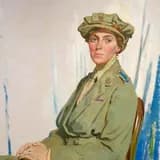
Gwynne-Vaughan and Alexandra Chalmers Watson led Britain's first all-female military unit, the WAAC, supporting troops in France.
By the end of March 1917, Helen Gwynne-Vaughan, alongside Dr. Alexandra Chalmers Watson, had established leadership over the Women's Army Auxiliary Corps (WAAC) — widely recognized as Britain's first all-female military unit. This was a genuinely groundbreaking moment: never before had British women been organized into a formal military structure with ranks, uniforms, and command hierarchies mirroring the regular army.
The WAAC was created amid the manpower crisis of the First World War, as Britain sought ways to release more men for combat duty by employing women in support roles such as cooking, clerical work, driving, and telephone operation, both in Britain and in the war zones of France and Belgium.
Gwynne-Vaughan's role in shaping this unprecedented organization was pivotal. Her scientific training lent her an analytical rigor in structuring the Corps' discipline, welfare provisions, and operational procedures. She worked to ensure that the women serving were treated with a professionalism previously reserved for male soldiers, fighting against skepticism and prejudice from sections of the military establishment and public who doubted women's capacity for military-style service.
This achievement laid crucial groundwork for the later formalization of women's military service in Britain, directly influencing the creation of the Women's Royal Air Force and, decades later, the Auxiliary Territorial Service during the Second World War — both of which Gwynne-Vaughan would also come to lead.