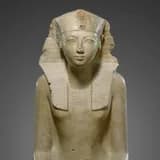
Around 1473 BCE, Hatshepsut assumed full pharaonic titles and regalia, ruling Egypt as king in her own right—a landmark first for a woman in the New Kingdom.
Around 1473 BCE, Hatshepsut took the unprecedented step of assuming the full titles, regalia, and ideological status of an Egyptian pharaoh in her own right.[1473-01-01] Building on several years as regent, she was formally elevated from queenly roles to kingship, adopting male royal iconography while retaining her identity as a woman. Sources such as royal inscriptions and temple reliefs mark this as the moment she became co-ruler, though effectively the dominant sovereign.
Historically, this was a barrier‑breaking first. While earlier women like Sobekneferu had ruled, Hatshepsut was the first woman of the New Kingdom to wield the full institutional and ritual power of kingship for an extended, prosperous reign. She took the throne name Maatkare, emphasized her divine birth from Amun, and appeared in traditional male regalia—kilt, false beard, and nemes headdress—to align herself with the long line of male kings while subtly reconfiguring gender expectations.
This assumption of pharaonic authority transformed Egypt’s political landscape. Hatshepsut presided over a largely peaceful, economically vibrant era, reinvigorating trade, investing heavily in monumental architecture, and patronizing the cult of Amun. Her reign demonstrated that a woman could not only occupy the throne but govern successfully within a system that ideologically privileged male kingship.
The legacy of this event reverberates through women’s history. Egyptologist James Henry Breasted called Hatshepsut "the first great woman in history of whom we are informed," underscoring how her documented kingship stands as an early, well‑attested example of female sovereign rule. Later efforts to diminish or erase her memory only highlight how disruptive her authority was to patriarchal norms. Modern scholarship now recognizes this moment as a landmark in the global story of female political leadership.