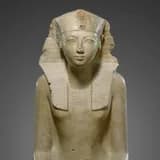
Around 1479 BCE, Hatshepsut began ruling Egypt as regent for the child-king Thutmose III, effectively taking control of the state during his minority.
In approximately 1479 BCE, Hatshepsut began serving as regent for the young Thutmose III, marking the start of her effective control over the Egyptian state during the Eighteenth Dynasty.[1479-01-01] Although the exact month and day are not preserved in surviving records, Egyptologists place this transition around this year based on king lists, inscriptions, and later historical reconstructions.
As regent, Hatshepsut initially ruled on behalf of her stepson-nephew, who was too young to exercise power. She drew on her status as Great Royal Wife of Thutmose II and as a royal daughter of Thutmose I to legitimize her authority in a system that formally reserved kingship for men. In this early phase she appeared in art and texts as queen and god’s wife, not yet as king, but already directed administration, building, and religious policy.
This regency was historically significant because it created the political conditions for her unprecedented later step of assuming the full titulary and prerogatives of a pharaoh. In a period when female rule was exceptional, Hatshepsut navigated court factions, priestly power, and military elites to stabilize the throne and maintain continuity after a royal death. The regency years also saw the beginnings of her building and religious programs that would flourish later, including attention to Amun’s cult at Karnak.
Modern scholars view the regency as a formative stage that allowed Hatshepsut to test and expand her authority, demonstrate competence, and build alliances. Her successful governance during Thutmose III’s minority strengthened the case—political and ideological—for her later elevation as king. In this sense, the regency is a key step in the broader history of women exercising sovereign power in ancient states, foreshadowing later female monarchs who similarly moved from consort or caretaker roles into full rulership.