← All women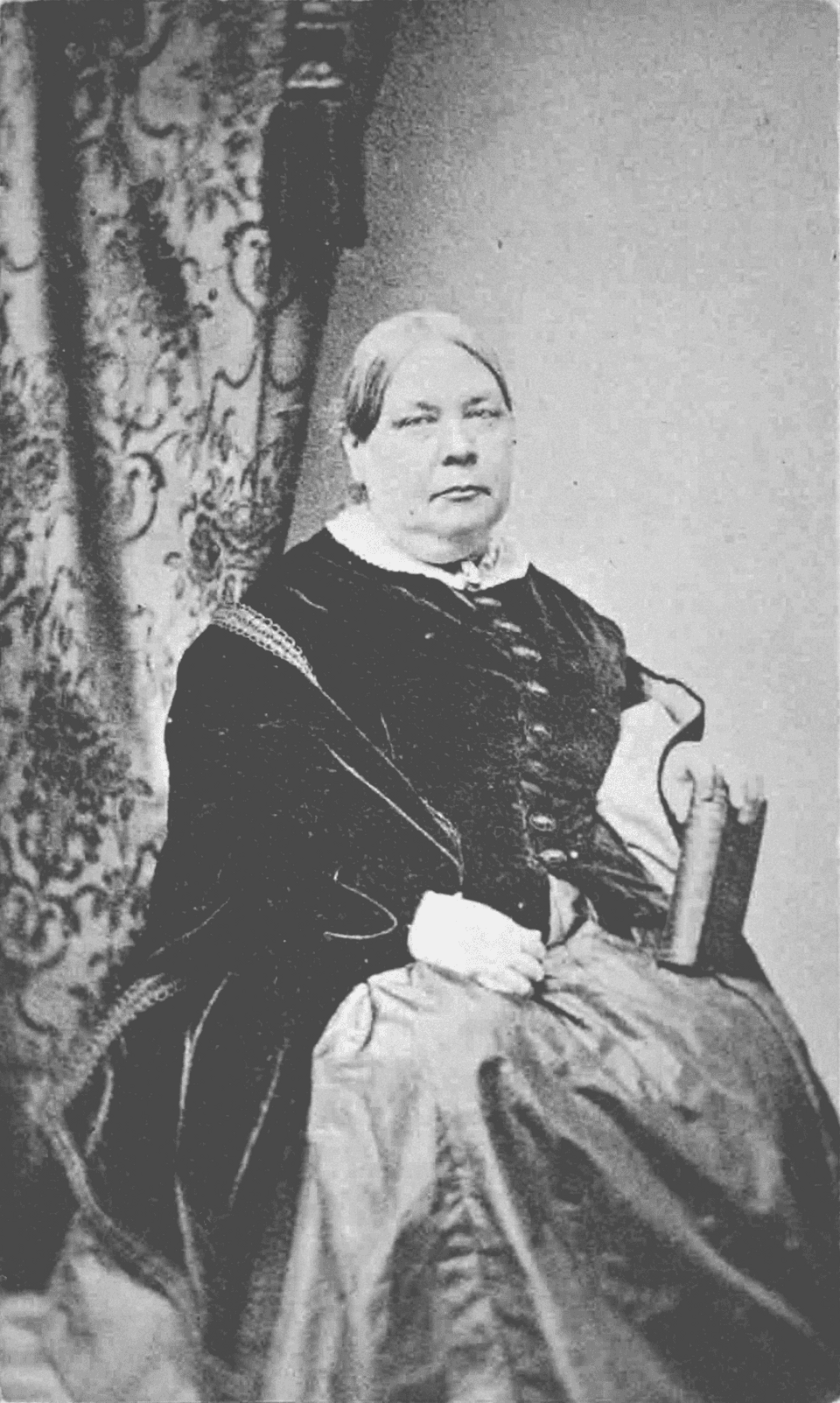
American · Medicine · Activism
Harriot Kezia Hunt
November 9, 1805 – January 2, 1875
Early life and background
Harriot Kezia Hunt was born on November 9, 1805, in Boston, Massachusetts, the daughter of Joab Hunt and Kezia Wentworth Hunt. She grew up in Boston’s North End and attended private schools, an educational foundation that was modest by elite standards but important in a period when many women had limited access to advanced learning. Later biographical accounts indicate that she came from a family in which education and moral seriousness mattered, and those values helped shape her intellectual independence. Hunt never married and had no children, a personal circumstance that gave her unusual autonomy for a woman of her era and also exposed her to the social expectations placed on unmarried women in nineteenth-century America.
Hunt’s early adulthood began conventionally enough. Around 1827, she opened a school in her home in Boston and worked as a teacher. That occupation gave her financial independence and brought her into regular contact with families and children, but it did not satisfy her growing interest in medicine and reform. In the early 1830s, after observing limitations in available treatments and influenced by family health concerns, she began studying alternative medicine. Around 1833, she undertook a two-year period of study under Dr. Richard Dixon and Elizabeth Mott, both of whom helped train her in the therapies that would inform her later practice. This apprenticeship-like education was crucial because formal medical schools did not admit women, and it gave Hunt a practical path into medicine outside the university system.
Career beginnings and rise as a physician
In 1835, Hunt opened a medical consulting room in Boston and began treating patients professionally. She did so without a formal degree, a fact that made her career remarkable in a profession tightly controlled by men. She was among the first women in the United States to establish a successful medical practice, and many later writers referred to her as the first woman physician in America, though such a title is historically debated because other women, including Elizabeth Blackwell, also occupy important places in that history. What is clear is that Hunt built a substantial practice, especially among women and children, and earned a reputation for empathetic care and sustained patient relationships.
Hunt’s medical approach differed from the increasingly institutionalized, male-dominated medicine of the mid-nineteenth century. She emphasized hygiene, exercise, diet, rest, and the emotional lives of her patients. She often listened to what she called women’s “heart histories”, meaning the personal burdens and social experiences that shaped their physical and mental well-being. This approach was not merely therapeutic technique; it was also a critique of medicine that ignored the conditions under which women lived. In Boston, her practice offered women a physician who took their complaints seriously and who recognized the links between domestic strain, social repression, and bodily distress.
Hunt also became identified with reform medicine. Sources describe her as a homeopathic or alternative practitioner, and she belonged to a broader generation of reformers who explored therapeutic systems outside orthodox medicine. Her office became a space where medical care and moral reform overlapped. By maintaining a steady practice for decades, she demonstrated that a woman could sustain professional authority even when denied the institutional credentials that legitimized male physicians.
Challenge to Harvard and the politics of exclusion
Hunt’s most famous confrontation with educational exclusion came in 1847, when she applied to Harvard Medical School, becoming the first woman to apply to any Harvard school. Her application was refused, and when she was later allowed to attend lectures, male medical students protested and her attendance was blocked. The episode is central to her historical significance because it condensed several forms of exclusion into a single public struggle: gender discrimination, institutional gatekeeping, and the refusal to recognize women’s professional competence.
The Harvard episode did more than deny her a degree. It transformed her into a visible symbol of women’s claims to higher education. In an era before women were routinely admitted to elite universities, the simple act of applying was itself a challenge to the gender order. Hunt’s application came after years of practical work and patient care, so her request was grounded in professional experience rather than abstract aspiration. Later accounts note that Harvard’s medical school would not admit women for nearly a century, underscoring the significance of her early effort.
Her frustration with educational exclusion deepened her activism. In 1850, she attended the first National Women’s Rights Convention, placing her within the organized movement that sought legal, educational, and political equality. The convergence of medicine and reform in her life was not accidental. As she encountered barriers in one field, she became more committed to dismantling barriers in others.
Women’s rights activism and reform work
Hunt’s activism broadened substantially in the 1850s and 1860s. In 1852, she publicly protested taxation without representation in Massachusetts, arguing against the injustice of taxing propertied women while denying them the vote. Historians identify this as the first public protest in Massachusetts by a woman on that issue. The protest was important because it translated the constitutional language of American republicanism into a women’s rights argument. If women were expected to bear civic burdens, Hunt insisted, they were entitled to political voice.
Her protest against taxation was part of a wider repertoire of reform work that included lectures, petitions, and participation in women’s rights conventions. She became associated with the networks of abolition, temperance, education reform, and suffrage that defined antebellum reform culture. Hunt’s own writing and public speaking linked women’s bodily health to their social condition, arguing that oppression itself could produce illness. This made her a distinctive reform figure: she did not simply advocate for women in the abstract but argued that medical realities and social justice were inseparable.
In 1843, Hunt organized the Ladies Physiological Society in Charlestown, Massachusetts, and in the same year turned to the Swedenborgian religion, reflecting the era’s intersections among spirituality, reform, and health. Such societies gave women a rare public forum for discussion of health, morality, and social issues. Hunt’s leadership in these spaces showed her ability to turn private concern into collective action.
She also supported broader women’s organizing. In 1868, she hosted the founding meeting of the New England Woman’s Club at her home. Women’s clubs were important because they created durable institutions for education, discussion, and reform at a time when women were excluded from most civic bodies. By opening her home, Hunt helped provide both a physical and symbolic center for women’s collective life in Boston.
Recognition, publication, and later career
Despite formal exclusion from medical education, Hunt received recognition from women’s medical institutions. In 1853, the Female Medical College of Pennsylvania conferred an honorary M.D. upon her. That honor mattered because it validated her professional standing even as elite male institutions refused to do so. It also symbolized the gradual emergence of women’s medical education in the United States. Hunt’s recognition by a women’s medical school reflected the growing conviction that women needed medical training and that women physicians could serve patients in ways male physicians often did not.
In 1856, Hunt published Glances and Glimpses, or Fifty Years' Social including Twenty Years' Professional Life. The book is a valuable historical source because it preserved her own account of her life, practice, and reform work. It offered readers a record of her social concerns and medical observations and helped legitimize women’s authorship in a culture that often dismissed women’s public writing. The work also reveals how closely Hunt saw the relationship between personal experience and social criticism.
Throughout her career, Hunt continued to see patients in Boston and to advocate for women’s education and health. She was admired for her attention to female patients and for her willingness to address emotional as well as physical concerns. Her medical practice, though established outside conventional credentials, endured for decades and gave her a platform from which to challenge gender hierarchy in both medicine and civic life. Accounts of her work stress that she sought to make medicine more attentive, humane, and responsive to the realities of women’s lives.
Personal life
Hunt never married and had no children. That fact is historically relevant not as a curiosity, but because it shaped the possibilities and constraints of her career. As an unmarried woman, she had a degree of independence that many married women lacked under nineteenth-century legal and social norms. At the same time, remaining single exposed her to the era’s stereotypes about female respectability and domestic failure. Hunt turned that social position into a platform for professional and reform activity rather than retreating from public life.
Her relationships with reform circles mattered deeply. She worked among abolitionists, suffragists, and advocates of women’s education, and she found in those networks both support and a forum for her ideas. Her religious turn toward Swedenborgianism also placed her within a culture of spiritual experimentation common among reform-minded Northeasterners. These affiliations helped sustain the moral vocabulary through which she understood health, gender, and social responsibility.
Legacy and historical impact
Harriot Kezia Hunt died in Boston on January 2, 1875, of Bright’s disease, and was buried at Mount Auburn Cemetery. Her legacy rests on several intertwined contributions. She was an early successful woman physician in the United States; she was one of the first women to challenge Harvard’s exclusions directly; she linked medical practice to women’s rights advocacy; and she used her career to argue that women’s physical suffering could not be separated from their social inequality.
Her historical importance lies in her role as a bridge figure. She connected the world of informal or alternative medical practice to the emerging professional identity of women physicians. She also connected the private concerns of women patients to public reform arguments about suffrage, education, and civic equality. That combination made her more than a medical pioneer: she was an architect of a broader understanding of women’s public capacity.
Later historians have treated Hunt as a significant nineteenth-century physician and woman’s rights advocate because she made visible the barriers women faced and demonstrated strategies for overcoming them. Even when elite institutions excluded her, she created her own authority through practice, writing, lecturing, and organizing. Her life illustrates how nineteenth-century women reformers transformed personal obstacles into public claims, leaving a legacy that shaped both women’s medicine and women’s political activism.
Dated achievements
8 indexed.
- Nov091805Science
Birth in Boston, Massachusetts
Harriot Kezia Hunt was born in Boston, Massachusetts, daughter of Joab Hunt and Kezia Wentworth.
View details Encyclopedia.com: Harriot Kezia Hunt - Jan011835Science
Opened her own medical practice in Boston
Hunt opened a medical consulting practice in Boston, becoming one of the first American women to practice medicine without a formal medical degree.