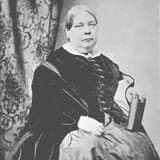
Harriot Kezia Hunt died of Bright's disease in Boston on January 2, 1875, after a long career as physician and women's rights advocate.
Harriot Kezia Hunt died on January 2, 1875, in Boston, Massachusetts, of Bright's disease (a historical term for chronic kidney disease), at the age of 69. Her death closed out a life that had spanned four decades of pioneering medical practice and women's rights activism.
She was buried in Mount Auburn Cemetery in Cambridge, Massachusetts, a resting place shared with many other prominent 19th-century reformers, scientists, and cultural figures. Her monument at Mount Auburn has become a site of pilgrimage for those studying the history of women in medicine, and the cemetery continues to recognize her as a historically notable resident.
At the time of her death, Hunt was widely remembered as one of the earliest women to sustain a professional medical practice in the United States and as a determined advocate who had directly challenged Harvard University's exclusion of women from medical education. Though she never received a traditional medical degree from an accredited institution during her working life, her honorary M.D. and decades of clinical work cemented her legacy as a foundational figure whose persistent advocacy helped pave the way for the generations of women physicians who followed, including graduates of the New England Female Medical College and the Woman's Medical College of Pennsylvania.