← All women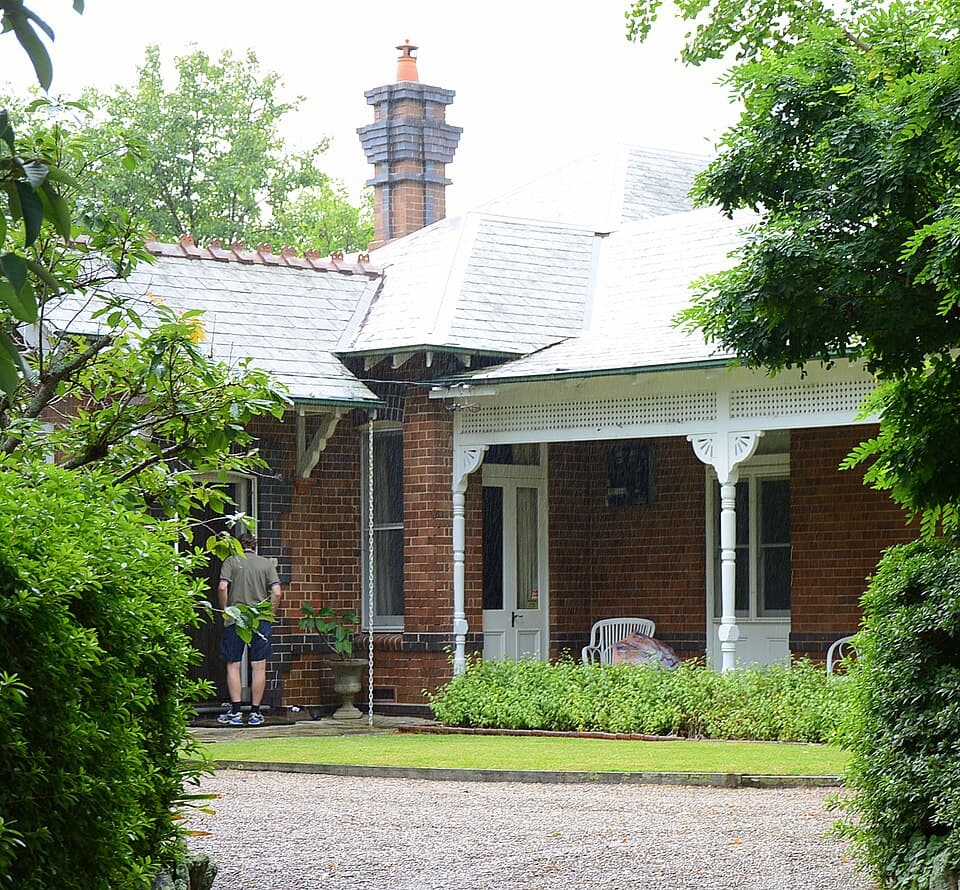
Australian · Arts
Grace Cossington Smith
April 20, 1892 – December 20, 1984
Early Life and Family Background
Grace Cossington Smith AO OBE (20 April 1892 – 20 December 1984) was an Australian painter and one of the earliest and most important exponents of modernism and Post‑Impressionism in Australia.[1][5] She was born Grace Smith in Neutral Bay, Sydney, the second of five children in a well‑to‑do English migrant family.[1][4] Her father, Ernest Smith, was a London‑born solicitor, and her mother, Grace Smith (née Fisher), was the daughter of the rector of Cossington in Leicestershire, a connection that later inspired the artist’s adopted middle name "Cossington".[1][7]
Raised in a comfortable, culturally engaged household, she absorbed British middle‑class values and Anglican sensibilities, which would later feed into her interest in religious subjects and spiritualized domestic interiors.[1][6] During her childhood the family moved through Sydney’s northern suburbs, including Wahroonga and eventually Turramurra, environments whose gardens, streets and houses became the enduring settings of her art.[11][12]
Smith’s schooling reflected both privilege and the constraints of gender in the period. She boarded at Westwood in Point Piper and then attended Abbotsleigh School for Girls in Wahroonga, completing her schooling there between about 1908 and 1909.[9] Abbotsleigh encouraged art; under teachers including Albert Collins and Alfred Coffey she studied drawing and painting, an unusual level of support for a young woman in early twentieth‑century Australia.[7][9] The strength of this encouragement is commemorated today by the Grace Cossington Smith Gallery at Abbotsleigh.[9]
Artistic Training and European Sojourn
In 1910 Smith commenced formal art studies at the Royal Art Society of New South Wales in Sydney, where she took drawing classes with Antonio Dattilo‑Rubbo, an Italian‑born painter and influential teacher of modernist techniques.[2][9] Dattilo‑Rubbo introduced his students to European Post‑Impressionist artists such as Vincent van Gogh, Paul Cézanne, Paul Gauguin and Georges Seurat; Smith’s early oil work, including an early Still life, emerged directly from this environment.[2][9][11]
In 1912, seeking further training, she travelled to Europe with her family. She attended drawing classes at the Winchester School of Art in England and studied in Stettin (then in Germany) between 1912 and 1914.[2][8] This period coincided with the pre‑war flourishing of modernist art movements in Europe. However, Cossington Smith later insisted that her understanding of Post‑Impressionist methods derived primarily from Dattilo‑Rubbo’s teaching in Sydney rather than from her European schooling.[11] The claim underscores both the strength of Dattilo‑Rubbo’s influence and the distinctive way she filtered European ideas through local experience.
With the outbreak of the First World War she returned to Sydney in 1914 and resumed classes with Dattilo‑Rubbo.[1][8] The war years provided subjects and emotional impetus for some of her most important early works, while the institutional framework of the Royal Art Society gave her an avenue for exhibition in a field still heavily dominated by men and academic painters.
Career Beginnings and "The Sock Knitter"
Smith’s breakthrough came during the war with the 1915 painting The Sock Knitter, a portrait of her sister Madge knitting socks for soldiers at the front.[1][3] The work was painted in oils and exhibits strong, divided brushstrokes and bold colour contrasts influenced by Post‑Impressionism.[1] It has frequently been described by historians as "perhaps the first fully Post‑Impressionist painting painted in Australia" and is widely regarded as her first major exhibited work.[1][2][11] The qualifying language used by scholars reflects the difficulty of establishing absolute priority, but consensus places the painting at the forefront of Australian responses to modern European art.
In 1915 The Sock Knitter was included in the annual exhibition of the Royal Art Society of New South Wales, marking Smith’s debut in a significant public exhibition.[1] At a time when women artists were often relegated to amateur status and modernist styles were controversial, her presence in the Society’s exhibition with such an advanced work represented a substantial achievement. The painting links domestic, female labour—knitting for troops—to global conflict, and prefigures her later interest in connecting home‑based experience with wider historical events.[3]
During the late 1910s and early 1920s she continued to paint war‑related subjects, city scenes and portraits, gradually refining a personal idiom characterised by luminous colour and structural brushwork. She also began to adopt the name Grace Cossington Smith, partially to avoid confusion with other artists named Smith and to reflect her maternal family connection to Cossington.[1]
Developing Modernism: 1920s and the Harbour Bridge
By the early 1920s Cossington Smith was recognised within progressive circles as a modern artist.[6] In 1926 she joined the Contemporary Group, an association of Sydney modernists including Thea Proctor, Grace Crowley, Ralph Balson and Roland Wakelin, and exhibited with them over many years.[10] Participation in this group situated her within an emerging network of artists committed to experimenting with colour, form and new subject matter in opposition to conservative academic tastes.
Her family’s 1914 move to Turramurra, on Sydney’s North Shore, became a key factor in her artistic development. The house at 43 Ku-ring-gai Avenue served as her home and studio for decades, and the leafy streets, gardens and interiors of Turramurra formed a core repertoire of motifs.[11][12] At the same time, Sydney’s urban transformation offered dramatic new subjects. When construction of the Sydney Harbour Bridge began in the late 1920s, Cossington Smith painted a series of works depicting the bridge’s steel arches and pylons, such as The Bridge in Curve (c.1928–29), using fractured colour and energetic brushstrokes to convey modern engineering and movement.[1][11]
In 1928 she held her first solo exhibition at Grosvenor Galleries in Sydney, where these bridge paintings were displayed.[1] Critics hostile to modernism attacked their broken colour and unconventional composition, but fellow artists and some reviewers admired their daring approach. The show established her as one of the principal Australian interpreters of urban modernity and confirmed the bridge series as a high point of local modernist painting.[1][11]
Macquarie Galleries and Mature Style
During the 1930s Cossington Smith began to exhibit regularly with Macquarie Galleries in Sydney, an institution supportive of modern art.[1] Her work there spanned city scenes, portraits and still lifes, but a pivotal piece was The Lacquer Room (1935), depicting a brightly lit café interior whose coloured surfaces and reflections demonstrate her sophisticated command of colour and space.[1] The painting was shown at Macquarie Galleries in the mid‑1930s and is now often seen as one of her masterpieces, consolidating her reputation as a leading modernist.[1]
Following the death of her father in 1938, Cossington Smith moved her working space from a garden studio into a room inside the Turramurra house.[8] This shift coincided with an increasing focus on domestic interiors. Over subsequent decades she produced a long series of paintings of rooms, furniture, windows and doors suffused with radiant light, transforming everyday spaces into spiritualised environments. These paintings, often small in scale yet structurally complex, reveal her conviction that beauty and transcendence could be found in ordinary suburban life.[8][11]
War Imagery and Later Experiments
Although she did not serve officially as a war artist, Cossington Smith engaged with the Second World War through paintings based on newspaper photographs, such as Dawn Landing (c.1944) and Signing (c.1945), which depict events like the D‑Day landings and the Yalta Conference.[7] Working from black‑and‑white images, she imagined colour and light to create scenes that connect global military events to her quiet life in Turramurra. This approach—making modernist paintings from press photographs—was relatively unusual in Australia at the time and reflected her desire to participate mentally and emotionally in world affairs while remaining physically removed.
Her technique grew increasingly distinctive: she employed small, square‑ended brushstrokes laid in rhythms across the canvas, often leaving areas of primed canvas between strokes so that light appeared to emanate from the surface itself.[2][11] Colour was central; contemporary writers frequently describe her as a "brilliant colourist" whose palette could transform modest interiors and suburban streets into shimmering, contemplative environments.[2][11]
One‑Woman Show, Retrospectives and Critical Recognition
For much of her career Cossington Smith’s reputation remained relatively low‑profile. She was respected among artists and some critics but did not enjoy broad public fame. Her reserved personality and solitary working habits contributed to this limited recognition.[11] However, a turning point occurred in the mid‑1940s when she mounted a one‑woman exhibition that, for the first time, included paintings bearing inscribed dates.[11] The dating of works signalled a new self‑consciousness about her oeuvre and facilitated later art‑historical study.
In the 1960s and early 1970s, as Australian institutions began to reassess the nation’s modernist heritage, Cossington Smith’s work attracted sustained scholarly attention. Critics and curators highlighted her significance in the first wave of Australian modernism and her pioneering use of Post‑Impressionist colour.[11][2] Major public collections, including the Art Gallery of New South Wales, the National Gallery of Victoria and the National Gallery of Australia, acquired representative works from across her career.[2][10][11]
A crucial milestone was the retrospective exhibition organised by the Queensland Art Gallery in 1973, which presented her work in depth and was accompanied by an analytical catalogue essay.[11] The retrospective reframed her as a central figure in twentieth‑century Australian art rather than a minor modernist. By this time she was in her eighties, and the show contributed significantly to the late recognition she experienced.
Awards, Honours and Institutional Status
Formal honours followed the critical reassessment. In 1973 Cossington Smith was appointed an Officer of the Order of the British Empire (OBE) for services to art, acknowledging her decades‑long contribution to Australian painting.[1][4] In 1976 she was appointed an Officer of the Order of Australia (AO), one of the early modernist painters to receive this national distinction for visual arts.[1][3][4] These honours placed her alongside better‑known male contemporaries and signalled an institutional recognition of women’s roles in shaping Australian modernism.
Her work continued to be acquired and exhibited by major galleries. The Art Gallery of New South Wales emphasised her status as "one of Australia’s most celebrated 20th‑century painters" and "an important early exponent of modernism in Australia".[2] The National Portrait Gallery added a self‑portrait to its collection and characterised her as a key modernist whose solitary lifestyle and long commitment to painting gave her work particular intensity.[6]
Personal Life
Cossington Smith never married and had no children.[1][6] She lived for most of her adult life with her mother and sisters in the family home at Turramurra, working primarily from a studio within the house.[6][11] Her choice—or necessity—to remain single and domestically based reflected both personal temperament and the limited options available to women artists of her generation, who often struggled to combine professional careers with marriage and motherhood.
Contemporaries noted her gentle, self‑effacing manner. She was deeply religious, and spiritual concerns permeated her work, particularly in later paintings of church interiors, crucifixions and visionary scenes rendered with luminous colour.[1][11] Despite her quietness she maintained connections with other artists through the Contemporary Group and gallery exhibitions, but she did not seek public prominence. Her life centred on routine, painting and family care, forming an example of how a serious artistic career could be sustained within a domestic framework.
Major Themes and Accomplishments
Cossington Smith’s achievements can be summarised through several key themes:
- Introduction of Post‑Impressionism to Australia: Her early adoption of Post‑Impressionist colour and brushwork, particularly in The Sock Knitter and the Harbour Bridge series, helped bring modern European idioms into Australian painting.[1][2][11]
- Modern Urban Subject Matter: Works depicting the Sydney Harbour Bridge and city interiors, such as The Lacquer Room, visualised engineering and commercial modernity through vibrant, fractured colour.[1][11]
- Domestic Interiors and Spiritualised Space: Her long series of room interiors and still lifes, produced mainly from the 1930s onward, explored the transcendent qualities of ordinary domestic spaces, using sequences of colour strokes to suggest light and spiritual presence.[8][11]
- War and Global Events: Paintings based on newspaper photographs of World War II connected her suburban vantage point to international conflict, expanding the range of subjects considered suitable for an Australian woman artist.[7]
- Persistent Modernism Across Decades: Unlike some contemporaries who moved back towards conservative styles, she maintained a modernist vocabulary of colour and structure throughout her life.
Legacy and Historical Impact
According to later assessments, Grace Cossington Smith is now regarded as one of the most significant Australian painters of the twentieth century and a foundational figure in the development of Australian modernism.[1][2][5][11] Her work formed part of the first substantial wave of Australian responses to European Post‑Impressionism, and she demonstrated that such approaches could be applied not only to heroic landscapes but also to suburban streets, domestic interiors and female‑coded subjects.
Her career has particular importance in women’s history. At a time when institutional support for women artists was limited and modernism frequently dismissed as foreign or decadent, she persisted with experimental colour and structure while living a relatively secluded domestic life. The eventual recognition of her achievements—through retrospectives, honours and the inclusion of her work in national collections—has helped to rewrite narratives that previously centred almost exclusively on male modernists.[2][11]
Institutions such as the Art Gallery of New South Wales, the National Gallery of Australia, the National Gallery of Victoria and the Queensland Art Gallery now hold key works by Cossington Smith and regularly feature them in displays of Australian art.[2][10][11][12] Educational resources, including those produced by the University of Sydney and the Anzac Portal, present her as a case study in modernism, war, and women’s artistic practice.[3][9] The Grace Cossington Smith Gallery at Abbotsleigh continues to honour her legacy by exhibiting contemporary art and reinforcing the link between women’s education and creative careers.[9]
Later Life and Death
In her later years Cossington Smith’s health deteriorated, and she gradually ceased painting. She remained in the Turramurra house until she moved to a nursing home in Roseville towards the end of her life.[6] Despite physical frailty, she lived to see her work significantly revalued, with major exhibitions and honours affirming her place in Australian art history.[1][11]
Grace Cossington Smith died on 20 December 1984 in Roseville, aged 92.[1][3][5] Her passing marked the end of a career spanning more than seven decades. Subsequent decades have only strengthened her reputation: she is now widely recognised as a pioneer of Australian modernist painting, a master of colour, and a crucial figure in understanding how women artists negotiated modernity, domestic life and spiritual experience in the twentieth century.
Dated achievements
9 indexed.
- Apr201892Arts
Birth of Grace Cossington Smith
Grace Cossington Smith was born in Neutral Bay, Sydney, New South Wales, Australia.
View details Australian Dictionary of Biography - Aug011915Arts
Exhibition of 'The Sock Knitter'
Exhibited 'The Sock Knitter', the first fully Post-Impressionist work in Australia, at Royal Art Society.