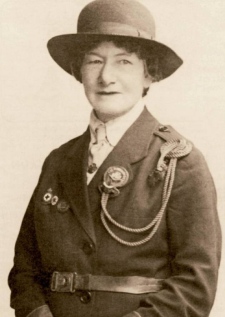
Agnes Baden-Powell established the Girl Guides in Great Britain in 1910, creating the first organized girls' guiding movement after girls demanded their own version of Scouting.
Agnes Baden-Powell founded the Girl Guides movement in 1910, marking a pivotal moment in the history of girls' organizations worldwide. The movement emerged directly from the enormous popularity of the Boy Scouts, founded the previous year by her brother, Robert Baden-Powell. When girls began attending the first Scout rally at Crystal Palace in 1909 declaring themselves 'Girl Scouts,' it became clear that girls wanted access to the same adventurous, character-building activities as boys, but within a framework suited to the social expectations of the era.
Agnes took on the task of organizing a parallel movement, adapting Scouting's badge system, outdoor skills training, and community service ethos for girls. This was a genuinely barrier-breaking achievement: in Edwardian Britain, opportunities for girls to engage in physical activity, camping, first aid, and self-reliance training outside domestic education were extremely limited. The Girl Guides offered girls of all social classes a structured, respectable outlet for adventure and skill-building that had previously been the near-exclusive domain of boys.
The exact founding day is not precisely documented in surviving records, but the year 1910 is consistently cited by Girlguiding UK and other authoritative sources as the movement's official start. Agnes served as the first President of the Girl Guides and authored the influential 1912 handbook How Girls Can Help Build Up the Empire, later retitled The Handbook for Girl Guides. Her work laid the foundation for what would become a global movement, eventually evolving into the World Association of Girl Guides and Girl Scouts (WAGGGS), touching the lives of millions of girls across more than 150 countries.
Images