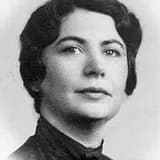
Blanch was elected a Fellow of the AAAS, recognizing her scientific contributions to numerical analysis and computation.
In 1962, Gertrude Blanch was elected a Fellow of the American Association for the Advancement of Science. The available sources do not preserve a specific day, but the honor recognized the scientific value of her work in numerical analysis, algorithm design, and computation. Fellowship in AAAS signaled that her contributions had gained recognition beyond the specialized world of mathematical tables and federal computing.
The award is historically meaningful because Blanch’s most important contributions were often behind the scenes. She worked on methods, tables, and computational organization rather than on widely publicized theorems or celebrity-level scientific breakthroughs. In the mid-twentieth century, this kind of technical labor was essential to science but frequently under-credited, especially when performed by women. AAAS recognition therefore served as a corrective, placing her among the respected scientific practitioners of her generation.
The fellowship also illustrates the maturation of numerical analysis as a field. What had once been considered support work for physics or engineering was increasingly recognized as an area of real scientific importance. Blanch’s election reflected both personal distinction and the growing institutional legitimacy of the computational sciences she helped build.