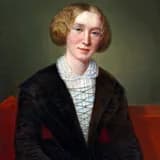
The three Blackwood's stories were collected and published in 1858 as Scenes of Clerical Life, establishing her pseudonymous identity in book form.
In 1858, the three linked stories that had appeared serially in Blackwood's Magazine—"The Sad Fortunes of the Rev. Amos Barton," "Mr Gilfil's Love Story," and "Janet's Repentance"—were published together in two volumes as Scenes of Clerical Life, under the now-established pseudonym George Eliot.
This was the first appearance of her fiction in book form, transforming what had been a serialized magazine experiment into a recognized literary work that could be reviewed, purchased, and circulated among the reading public in the standard format of the era. The collection received warm critical notice, with even Charles Dickens famously suspecting that a woman must be behind the writing, due to its emotional acuity, though the author's true identity remained a closely guarded secret at the time.
The book's publication cemented "George Eliot" as a literary brand and identity independent from Marian Evans's private life, allowing her serious, morally probing fiction focused on ordinary provincial characters and clergy to be evaluated on its own considerable merits. It set the stage for her first full-length novel, Adam Bede, published the following year, and represents an important sentinel moment in her transition from magazine contributor to published novelist of book-length works.