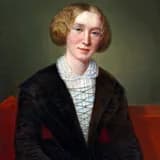
Her first major novel, Adam Bede, was published in 1859, bringing her widespread recognition as a leading Victorian novelist.
In 1859, Adam Bede was published by Blackwood's, becoming George Eliot's first full-length novel and an immediate critical and commercial success. Set in rural Warwickshire around the turn of the nineteenth century, the novel tells the story of a village carpenter, his tragic entanglement with the vain Hetty Sorrel, and the moral reckonings that follow.
The book was praised for its unusually realistic and sympathetic portrayal of rural working people, a marked departure from the more idealized or comic depictions common in earlier Victorian fiction. Its psychological depth and moral seriousness caused a sensation, and speculation about the true identity of the mysterious "George Eliot" became a subject of national curiosity, with several people wrongly claiming authorship until Evans was forced to publicly reveal herself.
Adam Bede sold extremely well and established George Eliot as one of the preeminent novelists of her generation almost overnight. Its success provided her financial independence and critical authority that allowed her to continue writing on her own terms, despite the social stigma she faced from her unmarried domestic partnership with George Henry Lewes. The novel remains a landmark of Victorian realism and is still widely studied for its ethical complexity and its innovative narrative voice.