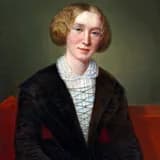
Marian Evans signed herself as 'George Eliot' for the first time in a letter to publisher John Blackwood on 4 February 1857.
On 4 February 1857, Marian Evans formally adopted the name by which she would become immortal in world literature, signing a letter to her publisher John Blackwood as "George Eliot" for the first time. The letter was written in reply to Blackwood's praise for her fiction, and this signature marks the documented birth of the pseudonym.
The choice of a male pen name was a calculated and consequential decision. In Victorian England, women novelists faced significant prejudice; their work was often stereotyped as sentimental, trivial, or inferior to that of male authors, regardless of actual literary merit. By publishing as "George Eliot," Evans ensured that her fiction would be judged purely on its literary qualities rather than dismissed or patronized because of her gender. "George" was reportedly chosen in tribute to her partner George Henry Lewes, and "Eliot" simply because it was, in her words, "a good mouth-filling, easily pronounced word."
This act of self-naming proved enormously significant: it allowed one of the greatest literary minds of the century to reach an audience and critical reception that might otherwise have been foreclosed to her as a woman. The pseudonym stuck for the rest of her career and remains, over 150 years later, one of the most famous pen names in literary history, symbolizing the broader struggle of women writers to be taken seriously in a male-dominated literary establishment.