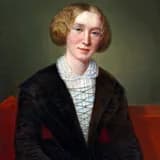
Daniel Deronda, Eliot's last completed novel, was published in 1876, notable for its exploration of Jewish identity and proto-Zionist themes.
In 1876, George Eliot published Daniel Deronda, her final completed novel and the only one of her major works set in her own contemporary Victorian society rather than in the past. The novel interweaves the story of Gwendolen Harleth, a self-absorbed young woman navigating an unhappy marriage, with that of Daniel Deronda, a young Englishman who discovers his Jewish heritage and becomes committed to the early Zionist cause of establishing a Jewish homeland.
The novel was groundbreaking and controversial for its sympathetic and deeply researched portrayal of Jewish culture, religion, and the proto-Zionist political movement at a time when antisemitism was widespread in British society. Eliot's extensive research into Jewish history, theology, and contemporary Jewish life for this novel was highly unusual for a non-Jewish English author of her era, and the book was embraced by many Jewish readers and leaders as a rare work of serious, respectful literary engagement with their culture and aspirations.
Daniel Deronda represents the culmination of Eliot's lifelong interest in questions of identity, moral duty, and social reform, extended here to encompass questions of religious and national belonging beyond England's borders. Though it received mixed reviews at the time, in part due to its unconventional subject matter, the novel has since been recognized as an important and prescient literary treatment of Jewish identity and nationalism, decades before the formal Zionist movement gained international traction.