← All women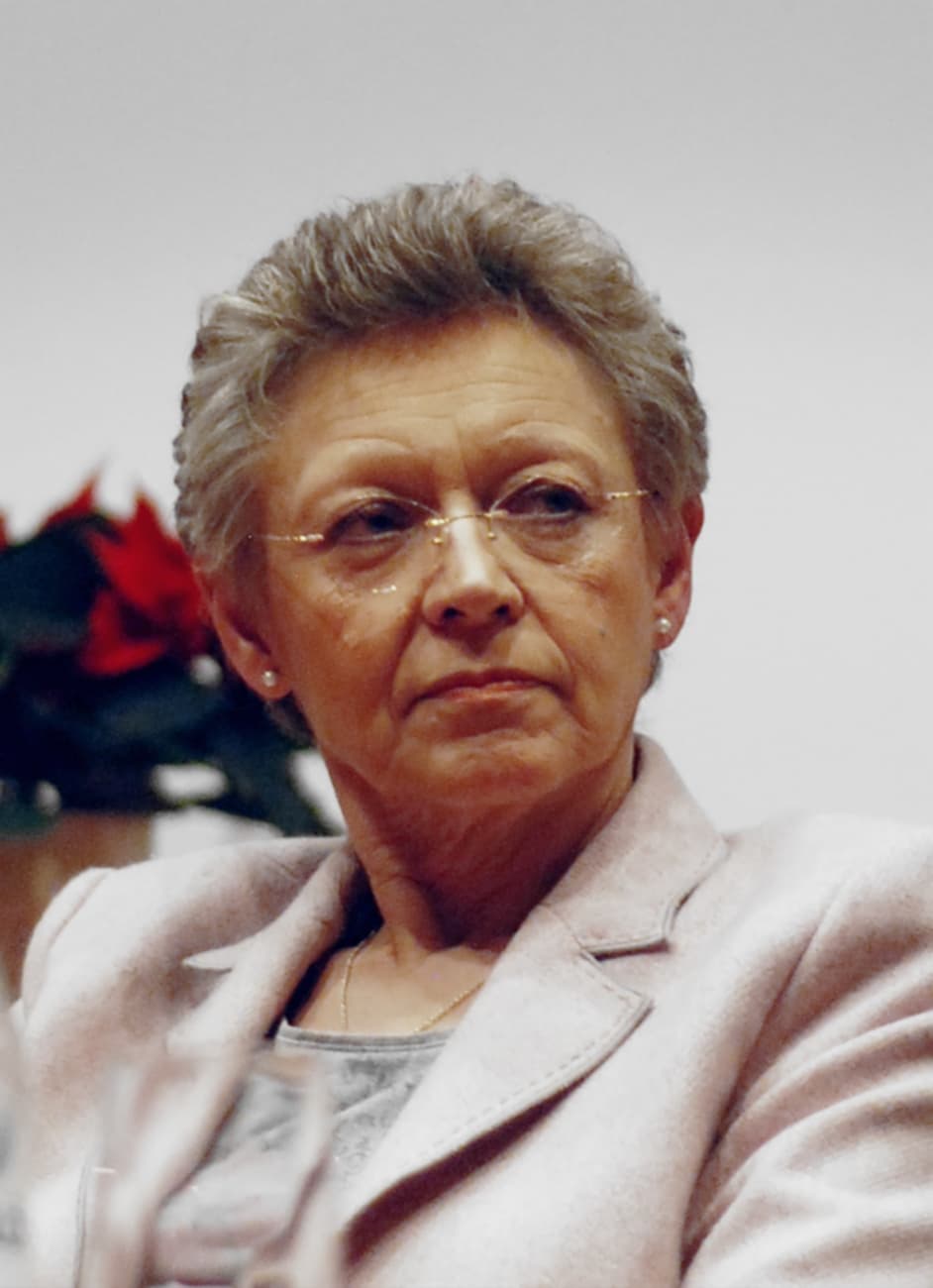
French · Science · Medicine · Activism
Françoise Barré-Sinoussi
July 30, 1947 – present
Early Life and Background
Françoise Barré-Sinoussi was born on 30 July 1947 in Paris, France, into a modest family in the post–Second World War era.[6][5][15] Raised in a social environment where women were rarely encouraged to pursue scientific careers, she developed an early fascination with biology and medicine. Biographical accounts describe her as drawn to understanding the mechanisms of disease and motivated by a desire to help patients, interests that would later shape her choice of virology and immunology as fields of study.[2][8]
She pursued higher education in the sciences in Paris, ultimately undertaking advanced studies that combined biology, virology, and immunology. While some sources differ on the exact institutional path of her doctoral training, French biographical notes and institutional profiles agree that she obtained a doctorate ès sciences from the Faculty of Sciences in Paris in the mid-1970s, after early work linked to the Institut Pasteur.[12][3][13] Her education unfolded at a time when retrovirology was emerging as a distinct field and when the tools to study viral replication and host responses were rapidly advancing.
Career Beginnings and Development
Barré-Sinoussi’s research career is closely tied to the Institut Pasteur, the historic Parisian institute founded by Louis Pasteur and dedicated to microbiology, immunology, and infectious disease.[2][4] According to Nobel Prize biographical information, she began working at the Institut Pasteur as a volunteer in the early 1970s, becoming involved in retrovirus research at a time when these viruses were only beginning to be recognized in animals and humans.[15] Other French sources note that she initially worked in the laboratory of Jean-Claude Chermann, where she gained expertise in detecting retroviral activity and in cultivating lymphoid cells.[1][12]
During the same period, Barré-Sinoussi undertook doctoral studies, culminating in a doctorate in sciences from the Faculty of Sciences in Paris by 1974.[12] Her thesis work, while somewhat differently described across sources, consistently involved retrovirology and immunovirology, setting the stage for her lifelong focus on host–virus interactions. In 1975 she joined INSERM (Institut national de la santé et de la recherche médicale), France’s national biomedical research organization, as a researcher.[13] This appointment gave her a formal institutional base and allowed her to pursue independent projects.
Later in the 1970s, Barré-Sinoussi returned to or remained closely associated with the Institut Pasteur, joining its virology department. Biographical entries and institutional profiles indicate that she worked within the group led by Luc Montagnier, focusing on retroviruses and their possible involvement in human diseases.[1][2][16] Her early publications addressed retroviral infections in animals and explored methods for detecting reverse transcriptase, the enzyme characteristic of retroviruses, in biological samples.
Discovery of HIV and Early AIDS Research
The most historically significant phase of Barré-Sinoussi’s career began in the early 1980s, as clinicians in Paris and elsewhere confronted a mysterious syndrome that would later be named acquired immunodeficiency syndrome (AIDS). Patients, many of them young men, presented with severe opportunistic infections and rare cancers such as Kaposi’s sarcoma, coupled with a profound loss of immune function.[6][7] Working within Montagnier’s group at the Institut Pasteur, Barré-Sinoussi was approached regarding the possibility that a retrovirus might be responsible.
In December 1982, she participated in a decisive strategy meeting with clinician Willy Rozenbaum and virologist Françoise Brun-Vézinet to plan laboratory investigations of a patient with swollen lymph nodes and early signs of immunodeficiency.[11] The team agreed to culture cells from a lymph node (ganglion), reasoning that if a retrovirus were involved, it would likely be present in lymphoid tissue. This decision, guided by Barré-Sinoussi’s experience with retroviruses, would prove critical.
In January 1983, Barré-Sinoussi and colleagues at the Institut Pasteur began culturing cells from the biopsied lymph node of an AIDS-risk patient.[11][4] She monitored the cultures for signs of viral replication, measuring reverse transcriptase activity in the culture supernatant. Around 20 January 1983, she detected a clear signal indicating the presence of a retrovirus, the earliest functional evidence of what would later be identified as human immunodeficiency virus (HIV).[4][11]
Subsequent experiments confirmed and elaborated on this initial finding. Electron microscopist Charles Dauguet examined the cultures and visualized virus particles with morphological features characteristic of a lentivirus, supporting the conclusion that a new human retrovirus had been isolated.[4] Barré-Sinoussi and her colleagues then performed further analyses of the virus’s ability to infect and destroy T lymphocytes, a key cell type in the human immune system.
On 20 May 1983, Barré-Sinoussi was first author of a landmark paper published in Science, which reported the isolation of the lymphadenopathy-associated virus (LAV) from a patient with lymph node enlargement and early AIDS.[12][3][15] The article described the detection of reverse transcriptase, the virus’s tropism for T lymphocytes, and its potential association with immunodeficiency. Subsequent work by the Pasteur group and others demonstrated that the virus, later renamed HIV-1, was the causative agent of AIDS.[6][15]
This discovery had profound global implications. Identifying HIV as the cause of AIDS made it possible to develop serological tests to detect infection, to screen blood supplies, and to design antiretroviral drugs targeting key viral enzymes.[17] Barré-Sinoussi’s bench work—culturing lymph node tissue, detecting reverse transcriptase, and characterizing the new virus—was central to this chain of advances. Her role as first author on the 1983 Science paper publicly recognized her contribution, which was unusual for a woman scientist in a male-dominated field at the time.[12][16]
Establishing Her Own Laboratory and Research Themes
In 1988, Barré-Sinoussi became responsible for her own laboratory at the Institut Pasteur, a significant milestone in her career.[4][12] She established the Regulation of Retroviral Infections Unit (often referred to as the Retrovirus Biology Unit), focusing on the viral and host determinants of HIV pathogenesis. Her group investigated how HIV interacts with the immune system, why disease progression differs between individuals, and how some exposed but uninfected or long-term non-progressor individuals mount protective responses.
Throughout the late 1980s and 1990s, her laboratory contributed to key questions in HIV biology: the role of cytokines and chemokines in viral replication, mechanisms of immune activation and exhaustion, and the importance of early treatment. She also participated in research on HIV vaccine candidates and strategies to induce effective immune responses.[2][4] Barré-Sinoussi’s work extended beyond basic virology to include clinical and translational studies, often in collaboration with researchers and physicians in countries heavily affected by HIV.
Institutional profiles note that she held senior positions at the Institut Pasteur and INSERM, eventually serving as Director of Research at INSERM and heading the Regulation of Retroviral Infections Unit within the Pasteur virology department.[13][4] In these roles, she mentored numerous students and postdoctoral fellows, including many from low- and middle-income countries, and fostered international partnerships aimed at strengthening HIV research capacity.
International Leadership and Advocacy
Beyond laboratory research, Barré-Sinoussi emerged as an influential figure in global HIV science and policy. She became actively involved with the International AIDS Society (IAS)president of the IAS, providing leadership at a time when the organization was expanding its role in setting scientific agendas and fostering collaboration between researchers, clinicians, and affected communities.[10]
Her advocacy emphasized the importance of integrating scientific evidence with human rights considerations. She argued for equitable access to antiretroviral therapy, for patient involvement in research and policy discussions, and for continued attention to HIV in resource-poor settings, where the epidemic remained most severe. Barré-Sinoussi frequently visited and collaborated with research teams in Asia and Africa, supporting studies on HIV transmission, prevention, and treatment in diverse contexts.[2][17]
In November 2017, she became president of Sidaction, a major French organization dedicated to the fight against HIV/AIDS.[3][4] Sidaction supports research projects, prevention initiatives, and community-based programs, particularly in France and francophone Africa. Under her leadership, the organization continued to emphasize both scientific excellence and social justice, reflecting her dual identity as a scientist and activist.[4][17]
Awards, Honors, and Recognition
Barré-Sinoussi’s contributions have been widely recognized. The most prominent honor is the Nobel Prize in Physiology or Medicine, announced on 6 October 2008 and formally awarded in Stockholm on 10 December 2008.[6][15] She shared the prize with Luc Montagnier; the Nobel citation recognized their discovery of HIV as the cause of AIDS, noting its central importance to modern medicine and public health.[15]
She became one of the very few women to receive the Nobel Prize in medicine and, as French media highlighted, the first French woman to be so honored in this category.[3][11] The Nobel Prize amplified her international profile and allowed her to speak with authority on issues ranging from research funding to global health equity.
In addition to the Nobel Prize, Barré-Sinoussi has received numerous other awards and distinctions. These include honors from French scientific bodies such as the Académie des sciences, where she is listed among distinguished members and laureates.[12] She has also been recognized by international organizations for her contributions to HIV research and for her advocacy on behalf of people living with HIV/AIDS. While individual award dates are not always specified in publicly accessible sources, the pattern of recognition underscores her status as a leading figure in virology and global health.[5][7]
Personal Life
Publicly available biographical information about Barré-Sinoussi focuses primarily on her scientific and activist roles. Detailed accounts of her personal life—such as marriage, children, or other family relationships—are limited, reflecting her preference for maintaining a clear boundary between professional and private spheres.[8][12] Some profiles mention her modest upbringing and strong work ethic, emphasizing how these traits shaped her commitment to both research and patient advocacy.[11]
What is consistently highlighted is her personal dedication to people affected by HIV. She has repeatedly stressed the importance of staying in contact with patients and communities, listening to their experiences, and ensuring that scientific agendas respond to their needs.[2][17] This orientation toward the human impact of HIV/AIDS has been described in interviews as a defining element of her identity, beyond formal personal details.
Legacy and Historical Impact
Françoise Barré-Sinoussi’s legacy is anchored in her role as a co-discoverer of HIV and a pioneer in retrovirology. Her early 1983 experiments, culminating in the Science paper that first described LAV/HIV-1, fundamentally transformed the global response to AIDS.[12][15] Identification of HIV enabled blood screening, antiretroviral drug development, and evidence-based prevention strategies, which collectively have saved millions of lives.
Beyond this central achievement, her career exemplifies the integration of basic science, clinical research, and activism. She has advocated for interdisciplinary collaboration and for a patient-centered approach to HIV research. Her leadership positions at the Institut Pasteur, INSERM, the International AIDS Society, and Sidaction reflect a commitment to building institutions that can sustain long-term efforts against HIV/AIDS.[2][4][6]
In the history of women in science, Barré-Sinoussi stands out as a trailblazer. She entered virology at a time when few women held senior research roles, and she rose to the highest levels of recognition, including the Nobel Prize. Her visible contributions challenge stereotypes about women’s capabilities in laboratory science and high-level biomedical research. She has also served as a mentor and role model for younger scientists, particularly women, encouraging them to pursue careers in research and to engage with global health issues.[17]
Her work continues to influence contemporary HIV research, including studies on immune activation, viral reservoirs, and the prospects for functional or sterilizing cures. She has emphasized that scientific progress must go hand in hand with social and political commitment, warning that neglecting research or global solidarity risks reversing gains in the fight against HIV.[11]
Later Life and Ongoing Work
As of the mid-2010s and 2020s, Barré-Sinoussi holds the status of Emeritus Professor at the Institut Pasteur and Emeritus Director of Research at INSERM.[4] She remains active in advisory roles, contributing her expertise to scientific committees, global health initiatives, and public debates about HIV/AIDS and research funding.
On 15 May 2023, she appeared on France Inter in a commemorative interview marking the 40th anniversary of the 1983 HIV discovery paper.[11] In the conversation, she revisited the chronology of the early experiments and reflected on the scientific, social, and emotional dimensions of AIDS research. Her participation in such public discussions shows her continuing engagement with both scientific history and contemporary public understanding of HIV.
Barré-Sinoussi has not retired from public life; she continues to speak and write about HIV, global health equity, and the importance of sustained investment in research.[2][17] While detailed information about her personal activities outside science remains limited, her ongoing involvement in scientific and activist networks underscores a lifelong commitment to improving the lives of people affected by HIV/AIDS.
Through decades of work—from the discovery of HIV to leadership in international organizations and advocacy for patients—Françoise Barré-Sinoussi has secured a lasting place in both the history of medicine and the broader narrative of women’s contributions to science. Her career demonstrates how rigorous laboratory research, combined with ethical engagement and activism, can reshape global health and challenge structural inequalities.
Dated achievements
11 indexed.
- Jul301947Science
Birth in Paris
Françoise Barré-Sinoussi is born in Paris, France, on 30 July 1947.
View details Françoise Barré-Sinoussi - Wikipedia - Jan011974Science
Doctorate in Sciences from the Faculty of Sciences, Paris
Barré-Sinoussi completes her doctorat ès sciences in Paris, formalizing her scientific training in virology.