← All women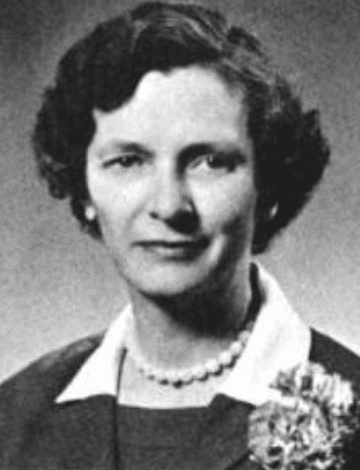
American · Politics
Frances Willis
May 20, 1899 – July 10, 1983
Early life and education
Frances Elizabeth Willis was born on May 20, 1899, in Metropolis, Illinois, into a world in which women’s access to advanced education and public authority remained severely limited. She later became one of the most important women in the history of American diplomacy, but her early life was shaped by the expectations of the late nineteenth and early twentieth centuries, when a woman’s career options were still usually narrowed to teaching, clerical work, or domestic life. Her rise therefore began with a significant departure from convention.
Willis studied at Stanford University, where she earned a bachelor’s degree before continuing to graduate work in political science. In 1923, she earned a Ph.D. in political science from Stanford, becoming the first woman to receive that doctorate in the field there. Before entering government service, she taught at Goucher College and Vassar College. Those academic years mattered because they gave her both disciplinary expertise and a platform from which to consider the political world more directly. Later accounts quoted her as saying that she did not want merely to teach political science; she wanted to participate in it.
Her education was unusually advanced for a woman of her generation and prepared her for a career that combined scholarship with statecraft. At a time when women were still struggling for recognition in universities and professions, Willis’s academic record already placed her among an elite minority. The intellectual seriousness of her training would remain visible throughout her diplomatic work, which was known for careful judgment, discretion, and deep knowledge of European affairs.
Entry into the Foreign Service
In 1927, Willis passed the Foreign Service exam and joined the U.S. Foreign Service. She became the third woman to enter the service, but she was the first to make it a full career. That distinction is central to her historical importance. Women could occasionally enter government work, but they were not often expected to remain, advance, and reach senior leadership. Willis did all three.
Her first posting was in Chile, and over the following years she served in Sweden, Great Britain, Belgium, Spain, and Finland. Her assignments were not ceremonial. They placed her in the operational center of American diplomacy during a period that spanned the interwar years, the rise of fascism, and the Second World War. The State Department and the wider Foreign Service remained heavily male-dominated, and Willis’s steady advancement required competence in environments where women were often treated as outsiders or temporary staff rather than professional officers.
Her ability to persist was especially important because the barriers she faced were institutional as well as cultural. Career women in diplomacy had to prove themselves repeatedly, often with less access to informal patronage networks than men. Willis’s progress through this system established a new model for women in public service: she was not simply admitted into the field, she earned a permanent place in it through sustained performance.
Wartime service and early leadership
By the late 1930s and early 1940s, Willis had become an experienced diplomat in Europe. In 1940 she was in Brussels when Nazi Germany invaded Belgium, placing her directly in a major wartime emergency. Service in a capital under threat demanded calm, practical judgment, and the ability to function under rapidly changing conditions. Such assignments were a test of professional resilience for any diplomat, and they were especially consequential for a woman seeking to prove that she belonged in the upper ranks of foreign affairs.
During the war years, Willis continued to gain senior responsibility. She served in a range of posts and was later an assistant to Under Secretary of State Joseph Grew. Her wartime and immediate postwar service helped establish her reputation as a trusted professional with a deep understanding of European affairs. These years were also significant because the United States was redefining its global role, and the Foreign Service was expanding in complexity and importance. Willis’s work placed her among the officers helping carry that transition forward.
One of the most notable milestones of her early career came in 1934, when, while serving in Stockholm, she assumed the duties of the minister in his absence. This made her the first U.S. woman to serve as chief of mission abroad, a major symbolic and practical breakthrough. A chief of mission represented the United States at the highest level in a foreign country, and for a woman to occupy that role, even temporarily, challenged long-standing assumptions about diplomatic authority.
Ambassadorial breakthrough
In 1953, President Dwight D. Eisenhower appointed Willis as Ambassador to Switzerland. This appointment made her the first career female ambassador in American history and the first U.S. ambassador to Switzerland. By then, Willis had spent decades building the expertise and reputation that enabled such a choice, but the appointment still marked a profound institutional shift. It showed that a woman could be selected not as a novelty or symbolic exception, but as the best professional choice for a major diplomatic post.
Her Swiss ambassadorship was followed by service as ambassador to Norway from 1957 to 1961 and then as ambassador to Ceylon from 1961 to 1964. Together these assignments demonstrate that Willis was not a one-post pioneer. She became a recurring figure in senior diplomacy, trusted to represent the United States in strategically important countries in Europe and Asia. Her service in Norway was particularly significant in the Cold War context, when North Atlantic alliances and northern European security were central to U.S. foreign policy. Her later post in Ceylon placed her in a newly independent Asian nation where diplomacy required attention to decolonization, regional politics, and the broader East-West competition.
In 1955, Willis was also the only woman at the Big Four Summit Conference in Geneva. The summit, held amid major Cold War tensions, underscored how rare senior female participation still was in global diplomacy. Her presence there was not merely symbolic; it was a sign that her expertise was valued at the highest level of international negotiation.
In the same period, she was appointed career minister, further confirming her place within the upper ranks of the Foreign Service. Her ascent reached another historic peak in 1962, when she became the first woman to attain the rank of career ambassador, the highest professional rank in the Foreign Service. That achievement capped a long climb through an institution that had once offered women little more than marginal participation. For later generations of women diplomats, Willis became a foundational figure: proof that a woman could rise from entry-level service to the apex of the profession.
Personal life and later years
Willis never married, and the historical record emphasizes her professional life rather than family life. That should not be mistaken for absence of personal commitments; rather, it reflects the intensity of a career that demanded geographic mobility, long postings abroad, and the full attention of a high-level diplomat. After mandatory retirement, she returned to Redlands, California, where she remained active in community and charitable work. Contemporary and later accounts note her involvement in civic organizations and local affairs, suggesting that her public spirit continued after formal government service ended.
Her later years also brought institutional recognition. In 2006, the U.S. Post Office honored her posthumously as one of six distinguished American diplomats featured on commemorative stamps, a reminder of her lasting importance in the national memory of diplomacy. That recognition was fitting: Willis’s career had been built on quiet but transformative persistence, and the values she embodied—professionalism, competence, and perseverance in the face of gender bias—remained relevant long after her retirement.
Death and legacy
Frances E. Willis died on July 10, 1983, in Redlands, California. She was 84 years old. Her death closed the life of a woman who had moved American diplomacy forward in several decisive ways: she was the first woman to make a career of the Foreign Service, the first U.S. woman to serve as chief of mission abroad, the first career female ambassador, and the first woman to hold the rank of career ambassador. Each of those milestones marked a separate barrier being crossed, but together they formed a single historical arc.
Willis’s legacy lies not only in the fact that she was first, but in the manner of her achievement. She was not elevated for symbolic reasons alone; she was promoted because she had repeatedly demonstrated skill, resilience, and judgment in demanding posts. Her life stands as evidence that institutional barriers can be broken by sustained excellence, and that once they are broken, they alter the expectations of an entire profession. In the history of women in American public life, Frances Willis remains one of the clearest examples of a career that changed the structure of opportunity itself.
Dated achievements
11 indexed.
- May201899Politics
Born in Metropolis, Illinois
Born in Metropolis, Illinois, Frances Elizabeth Willis would become a trailblazing U.S. diplomat and the first woman career ambassador.
View details Stanford SearchWorks / U.S. Department of State - Jan011927Politics
Joined the U.S. Foreign Service
Willis joined the U.S. Foreign Service in 1927, beginning the career that made her the first woman to build a full Foreign Service path.