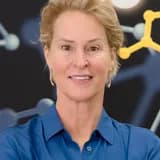
Arnold was announced as a 2018 Nobel Chemistry laureate, the first American woman to win the prize, for directed evolution of enzymes.
On October 3, 2018, the Royal Swedish Academy of Sciences announced that Frances Arnold had been awarded the Nobel Prize in Chemistry "for the directed evolution of enzymes," sharing half of the prize, with the other half split between George P. Smith and Sir Gregory P. Winter for their work on phage display.
Arnold's win was historic on multiple levels: she became only the fifth woman ever to win the Nobel Prize in Chemistry since its founding in 1901, and the first American woman to do so. This came 117 years after the prize was first awarded, underscoring the long history of underrepresentation of women in the sciences and in Nobel recognition specifically.
Her prize-winning work — the development of directed evolution techniques starting in 1993 — had, by 2018, become a cornerstone technology in biotechnology, used to engineer enzymes for pharmaceuticals, biofuels, and environmentally sustainable industrial chemistry. Her methods enabled the creation of enzymes that did not exist in nature, expanding the toolkit available to chemists and biologists worldwide.
The announcement generated widespread media coverage and celebration, particularly among women in STEM fields, who viewed Arnold's win as a milestone in the ongoing effort to achieve greater gender parity in scientific recognition at the highest levels.