← All women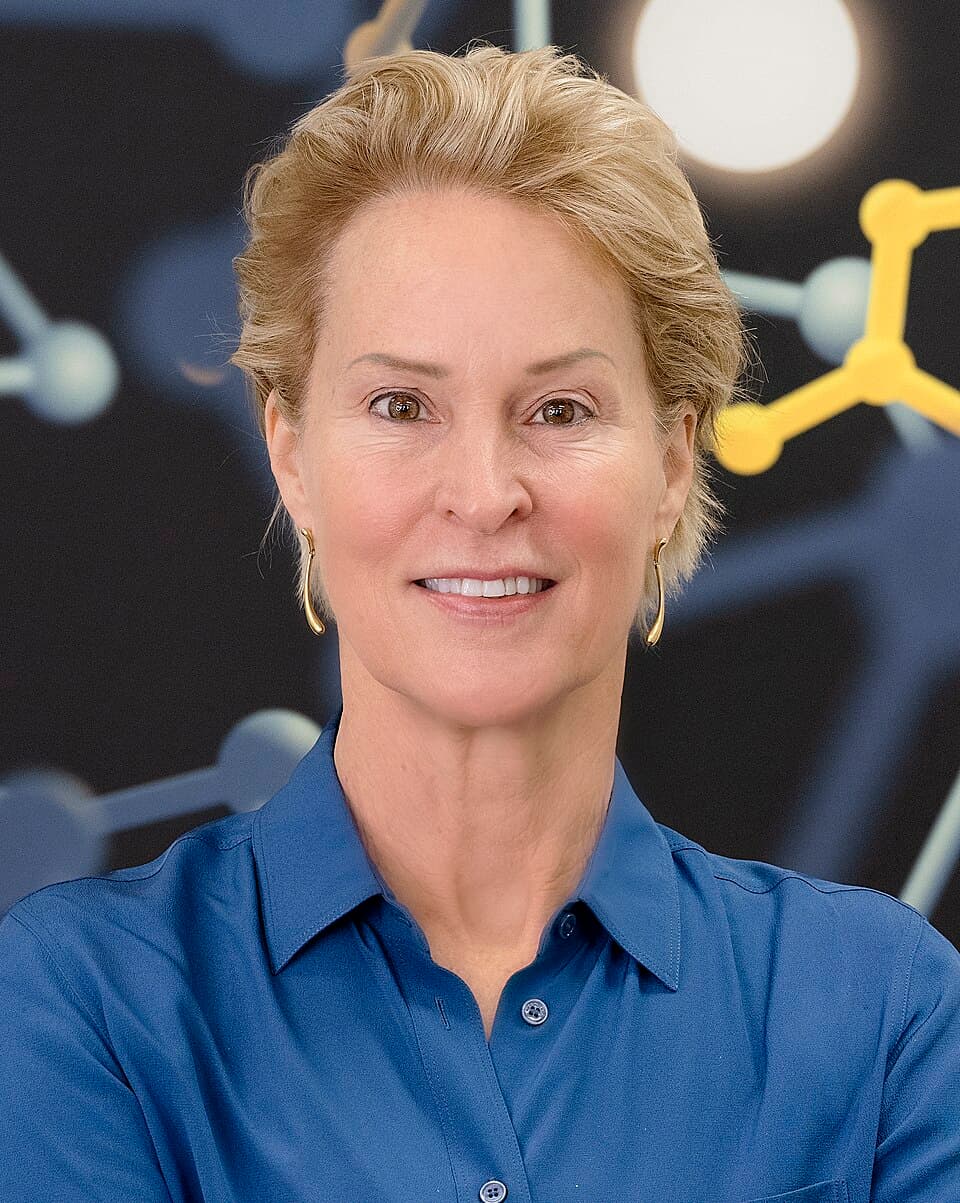
American · Science
Frances Arnold
July 25, 1956 – present
Early Life and Background
Frances Hamilton Arnold was born on 25 July 1956 in Pittsburgh, Pennsylvania, United States. Pittsburgh in the 1950s and 1960s was a major steel and industrial center, and Arnold grew up amid smokestacks and heavy manufacturing.[4][3] She has often noted that witnessing both the economic importance and the environmental impact of industry shaped her later commitment to developing cleaner, more sustainable technologies.[4]
Arnold was the daughter of William Howard Arnold, a nuclear physicist, and Josephine Inman Arnold.[1] Her family background exposed her early to scientific and technical discussion. Nevertheless, like many girls of her generation, she navigated social expectations that did not envision women as engineers or chemists.
As a teenager, Arnold developed a reputation as an independent thinker and activist. Accounts from later interviews and profiles describe her participation in anti–Vietnam War demonstrations and other political causes, including sometimes hitchhiking to Washington, D.C., to protest.[6][9] She also worked various jobs—including as a cab driver—to support herself, experiences that reinforced her sense of autonomy and resilience.
Arnold attended Princeton University, where she studied mechanical and aerospace engineering, graduating with a B.S. in 1979.[1][7] At Princeton she was among a small minority of women in the engineering program, navigating classrooms and laboratories that were still predominantly male. Her undergraduate work emphasized rigorous applied mathematics and fluid mechanics, laying a foundation for her later interest in complex systems.
After Princeton, Arnold shifted fields toward chemical engineering and pursued graduate studies at the University of California, Berkeley. She earned her Ph.D. in chemical engineering in 1985, working on problems related to solar energy and materials under the supervision of Harvey Blanch.[1][6] During her Berkeley years she engaged with the emerging environmental movement and explored how engineering could contribute to sustainable energy solutions.
Career Beginnings and Development
Following her doctoral work, Arnold undertook postdoctoral research in biochemistry at the California Institute of Technology (Caltech), where she began to integrate chemical engineering with biology.[1] In 1986 she joined the Caltech faculty. She has written in her Nobel biographical essay that she was only the ninth woman ever hired on the Caltech faculty, underscoring the rarity of women faculty at the institution at that time.[14]
At Caltech, Arnold initially focused on solid‑state materials and solar energy but gradually turned to biochemical and molecular problems.[9] She became interested in enzymes—proteins that catalyze chemical reactions—and in how they might be redesigned to work in industrial processes. By the late 1980s and early 1990s, protein engineering was a growing field, but many approaches relied on rational design: predicting how specific amino acid changes would alter function based on structural models. Arnold observed that such methods were limited by the complexity of proteins and the incomplete understanding of sequence–structure–function relationships.
In response, Arnold began to explore a radically different strategy. Rather than trying to predict the "right" mutations, she proposed using directed evolution: creating large libraries of enzyme variants by random mutagenesis, subjecting them to selection under desired conditions, and iterating the process.[4][16] This approach drew inspiration from Darwinian evolution but implemented it in the laboratory on experimental timescales.
In 1993, Arnold carried out the first directed evolution of enzymes, demonstrating that repeated rounds of mutation and selection could yield enzymes with dramatically improved properties for specific industrial tasks.[4][16] She applied the method to enzymes used in organic synthesis, showing that they could be evolved to function in non‑natural solvents or at higher temperatures. This work is widely recognized as the founding of the modern field of directed evolution of biocatalysts.[4][13]
Over subsequent years, Arnold and her group refined directed evolution methodologies. They developed techniques for constructing diverse gene libraries, designing effective selection schemes, and combining beneficial mutations. Her team evolved enzymes for uses ranging from pharmaceutical synthesis to biofuel production, demonstrating the broad applicability of evolutionary design in chemistry.[12][13]
Major Works, Discoveries, and Accomplishments
Arnold’s central scientific achievement is the systematic development and application of directed evolution of enzymes. In contrast to traditional rational design, directed evolution treats proteins as evolving populations. Researchers introduce variation by mutating DNA sequences; they then select variants that perform a desired function, such as catalyzing a reaction or binding a substrate, and repeat the cycle. This process can rapidly yield enzymes with improved activity, stability, or selectivity.[4][13]
One major example from Arnold’s laboratory involved evolving enzymes to perform stereoselective reactions—controlling the three‑dimensional arrangement of atoms in a molecule, which is crucial in drug synthesis. Using directed evolution, her group created enzymes that catalyze specific stereochemical outcomes more efficiently and selectively than many traditional metal catalysts.[13] These biocatalysts are used in the manufacturing of pharmaceuticals, reducing the need for harsh reaction conditions and minimizing chemical waste.
Another important line of work focused on enzymes for renewable fuels and chemicals. Arnold’s team evolved enzymes capable of breaking down plant biomass or converting it into fuel molecules, contributing to the broader effort to replace fossil‑fuel‑derived feedstocks with sustainable alternatives.[4][12] Directed evolution allowed them to adapt enzymes to industrial contexts, such as higher temperatures, non‑aqueous media, or unusual substrates.
Beyond enzymes, Arnold helped extend evolutionary principles to other biomolecules and systems. Her methods influenced the development of engineered metabolic pathways and synthetic biology, where directed evolution is used to optimize multi‑enzyme cascades and regulatory networks.[13] Although the 2018 Nobel Prize in Chemistry recognized her specifically for directed evolution of enzymes, the broader impact of her work reaches into many areas of biotechnology and chemical engineering.
Arnold also contributed to theoretical and methodological understanding of how best to design evolutionary experiments. She emphasized that successful directed evolution requires thoughtful choice of starting points, mutation rates, and selection pressures, and she advocated for combining evolution with structural insights where available. This integrated perspective helped move the field beyond simplistic mutation–selection cycles toward more sophisticated engineering strategies.[13]
Awards, Honors, and Recognition
Frances Arnold’s work has earned extensive recognition across chemistry, engineering, and technology.
- In 1993, her demonstration of the first directed evolution of enzymes marked the beginning of the achievements later honored by major international prizes.[4][16]
- In 2011, Arnold received the Charles Stark Draper Prize from the U.S. National Academy of Engineering, becoming the first woman to receive this leading engineering award.[1][14] The prize recognized her pioneering contributions to directed evolution and their impact on industrial biocatalysis.
- Also in 2011, she was awarded the National Medal of Technology and Innovation, the United States’ highest honor for technological achievement, for her work in green chemistry and biocatalysis.[11][9]
- In 2014, Arnold was inducted into the National Inventors Hall of Fame in recognition of her patented inventions in directed evolution of enzymes.[11]
- In 2016, she received the Millennium Technology Prize, becoming the first woman laureate of that award.[14][10] The prize committee cited her development of directed evolution as a technology that has greatly improved quality of life and promoted sustainable development.
- In 2017, Arnold was named the Linus Pauling Professor of Chemical Engineering, Bioengineering, and Biochemistry at Caltech, one of the institution’s highest faculty distinctions.[6][9]
- On 3 October 2018, the Royal Swedish Academy of Sciences announced that Arnold had been awarded the Nobel Prize in Chemistry "for the directed evolution of enzymes."[4][7] She received half of the prize, with the other half shared between George P. Smith and Sir Gregory P. Winter for their work on phage display of peptides and antibodies.[4][3]
- On 10 December 2018, Arnold formally received her Nobel medal and diploma at the award ceremony in Stockholm.[6][13]
Arnold’s Nobel win made her the fifth woman ever to receive the chemistry Nobel and the first American woman to do so.[1][8][11] She is also the first Princeton engineering alumna to win a Nobel Prize and the first person who obtained their undergraduate degree from Princeton to receive a Nobel in the natural sciences (chemistry, physics, or physiology or medicine).[7][1]
Her broader honors include membership in the U.S. National Academy of Sciences, the National Academy of Engineering, and the American Academy of Arts and Sciences, as well as foreign membership in the Royal Society
Frances Arnold’s personal life has intertwined with her scientific career in ways that have influenced her research priorities and perspectives. She has been married and has three sons.[1] One of her sons, William, died in an accident in 2016, an event she has mentioned publicly in connection with reflections on resilience and mentorship.[13] Arnold has spoken about balancing family responsibilities with the demands of running a high‑profile research group. Her experiences informed her support for policies and cultures that allow scientists with caregiving responsibilities—disproportionately women—to thrive in academia and industry. Outside the laboratory, Arnold is known for her love of outdoor activities, including hiking and exploring nature, which resonates with her scientific interest in natural evolutionary processes.[13] She has also maintained engagement with public policy and advisory roles related to science and technology. In 2021 she briefly served as a co‑chair of the U.S. President’s Council of Advisors on Science and Technology (PCAST), contributing her expertise in biotechnology and sustainability to national science policy discussions.[1] Her public talks often emphasize the responsibility of scientists to address climate change and environmental degradation. Frances Arnold’s legacy rests on her transformation of how scientists and engineers design biological molecules and processes. By demonstrating that directed evolution could reliably produce enzymes with desired properties, she shifted the paradigm from attempting to predict function from sequence to discovering function through evolution. This conceptual change has influenced not only chemistry and chemical engineering but also synthetic biology, materials science, and medicine.[4][13] Directed evolution is now widely used in academia and industry to engineer enzymes, antibodies, metabolic pathways, and regulatory proteins. Pharmaceutical companies employ evolved enzymes to synthesize complex drugs with high selectivity; agricultural firms use them in crop protection and biosynthesis; energy researchers adapt them for biomass conversion and carbon‑neutral fuels.[4][12][13] Arnold’s methods have contributed to reducing energy consumption and waste in chemical manufacturing, supporting the broader transition toward more sustainable industrial practices. Historically, Arnold’s career also represents a breakthrough in gender representation in engineering and physical sciences. She advanced from being one of few women in Princeton engineering, to one of few women faculty at Caltech, to the institution’s first female Nobel laureate.[14] Her status as the first American woman Nobel laureate in chemistry further expanded the narrative of women’s contributions to high‑level science.[1][11] Arnold is widely recognized as an outstanding mentor. Over her career she has trained more than 300 students and postdoctoral researchers, many of whom have gone on to lead their own laboratories and start companies.[11][13] She has expressed that mentoring and building an inclusive research community are among her proudest accomplishments, equal in importance to any prize. Her work has also influenced public understanding of evolution. By showing how evolutionary principles can be harnessed to create useful technologies, Arnold has helped bridge gaps between evolutionary biology and applied engineering, countering misconceptions that evolution is merely a historical process rather than a powerful design tool. Since receiving the Nobel Prize in 2018, Frances Arnold has remained an active researcher, educator, and public figure. At Caltech she continues to lead a laboratory focused on new methods in directed evolution, expanding the repertoire of enzymes and pathways that can be engineered for sustainability, medicine, and materials.[12][13] Arnold has taken on roles in national and international advisory bodies, contributing her expertise to discussions about climate change, biotechnology regulation, and science education. She participates in lectures, interviews, and public dialogues that emphasize the importance of curiosity‑driven research, risk‑taking, and interdisciplinary collaboration.[2][18] Her ongoing work reflects a consistent theme: using the tools of evolution to build a "better chemistry"—one that is cleaner, more efficient, and more aligned with environmental and societal needs.[2][11] As of the mid‑2020s, she remains a professor at Caltech and an influential voice in debates about the future of technology and innovation.[1] Frances Arnold’s life and career illustrate how a combination of scientific insight, persistence in the face of skepticism, and commitment to mentoring can reshape both a field and its culture. From her birth in industrial Pittsburgh in 1956 to her role as a Nobel laureate and global ambassador for green chemistry, she has become a central figure in the history of women in science and in the evolution of modern chemical engineering.Personal Life
Legacy and Historical Impact
Later Life and Continuing Work
Dated achievements
11 indexed.
- Jul251956Science
Birth of Frances H. Arnold
Frances Hamilton Arnold was born in Pittsburgh, Pennsylvania, USA.
View details Nobel Prize – Frances Arnold Facts - Jan011993Science
First directed evolution of enzymes
Arnold pioneered the first directed evolution of enzymes, creating a revolutionary method for engineering biocatalysts.