← All women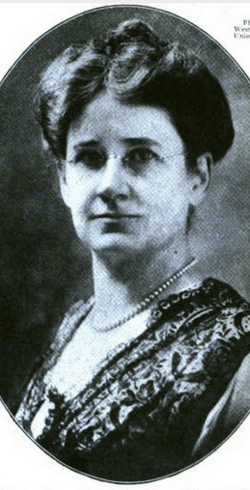
American · Law
Florence King
June 22, 1870 – June 20, 1924
Early life and background
Florence King was born on 22 June 1870 in Hudson, Iowa, a small rural community in the American Midwest.[2] Little detailed documentation survives about her parents, household circumstances, or early schooling, a common archival gap for nineteenth-century women who did not initially come from elite or politically prominent families. What can be reconstructed from later biographical notes is that she grew up at a time when formal opportunities for girls in higher education and the law were limited, especially outside major urban centers.
Despite these structural barriers, King obtained an education that was unusually extensive for a woman of her generation. She attended Mount Morris College, a small liberal arts institution in Illinois with religious roots, and completed a B.A. degree in 1891.[2] Access to this level of higher education placed her within a minority of American women who could realistically contemplate professional careers.
After her undergraduate studies, King moved further into fields that were not only male-dominated but largely hostile to female entrants. She enrolled at Chicago-Kent College of Law, one of the law schools in Chicago that, in the late nineteenth century, was beginning slowly to admit women.[2] She completed her law degree in 1895, joining a tiny cohort of women lawyers in the United States. Legal education at the time emphasized procedural law and commercial practice, and there is evidence that King’s interests were already drawn toward the increasingly important field of patents and industrial technology.
Alongside legal training, King also pursued technical expertise. She later studied at the Armour Institute of Technology in Chicago (a predecessor to the Illinois Institute of Technology) for approximately three years, focusing on engineering subjects related to machine design and construction.[2] This combination of legal and technical education was rare for any lawyer at the time and almost unheard of for a woman, positioning her to work at the intersection of engineering and intellectual property law.
Career beginnings and development
After receiving her law degree in 1895, King embarked on a professional path that joined legal practice with technical consulting. Around the mid-1890s, she began working in Chicago, a rapidly industrializing metropolis and a center of manufacturing, railroads, and mechanical innovation. The city’s industrial climate created demand for attorneys who could navigate the complexities of patent law, infringement disputes, and the protection of mechanical inventions.
In 1897, according to contemporaneous biographical accounts and later summaries, King became the first woman registered to practice before the U.S. Patent Office.[2] Registration required passing a rigorous examination and demonstrating adequate knowledge of patent law and related technical fields. This achievement distinguished her from other women lawyers by giving her direct access to the national system that governed intellectual property in the United States. While modern scholarship has suggested that another woman, Edith Julia Griswold, preceded her as the first woman patent lawyer, King’s registration before the Patent Office remains a notable milestone in women’s participation in patent practice.
King built her career in Chicago as a patent attorney and consulting engineer specializing in machine design and construction.[2] Her work would have included drafting patent applications, conducting prior art searches, advising inventors and firms on the patentability of their devices, and representing clients in infringement disputes. At a time when manufacturing technology was transforming American industry, attorneys with technical fluency were indispensable. King’s studies at Armour Institute equipped her to communicate with engineers and machinists, strengthening her credibility with clients and courts.
Over the next decades, King’s practice appears to have focused on mechanical and industrial patents, rather than on purely chemical or electrical inventions. While surviving records of her individual cases are fragmentary, later tributes and reference works consistently emphasize her dual role as both legal advocate and engineering consultant. This dual identity set her apart from many contemporaries and contributed to her reputation in professional circles as a capable specialist rather than a token female practitioner.
Major works, cases, and accomplishments
King’s most widely cited professional achievements involve a sequence of notable “firsts” that unfolded in the early twentieth century. These milestones are documented in legal histories and modern intellectual property retrospectives, although in some instances only the year, not the precise calendar date, has been preserved in accessible sources.
In 1897, she was recorded as the first woman registered to practice before the U.S. Patent Office.[2] This registration furnished her with formal standing to prosecute patent applications and appear in proceedings before the Office on behalf of inventors. It also signaled a grudging institutional acceptance of women in a federal technical-legal bureaucracy that had previously been the preserve of men. For women considering a career in patent law, King’s registration demonstrated that it was possible not only to become a lawyer but to gain admission to one of the profession’s most specialized arenas.
By the early 1920s, King’s expertise had carried her to the highest judicial level in the United States. In 1922, she became widely recognized as the first woman to argue a patent case before the U.S. Supreme Court.[2] Contemporary documentation notes her appearance but does not readily supply the exact date of oral argument. The Supreme Court at that time had only begun to admit women to its bar a few decades earlier, and female advocates were still a rarity. King’s argument before the Court demanded not only technical mastery of the underlying patent issues but also the rhetorical and procedural sophistication required in the nation’s highest tribunal.
The following year, in 1923, King achieved another milestone when she is credited with becoming the first woman to win a case before the U.S. Supreme Court in the patent matter of Crown v. Nye.[2] The case involved questions of patent validity and infringement—typical of the Court’s patent docket in that era—and her success underscored that women lawyers could prevail in complex, high-stakes litigation. Intellectual property specialists and women’s legal history scholars often point to this victory as evidence that women could not only appear in elite legal venues but could shape substantive doctrine in technical fields.
Beyond these headline achievements, King maintained a long-running practice that blended legal counseling with engineering work. She is described as having worked as a consulting engineer in machine design and construction, drawing on her studies at the Armour Institute of Technology.[2] This consulting role likely involved collaborating with inventors and industrial firms to optimize designs for patent protection, troubleshoot issues raised in litigation, and adapt machinery to emerging industrial standards. Although individual machines and patents associated with her practice are not well documented in surviving public sources, her dual role suggests a career embedded in the technical infrastructure of early twentieth-century manufacturing.
King’s career unfolded during a period of broader advancement for women lawyers. The late nineteenth and early twentieth centuries saw gradual increases in the number of women admitted to state bars, law schools, and public offices. King’s placement in the specialized patent bar and her work before the Supreme Court represent a particularly technical and elite dimension of this phenomenon. As legal historians have noted, the obstacles were not only formal—such as admission rules—but also informal, including social skepticism, client prejudice, and the lack of female mentors in the profession.
Awards, honors, and contemporary recognition
Unlike some later women lawyers who received formal honors or bar association awards, King appears not to have been widely decorated during her lifetime. Early twentieth-century legal culture was slow to celebrate women’s contributions, and much of the recognition that King has received comes from retrospective accounts.
Modern legal and intellectual property organizations have highlighted King as a historical figure. For instance, contemporary IP law firms and professional groups profiling notable women in intellectual property have repeatedly cited her as an early woman patent attorney and as the first woman to argue and win Supreme Court patent cases, particularly in connection with Crown v. Nye.[2] Such recognitions are part of a broader effort within the profession to recover and make visible the contributions of women and other underrepresented groups.
These later tributes do not change the historical record of her life, but they reflect a growing awareness of how gender shaped the profession’s development. By foregrounding King’s achievements, modern commentators seek both to honor her and to provide role models for new generations of law students and patent professionals.
Personal life
The surviving record on King’s personal life is fragmentary. Sources indicate that she was also known as Florence Embrey, suggesting that she married and took her spouse’s surname, though details about her husband, marriage date, or family life remain sparse.[2] The absence of extensive personal documentation is not unusual for professional women of her era, whose private lives often went unrecorded unless they intersected directly with public roles or scandals.
King lived for much of her professional career in Chicago, specifically in the Edison Park neighborhood, which during the early twentieth century was a developing residential area on the city’s northwest side.[2] The neighborhood’s growth reflected the broader expansion of Chicago as a hub of transportation, industry, and middle-class professional life. For King, residing there meant proximity to both downtown legal institutions and the industrial districts where many clients would have been based.
Her choice to pursue advanced studies and an intensive professional practice suggests a life structured primarily around work rather than public social roles such as club leadership or suffrage activism, although it is possible she participated in professional or civic organizations related to law and engineering. The lack of explicit records, however, prevents firm conclusions. What can be said is that King’s personal and professional identities were shaped by her navigation of predominantly male worlds—courtrooms, engineering classrooms, and patent offices—in which she had few female peers.
Legacy and historical impact
King’s legacy lies chiefly in her role as a pioneering woman in patent law and technical legal practice. Her registration to practice before the U.S. Patent Office in 1897, her argument of a patent case before the Supreme Court in 1922, and her victory in Crown v. Nye in 1923 collectively mark her as one of the earliest women to operate at the highest levels of American intellectual property law.[2] These milestones have made her a recurring figure in surveys of women’s legal history and in accounts of women’s contributions to technology-related professions.
At the same time, King’s story illustrates the complexities of historical “firsts.” Some scholars and institutional histories have credited her as the first female patent attorney in America, while research at institutions such as Bowdoin College and in specialized legal histories has suggested that Edith Julia Griswold more accurately holds that distinction. The existence of this debate underscores how archival gaps, limited documentation of women’s careers, and changing definitions of professional categories can complicate seemingly straightforward claims about precedence.
Regardless of the precise ordering of “firsts,” King’s presence in high-profile legal venues helped normalize women’s participation in the patent bar. For later women patent attorneys and agents, her career provided both a precedent and a narrative of possibility, demonstrating that technical law was not exclusively a male domain. Her work as a consulting engineer also points to the potential for interdisciplinary careers that cross the boundaries between engineering and law, a model that has become increasingly common in modern intellectual property practice.
King’s significance extends beyond individual achievements. She offers historians a window into how women navigated the institutional structure of the early twentieth-century legal profession: seeking education in newly accessible law schools, leveraging technical training to carve out niches in specialized practice, and confronting the tacit biases of clients, colleagues, and courts. The relative scarcity of personal and professional documentation in her case is itself a reminder of how much of women’s professional history remains to be fully reconstructed.
Later life and death
In the final years of her life, King continued her work in Chicago, maintaining her legal and consulting practice while dealing with declining health. She lived in the Edison Park neighborhood, which by the 1920s was experiencing suburban-style development as part of Chicago’s outward expansion.[2] The city remained a major center of industry and innovation, ensuring a continued flow of patent-related work.
King died of breast cancer at her home in Edison Park on 20 June 1924, at the age of fifty-three.[2] Accounts note that she had been ill for some time, though precise details of her illness and medical treatment are not widely documented. Her death came only a few years after her Supreme Court advocacy, suggesting that her most visible professional achievements occurred near the end of her life.
After her death, King did not immediately receive the level of commemoration granted to some male contemporaries in the law. Over time, however, the growth of women’s history as a scholarly field and increased attention to the history of intellectual property have brought her back into view. Modern profiles of women in IP law often include her among early trailblazers, citing her Supreme Court work and Patent Office registration as landmarks.[2]
Although much about King’s life remains under-documented, the available record supports her inclusion in any serious account of women’s early contributions to American patent law. Her story captures both the tangible breakthroughs and the persistent invisibility that characterized the experiences of many professional women in the late nineteenth and early twentieth centuries.
Dated achievements
5 indexed.
- Jun221870Law
Birth of Florence King
Florence King was born in Hudson, Iowa, on June 22, 1870.
View details Florence King (patent attorney) - Wikipedia - Jan011897Law
First woman registered to practice before the U.S. Patent Office
King became the first woman registered to practice before the U.S. Patent Office, breaking a major professional barrier.