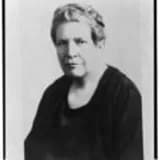
Congress established the U.S. Children's Bureau, the first federal agency for children's welfare, with Kelley as key strategist.
On April 9, 1912, Congress established the United States Children's Bureau, the first federal agency in American history dedicated exclusively to investigating and improving the welfare of children.
Florence Kelley had been a leading strategist in the decade-long campaign for the Bureau, working alongside Lillian Wald and other settlement house reformers to convince Congress that child welfare, infant mortality, and child labor were matters of national concern requiring federal data collection and advocacy. Kelley's testimony and lobbying emphasized that without reliable federal statistics, states could not effectively legislate against child labor or improve maternal and infant health outcomes.
The Bureau's first chief, Julia Lathrop, was herself a former Hull-House resident and close colleague of Kelley's, reflecting the tightly knit network of women reformers who shaped early twentieth-century American social policy.
The Children's Bureau became the institutional foundation for subsequent federal child welfare initiatives, including the Sheppard-Towner Act of 1921 and later New Deal-era programs under the Social Security Act. Its creation represented a major expansion of the federal government's role in social welfare, driven substantially by women reformers who, though not yet able to vote in federal elections, exercised significant policy influence through organizations like the National Consumers League.