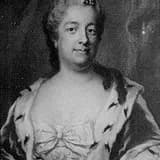
By 1751 she was reclassified as an honorary, rather than full, member of the Royal Swedish Academy of Sciences.
In 1751, by which time she had already attracted attention for her potato experiments, Eva Ekeblad was reclassified from a full to an honorary member of the Royal Swedish Academy of Sciences, a change reflected here under the placeholder date 1 January 1751.[2][14] The Academy’s statutes and practices did not, in the long term, accommodate female full members, and her status was adjusted accordingly.
This reclassification did not annul her trailblazing election in 1748, but it reveals the institutional limits of Enlightenment inclusiveness. Ekeblad’s work continued to be respected, yet the Academy signaled that formal, ongoing participation and voting rights remained a male prerogative.[2][5] In later summaries she is often described explicitly as an “honorary member,” a label that both acknowledges her contribution and underlines her marginalization.
Despite the downgrade in status, Ekeblad maintained contact with the Academy, submitting reports on her bleaching and cosmetic experiments in the early 1750s.[hemtrevligt.se via editor’s brief; 2] Her experience illustrates how women could be celebrated as exceptions while remaining structurally excluded from full professional standing.
Note: Sources provide only the year of this change, not an exact day; the date here is therefore marked as approximate and serves only as a chronological anchor.