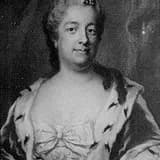
Notice dated 4 April 1752 records Ekeblad’s findings on bleaching cotton yarn, documenting her applied chemical work.
On 4 April 1752, a notice in the records of the Royal Swedish Academy of Sciences documented Eva Ekeblad’s findings on the bleaching of cotton yarn.[hemtrevligt.se via editor’s brief] This dated reference is one of the clearest archival traces of her later experimental work in applied chemistry.
The notice indicates that Ekeblad’s investigations into soap‑based bleaching had progressed to practical recommendations on treating cotton yarn, a material of growing importance in Sweden’s evolving textile economy. By sharing her results with the Academy, she contributed to improving techniques for preparing yarn for weaving and finishing, making the process more efficient and potentially less damaging to the fibers.
This event shows that, several years after her famous potato experiments, Ekeblad remained engaged in systematic experimentation and communication with the scientific community. It also illustrates how a noblewoman’s domestic responsibilities—overseeing clothing and household linens for large estates—could serve as a laboratory for innovation in chemistry and materials processing.
In the wider context of 18th‑century science, the 4 April 1752 notice underscores the often‑overlooked role of women’s work in advancing practical technologies that underpinned both everyday life and early industrialization.