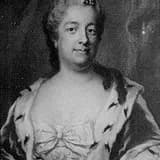
Birth of Eva Ekeblad (née De la Gardie) in Stockholm, Sweden, to a prominent noble family.
On 10 July 1724, Eva De la Gardie, later known as Eva Ekeblad, was born in Stockholm, Sweden, into one of the kingdom’s most powerful aristocratic families. Her birth placed her at the intersection of noble privilege and the emerging world of Enlightenment science.
Her father, Magnus Julius De la Gardie, was a privy councillor and state marshal, while her mother, Hedvig Catharina Lillie, came from a prominent noble lineage.[5][6] This environment provided Eva with access to education, estate management, and intellectual circles that were largely closed to most women of her era.
Although her birth itself was not seen as historically remarkable at the time, it proved consequential for Swedish science and agriculture. As an adult, Ekeblad used her position as a landowning countess to conduct experiments in agronomy and chemistry, particularly with potatoes and textiles.[1][2][5] Her later work on converting potatoes into flour and alcohol helped reduce pressure on grain supplies and contributed to greater food security in Sweden.[2][12][17]
In an age when women were largely excluded from formal scientific institutions, Ekeblad’s life trajectory—from noble daughter to experimental agronomist and the first woman elected to the Royal Swedish Academy of Sciences—illustrates how birth into a politically connected household could both enable and limit a woman’s scientific agency in 18th‑century Europe.[1][5][10]