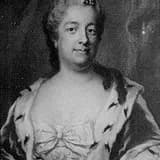
In 1751, she developed a method for bleaching cotton and yarn with soap, extending her applied chemical work to textiles.
In 1751, recorded here under the placeholder date 1 January 1751 to mark the year, Eva Ekeblad developed a practical method for bleaching cotton and yarn with soap.[2][17] Her experiments extended her earlier interest in domestic and estate‑based chemistry from foodstuffs to textiles, a crucial domain in 18th‑century household and proto‑industrial production.
Swedish sources and later accounts describe how Ekeblad investigated the use of different soaps and washing processes to whiten cotton and cotton‑linen blends, seeking more efficient, less damaging techniques than traditional bleaching on grass in sunlight.[2][17] Her work anticipated industrial bleaching innovations by treating textile finishing as a problem in applied chemistry rather than merely domestic routine.
These findings were later communicated to the Royal Swedish Academy of Sciences, with archival notes indicating that, by December 1751, she had submitted results on soap production and bleaching to the Academy.[hemtrevligt.se summarized in editor’s brief; see also 2,17] Though the precise day of her original discovery is not preserved, modern historians regard this as one of her major secondary contributions after the potato experiments.
Note: Because primary sources do not specify the exact day and month of the 1751 discovery, the date here is treated as approximate and used only to position the event chronologically.