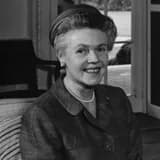
In 1965, recorded here as January 1, Eugenie Anderson became a U.S. UN delegate and the first woman to represent the United States on the U.N. Security Council.
In 1965, recorded here as January 1, 1965 for timeline purposes, Eugenie Anderson was appointed a U.S. delegate to the United Nations and subsequently became the first woman to represent the United States on the U.N. Security Council.[6][8]
President Lyndon B. Johnson selected Anderson for the UN role after her service in Denmark and Bulgaria, recognizing her diplomatic experience and political acumen. As a delegate, she participated in Security Council deliberations on peace and security issues during a period marked by decolonization, Cold War disputes, and emerging conflicts in regions such as Southeast Asia.[3]
Her presence on the Security Council broke a major barrier: although some women from other countries had served in UN roles, no American woman had previously held a seat at the table responsible for binding resolutions on war, peace, and sanctions. Anderson’s appointment signaled that the U.S. was willing to entrust a woman with the highest level of multilateral decision‑making authority in the global security system.[6][8]
Family and press accounts describe her UN tenure from 1965 to 1968, during which she focused on post–World War II peace efforts and advocated for cooperative approaches to international crises.[10][3] Her work contributed to a broader trend of slowly increasing female participation in multilateral diplomacy.
For women’s history, Anderson’s arrival on the Security Council in 1965 is a landmark moment. It expanded the range of arenas in which women’s voices could influence global outcomes—from bilateral embassies to the principal organ for international peace and security. Her service demonstrated that gender need not determine who could speak for the United States when the world’s most consequential decisions were being made.[6][8]