← All women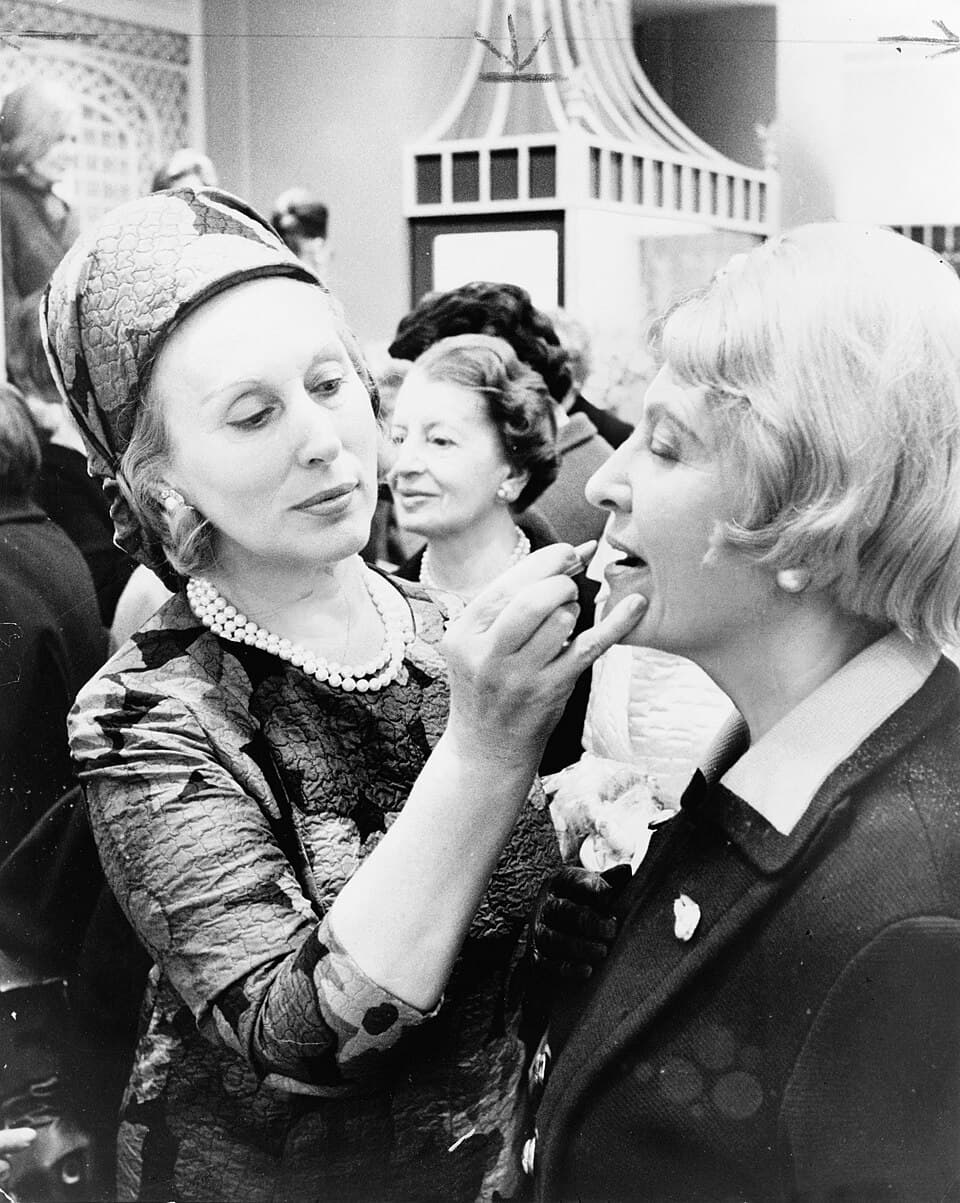
American · Arts
Estee Lauder
July 1, 1906 – April 24, 2004
Early life and background
Estée Lauder was born Josephine Esther Mentzer on July 1, 1906, in Corona, Queens, New York, to parents who had emigrated from Central Europe. Her family background and neighborhood environment were formative influences on the resourcefulness and determination that later defined her career. Biographical sources describe her as the daughter of Hungarian and Czech Jewish immigrants, raised in a working-class household in Queens. The name Estée was a stylized form that helped create the elegant public identity she would later build around her business.
Lauder grew up in an era when women’s professional options were limited, and when entrepreneurship, especially at a high commercial level, was overwhelmingly male-dominated. She was drawn early to sales, presentation, and the persuasive power of appearance. Accounts of her youth emphasize her fascination with beauty culture and her exposure to products and formulas through family and relatives. Those early experiences helped shape an unusually practical understanding of how women might be encouraged to buy cosmetics not as luxury accessories alone, but as daily tools of self-presentation and confidence.
Although she did not build her fortune immediately, the habits that made her famous—personal selling, product demonstration, and careful attention to the customer—were already visible in her early life. She eventually married Joseph H. Lauder in 1930, and the name Estée Lauder became the professional identity under which she would create a global brand.
Career beginnings
Lauder’s business career began long before the formal founding of her company. In the late 1930s and 1940s, she sold skin creams developed by her uncle, a chemist, and her own blended products in beauty salons and hotels, refining the direct-selling and sampling methods that later became trademarks of the brand. She learned that customers responded not just to a product, but to the experience of trying it, hearing it described, and seeing its effect demonstrated on the spot. That insight was central to her later success.
By the 1940s, she had also gained access to department-store counter space, including at Saks Fifth Avenue, an important step in making prestige cosmetics a mainstream fixture of American retail. At a time when high-end beauty brands were still developing their modern form, Lauder used personal relationships and relentless persuasion to carve out visibility for her products. Her approach challenged the era’s assumptions about who could create and control a luxury brand. Instead of waiting for a large corporation to define the market, she built demand herself.
In 1946, she and her husband formally founded Estée Lauder Inc. in New York. The company began with only four products and a tightly controlled distribution strategy focused on salons and specialty stores. This was the first stage of a business that would grow into one of the world’s most important prestige cosmetics companies. Lauder’s genius lay in combining formulation, image, and retail strategy into a single sales philosophy.
Rise of a cosmetics empire
Lauder’s company expanded rapidly because she understood that cosmetics marketing was as much about emotion and ritual as about ingredients. During the 1950s, she became widely associated with in-store beauty demonstrations and with the practice now known as gift with purchase. These innovations were not isolated tricks; they were part of a broader method that made consumers feel personally recognized and rewarded. Her style of selling helped turn cosmetics into a more intimate and aspirational form of retail.
Her most famous breakthrough came in December 1953, when she launched Youth-Dew, a bath oil that could also be used as a perfume. The product became a runaway success and changed the fragrance market by encouraging women to buy scent for themselves. This was an important cultural shift in postwar America, where advertising often framed women’s purchases around domestic roles or male approval. Youth-Dew instead centered female self-purchase and self-expression.
By the 1960s and 1970s, Lauder had expanded the company internationally, opening counters in Europe and Asia and helping globalize prestige cosmetics distribution. She also guided the launch of new brands that broadened the company’s market reach. In June 1964, she launched Aramis, one of the early prestige men’s fragrance and grooming brands in department stores. In September 1968, Clinique debuted under the corporate umbrella as a dermatologist-guided, fragrance-free skincare line, reflecting changing consumer interests in health, safety, and clinically informed beauty.
Lauder’s career was notable not only for successful products but also for the way she helped define the modern multibrand beauty conglomerate. During the 1980s, the company diversified further through acquisitions and launches, strengthening its position as a major international beauty group. Her name became associated not just with a product line, but with an enduring corporate philosophy that linked innovation, aspiration, and family stewardship.
Writing, awards, and public recognition
In November 1973, Lauder published her autobiography, Estée: A Success Story. The book recounted her rise from modest origins to the leadership of a global enterprise and reinforced the lessons she had learned through experience: sell directly, present beautifully, and never underestimate the importance of the customer’s emotional response. The autobiography also allowed her to shape the public understanding of her own life and achievements.
Recognition for Lauder’s success continued to grow in the following decades. In 1978, she received the Chevalier of the Legion of Honor from France, a major international acknowledgment of her influence on cosmetics and luxury culture. In 1988, she was inducted into the Junior Achievement U.S. Business Hall of Fame, honoring her as a pioneering woman entrepreneur. In 1998, the United States Postal Service included her in its Legends of American Business stamp series, signaling her status as a national business icon. In 2001, she received the Goldman Sachs and National Urban League Entrepreneur of the Year recognition cited in biographical summaries, reflecting her enduring reputation as one of America’s most celebrated self-made businesswomen.
These honors mattered because they placed a woman in a field long dominated by men among the most respected names in American commerce. Lauder’s recognition was not simply about wealth; it was about changing what women could be seen to build, own, and lead at the highest levels of business.
Personal life
Lauder married Joseph H. Lauder on January 15, 1930. The marriage was both personal and entrepreneurial, and the Lauder family name became inseparable from the cosmetics business she created. They had two sons, Leonard and Ronald, who later became significant figures in the company and the broader family business network. The company’s evolution into a family-controlled enterprise was a notable aspect of its longevity.
Lauder’s personal identity and public brand were tightly linked. She cultivated an image of elegance and polish, but she was also known for pragmatism, discipline, and hands-on involvement in marketing decisions. She was not merely a symbolic founder; she remained a force in product strategy and brand identity for decades. In later life, she was honored as honorary chairman while her descendants continued to lead the company.
Later life and death
In 1995, Lauder stepped down from active management and became honorary chairman of the Estée Lauder Companies, a transition that reflected both the maturity of the corporation and the success of its succession planning. The company had grown well beyond its beginnings, but it remained rooted in the founder’s vision of luxury beauty shaped by direct engagement with the consumer.
Lauder died on April 24, 2004, at her home in Manhattan of cardiopulmonary arrest. She was 97 years old. Her death drew widespread attention because it marked the passing of a figure whose influence reached across cosmetics, retail, advertising, and the broader history of women in business.
Legacy
Estée Lauder’s legacy is central to the history of 20th-century consumer culture. She helped define the prestige cosmetics industry in the United States and abroad, showing that beauty products could be sold through demonstration, personalization, and aspiration rather than through mass marketing alone. Her innovations in sampling and gift-with-purchase promotions became industry standards. Her insistence on elegant presentation and direct customer contact transformed how beauty brands spoke to consumers.
Her career also had lasting significance for women’s economic history. Lauder built a global company at a time when women rarely occupied the upper ranks of corporate leadership. She did so not by following existing models, but by creating new ones. She proved that a woman entrepreneur could shape a major international market and leave behind a multigenerational corporate legacy.
Through the Estée Lauder Companies, her brand continues to influence beauty retail, product development, and marketing strategy. More broadly, her life remains a case study in persistence, self-invention, and the power of understanding consumer desire. She transformed a personal fascination with beauty into a global enterprise and became one of the most enduring names in American business history.
Dated achievements
10 indexed.
- Jul011906Arts
Birth of Estée Lauder
Estée Lauder was born Josephine Esther Mentzer on July 1, 1906, in Queens, New York.
View details Encyclopedia Britannica: Estée Lauder - Jan151930Arts
Marriage to Joseph H. Lauder
Josephine Esther Mentzer married Joseph H. Lauder in New York on January 15, 1930.
View details