← All women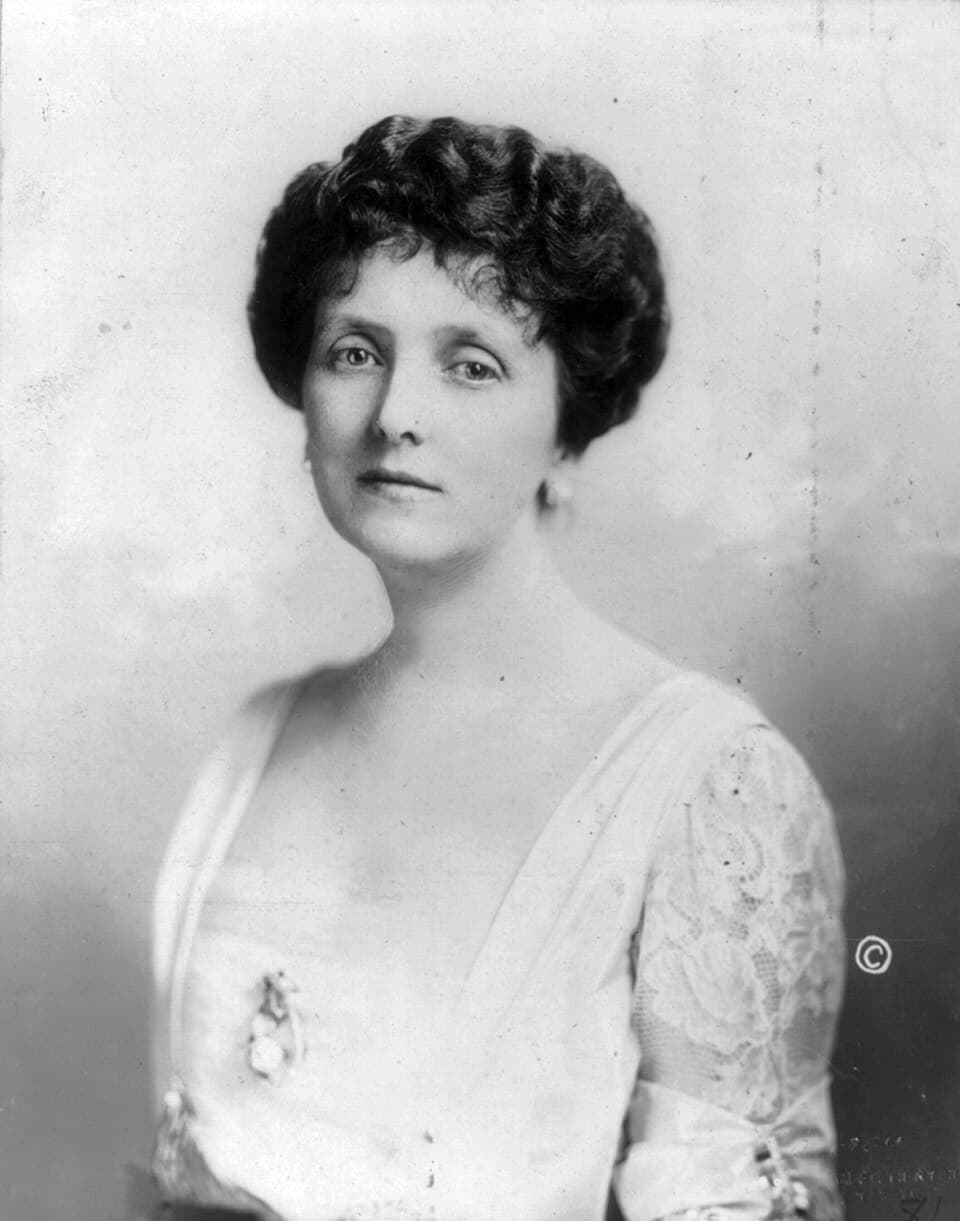
American · Literature
Emily Post
October 3, 1873 – September 25, 1960
Early Life and Background
Emily Post (née Emily Price) was born into privilege in Baltimore, Maryland, in the early 1870s. The most precise scholarly sources give her birthday as October 3, 1873, while a substantial number of reference works, including Britannica and many biographical summaries, list October 27, 1872; contemporaneous records were inconsistent, and her exact birth year remains disputed.[1][9] She was the only child of Bruce Price, a prominent architect known for designing resorts and planned communities, and Josephine (Lee) Price, an investor from a well-connected family.[1][4][9]
Bruce Price’s work on places such as Tuxedo Park in New York and Bar Harbor in Maine immersed Emily in carefully curated environments for America’s Gilded Age elite.[4][18] She spent summers in these communities, absorbing the elaborate social rituals of the upper class. At home, she was educated by governesses and later attended private schools in Baltimore and New York, followed by a finishing school, reflecting expectations that upper-class women cultivate poise rather than pursue formal academic or professional training.[4][18][19]
From an early age, Emily was taught that "well-bred" women should not work for pay, a dictum that shaped her later self-understanding as a "pioneering American career woman" when she eventually earned a living through writing.[14][18] Her upbringing gave her intimate knowledge of the codes of conduct governing elite social life—calling cards, formal dinners, country-house weekends, and the subtleties of introductions and precedence—which would become the raw material for her later work on etiquette.
Debutante Years and Marriage
As a young woman, Emily entered New York society as a debutante. She appeared at balls and social events that brought together the city’s wealthiest families. At one such seasonal ball she met Edwin Main Post, a businessman and investor from another socially prominent family.[4][19] Their courtship culminated in marriage on June 1, 1892, in New York.[4]
After their marriage, the couple lived in fashionable surroundings, including a home on Washington Square, and later spent time in seasonal resorts frequented by the elite.[4] Emily’s role in this period was that of a society hostess and wife, presiding over dinners and social events that required meticulous attention to protocol. The Posts had two sons, Edwin M. Post Jr. and Bruce Price Post, both of whom would later attend boarding schools, freeing Emily’s time for writing.[4][17]
Despite their apparent social success, the marriage deteriorated due to Edwin’s infidelity and involvement in public scandal. According to biographical accounts, he became entangled in affairs and legal difficulties that drew unwelcome attention.[4][17] The couple divorced in 1905, a serious step in an era when divorce could severely damage a woman’s social standing.[4][9] Emily did not remarry, a choice that defied contemporary expectations for a divorced woman of her class. Instead, she began supporting herself and her sons through professional writing.
Transition to Writing and Early Career
Emily Post’s literary career took shape in the first decade of the twentieth century. Around the time of her divorce, she began writing high-society romances and stories that were serialized in popular magazines such as Vanity Fair, Collier’s, and McCall’s.[14][4] These pieces drew directly on her experience of elite life, from the marriage market to the subtle politics of social gatherings.
Her first novel, Flight of a Moth, was published in 1897, signaling her transition from purely social figure to professional author.[11] She continued to produce fiction, including Woven in the Tapestry in 1904 and The Title Market in 1910, the latter a satirical novel about the marriage market and class structures in New York society.[11] These works showcased her observational gifts and her capacity to critique the world she inhabited.
Post’s writing was not confined to fiction. She increasingly turned to essays and travel narratives. A notable episode in her life occurred in 1915, when she undertook a long-distance automobile journey from New York to the Panama-Pacific International Exposition in San Francisco with her son and companions.[3] At a time when cross-country motoring was still arduous and relatively rare, especially for women, she confronted poor roads, mechanical breakdowns, and rough accommodations.
Beginning on June 19, 1915, she documented this experience in a six-part series, “By Motor to the Fair”, published in Collier’s Weekly.[3] The series combined practical travel details with keen social observation, treating road travel as a window onto American life beyond elite enclaves. In 1916, she expanded these articles into a book-length travel narrative, also titled By Motor to the Fair.[11] This work marked her as a modern observer willing to venture far from the drawing rooms of New York to investigate the changing nation.
The Breakthrough: Etiquette (1922)
Emily Post’s defining achievement came with the publication of Etiquette in Society, in Business, in Politics and at Home on October 2, 1922.[18] Issued by Funk & Wagnalls, the book was a comprehensive guide to social behavior that quickly topped nonfiction bestseller lists.[18][14] It provided detailed instructions on a remarkable range of topics: introductions, calling cards, wedding management, dinner parties, letters, travel, business dealings, and public behavior.
Crucially, Post framed etiquette not as arbitrary rules imposed by class, but as the practical expression of respect and consideration for others. She insisted that true good manners were grounded in integrity and kindness rather than mere form. Her advice allowed readers to adapt forms to circumstances, recognizing the diversity of social situations in an increasingly urban and industrial society.
Within days of publication, Etiquette attracted serious critical attention. On October 5, 1922, The New York Times ran a major review that highlighted the book’s breadth and significance, treating it as a serious commentary on social behavior rather than trivial domestic writing.[4] The review helped propel the book to national prominence and contributed to making "according to Emily Post" a familiar phrase in American speech.[18]
The book’s success represented a turning point in Emily Post’s life and in American culture. It transformed her from novelist and society commentator into the country’s foremost authority on etiquette. It also marked her transition into a fully autonomous professional role, defying earlier expectations that a woman of her class should not earn income. In later reflections, the Emily Post Institute described her as a "pioneering American career woman" whose work, syndicated columns, and radio programs made her a figure of national importance.[18][14]
Further Books and Thematic Expansion
Following the success of Etiquette, Emily Post expanded her writing into specialized topics. In 1927, she published How to Behave—Though a Debutante, a humorous etiquette book pitched to younger women. It blended practical advice with satire, helping debutantes navigate both the rituals and absurdities of society life.[11]
In 1928, she issued Children Are People, reflecting her belief that children deserve respect as individuals and can be guided toward good manners through understanding rather than harsh discipline.[11] This work aligned with broader early twentieth-century movements toward child-centered education and psychology.
By 1930, she had published Parties and Payoffs, extending her attention to social events and the transactional aspects of hosting and hospitality.[11] Across these books, Post increasingly adapted her core principles to specific audiences: young women, parents, and hosts facing complex social obligations.
She continued revising Etiquette across the decades. During World War II, she updated the book and associated materials to address wartime conditions, including changes in travel, rationing, and gender roles in workplaces and military service.[6] These revisions showed her commitment to keeping etiquette responsive to social realities rather than frozen in prewar forms.
Radio, Newspapers, and Media Authority
Emily Post’s influence grew in tandem with the expansion of mass media. On October 25, 1931, she began hosting a weekly program on CBS Radio, providing etiquette advice to a national audience.[18] Radio brought her voice into living rooms across the country, allowing listeners to hear her tone and pacing as she addressed questions about visiting customs, telephone use, and public behavior.
During the 1930s, she also served as an expert on etiquette and home decoration through radio appearances and newspaper features.[9] Her commentary on domestic interiors complemented her views on social interaction, suggesting that space and manners were interconnected.
On November 3, 1939, Post began a syndicated newspaper column devoted to etiquette.[18] Syndication meant that her advice appeared in local papers across the United States, reaching readers far removed from the metropolitan centers that dominated her early life. The column invited questions from readers and responded to everyday dilemmas, embedding etiquette in the routine media consumption of Americans at the brink of World War II.
Her media presence continued after the war. On March 3, 1946, she launched an etiquette radio program sponsored by Bell Telephone, focusing particularly on telephone manners and the etiquette of new communication technologies.[18] As telephones became ubiquitous in homes and offices, Post addressed questions about when and how to call, how long to talk, and how to avoid intruding on others, framing technological etiquette as an extension of respect and consideration.
The Emily Post Institute and Later Recognition
In 1946, the year of the Bell Telephone program, Emily Post founded the Emily Post Institute for the Study of Gracious Living (often referred to simply as the Emily Post Institute).[5][9] The organization was designed to continue and systematize her work on manners, home life, and social interaction. The Institute coordinated publications, media appearances, and educational efforts, and eventually became the vehicle through which her descendants would carry forward the "Emily Post" approach to etiquette.
By this time, Post was widely regarded as America’s foremost authority on etiquette.[5] Her name was synonymous with guidance on social conduct; news articles and advertisements referenced her as the ultimate standard. The Institute’s later timeline emphasizes that upon the publication of Etiquette, the phrase "according to Emily Post" entered the language as a way of invoking definitive rules on manners.[18]
While she did not receive major literary prizes in the conventional sense, her honors took the form of cultural recognition: newspaper profiles, magazine pieces, and references in political and social commentary that treated her as a national oracle on civility. In 1937, the U.S. Post Office issued a three-cent stamp commemorating the Panama-Pacific Exposition, an event she had famously chronicled; later, the National Postal Museum’s "Women on Stamps" exhibition highlighted her as an important figure in American etiquette, though she did not have a dedicated stamp of her own.[5]
Personal Life and Relationships
Throughout her career, Emily Post’s personal life remained relatively private. After her divorce from Edwin Main Post in 1905, she did not remarry.[4][9] She focused her attention on raising her two sons and on building a career that could support them. As they grew older and left for boarding schools, she gained more time to write, travel, and observe social life in different settings.[4]
Post cultivated a persona that combined warmth with firm standards. Accounts from friends, family, and biographers describe her as humorous and pragmatic, willing to recognize the absurdity of some traditional rituals while still valuing the underlying principles of kindness and order.[10][15] She enjoyed travel and maintained strong ties to the places of her youth, including Tuxedo Park and Bar Harbor, where she had learned many of the social customs she later dissected.
Her family remained integral to the continuation of her work. Descendants, including Elizabeth Post and later Peggy Post, became authors and spokespersons for the Emily Post Institute, revising and updating Etiquette for new generations.[2] These successors helped ensure that Emily Post’s personal legacy persisted beyond her own lifetime, transforming "Emily Post" into a multigenerational brand associated with civility.
Legacy and Historical Impact
Emily Post’s historical significance lies less in any single "first" than in the sustained influence of her ideas on American social life. Her 1922 Etiquette did more than codify manners; it democratized etiquette by translating upper-class practices into a coherent framework accessible to middle-class readers navigating modernity.[18][19] She insisted that the essence of good manners was consideration for others, a principle adaptable to diverse social contexts.
Her work also contributed to the evolution of the advice industry. Decades before the rise of television talk shows and online advice columns, Post used books, radio, and newspapers to create a public conversation about how people should treat one another. Her formats—Q&A columns, themed chapters, radio segments—anticipated later models for relationship advice, workplace guidance, and ethical commentary.
For women’s history, Emily Post stands out as a figure who transformed expectations about upper-class women’s roles. Raised to believe that "well-bred" women should not work, she nonetheless built a professional life that depended on her expertise and authorship.[14][18] Her success as a writer, columnist, and broadcaster paved the way for later female media personalities who claimed authority in domains related to home life, relationships, and social interaction.
Post’s ideas also proved resilient. Subsequent editions of Etiquette adapted her principles to new circumstances: automobiles, telephones, wartime conditions, changing gender roles, and, later, civil rights and workplace diversity. Her descendants and the Emily Post Institute have continued to update her guidance, applying core values of respect and consideration to email, social media, and globalized workplaces.[18][5]
Historians and cultural critics often note that Emily Post’s writing offers a window into the anxieties of twentieth-century America: fears of social missteps, desires for belonging, and the tension between individual expression and communal norms.[19][5] In this sense, her work is as important for what it reveals about society as for the rules it prescribes.
Later Life and Death
In her later years, Emily Post continued to write, revise, and advise. She remained active in the Emily Post Institute and in media work through the 1940s, even as younger collaborators and family members increasingly shared the stage. She saw the United States move from the Jazz Age through the Depression, World War II, and into the early Cold War, adapting her advice to each period’s distinctive challenges.
Emily Post died on September 25, 1960, in New York City, at the age of 87.[1][2][9] At the time of her death, her name had become a synonym for etiquette itself. Obituaries and retrospectives emphasized her role in shaping American manners and noted that "according to Emily Post" remained a widely recognized phrase.
After her death, the Emily Post Institute continued under the leadership of her descendants, who produced new editions of Etiquette and related works, including adaptations for corporate environments and contemporary communication technologies.[18][2] Her influence, thus, extended far beyond her lifetime, as later authors and educators invoked her principles of respect, consideration, and honesty in contexts she could not have foreseen.
Today, Emily Post is remembered as the “queen of etiquette”—a writer and thinker whose work both reflected and shaped American social life in the twentieth century. Her legacy persists not as rigid rules, but as a flexible moral framework for living with others in an ever-changing world.
Dated achievements
9 indexed.
- Oct031873Literature
Birth of Emily Price (Emily Post)
Emily Price (later Emily Post) was born on October 3, 1873, in Baltimore, Maryland.
View details Encyclopedia.com: Emily Price Post - Jun011892Literature
Marriage to Edwin Main Post
Emily Price married Edwin Main Post on June 1, 1892.
View details