← All women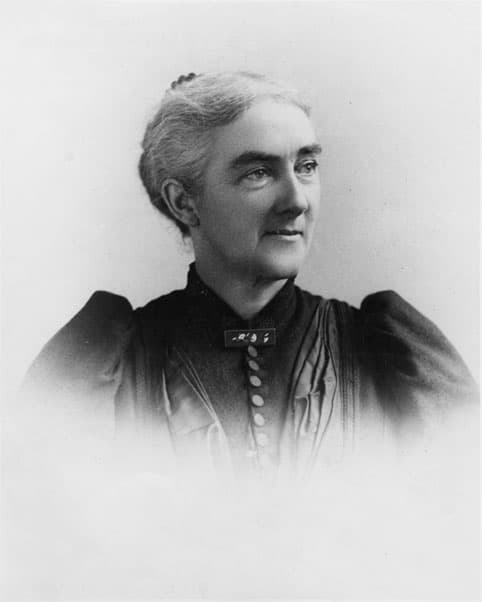
American · Science · Activism
Ellen Swallow Richards
December 3, 1842 – March 30, 1911
Early Life and Background
Ellen Henrietta Swallow Richards was born on December 3, 1842, in Dunstable, Massachusetts, the only child of Peter Swallow, a farmer and mechanic, and Mary (Fanny) Taylor Swallow.[3][4][5][10][13] Her parents valued education for both girls and boys and encouraged Ellen’s curiosity about the natural world, giving her an unusually supportive environment for a girl in mid‑19th‑century rural New England.[5][10]
Formal schooling opportunities were limited, and Ellen was largely home‑schooled during her childhood.[10][11] She assisted with farm work and household duties, experiences that later informed her practical approach to science, sanitation, and domestic management. At about 16 she began more structured study and eventually attended Westford Academy, from which she graduated in 1862.[4][11] Her education there included mathematics and science, subjects rarely emphasized for girls at the time.
After graduation, Ellen worked as a private tutor and did housecleaning and other jobs to earn money.[5][10] During the 1860s she also briefly taught school and studied Latin, Greek, and other subjects to prepare herself for college entrance, despite the fact that most U.S. colleges did not admit women. These years of self‑directed study and wage‑earning were crucial: they allowed her to save the $300 needed for tuition and demonstrated her determination to secure advanced education in science.[5]
Higher Education and Breaking Barriers
On September 20, 1868, Ellen Swallow enrolled at Vassar College in Poughkeepsie, New York, one of the first U.S. institutions founded specifically to provide collegiate education for women.[5][10] Entering as a third‑year student because of her prior study, she chose chemistry as her main subject and quickly impressed her professors with her ability and diligence.[5][10] She completed the usual four‑year course of study in just two years.
On June 29, 1870, she graduated from Vassar with a bachelor’s degree in chemistry, becoming the first American woman to obtain a degree in chemistry.[4][5][10] This credential was unprecedented and provided strong evidence that women could handle the demands of advanced laboratory science, countering prevailing assumptions that science education was unsuitable for women.
Motivated to continue her studies, Ellen applied to the Massachusetts Institute of Technology (MIT), then a relatively young institution focused on engineering and applied science. In the 1870–71 academic year she was admitted as a special student, becoming the first woman in America accepted to any school of science and technology and the first woman student at MIT.[1][2][4][11][14] MIT allowed her to attend without paying tuition, viewing her presence as an experiment rather than a precedent for coeducation.[4][14]
At MIT, Ellen studied chemistry intensively under leading chemists and worked in laboratories that focused on industrial and analytical chemistry.[4][11][14] Initially, some faculty and administrators expressed concern that admitting a woman might damage the Institute’s reputation or lead to demands for broader coeducation. Ellen’s exceptional performance, however, helped assuage these fears and demonstrated that women could meet MIT’s rigorous standards.[4][11][14]
In 1873 she completed the requirements for the Bachelor of Science degree in chemistry at MIT, becoming the first woman graduate of MIT and its first alumna.[2][4][11][14] At nearly the same time, Vassar College awarded her a Master of Arts (M.A.) degree in chemistry, recognizing the depth of her scholarship.[2][14] These dual degrees established her as one of the first professionally trained women chemists in the United States and gave her a powerful platform for subsequent work in science and public health.[2][4][11]
Career Beginnings in Industrial and Analytical Chemistry
After graduating from MIT, Ellen Swallow Richards began working as an industrial and analytical chemist. She collaborated with her future husband, Robert Hallowell Richards, a professor of mining engineering at MIT, and conducted research on ore analysis, particularly nickel ores.[4][5][6] In 1875 she married Robert Richards; the couple had no children but shared scientific and educational interests.[4][13]
One of her early notable contributions was a paper on methods for determining nickel in pyrrhotite, published in 1877.[5][6] This research improved analytical techniques used to evaluate nickel ore deposits and contributed to the growth of the nickel industry in Ontario, Canada.[5] Her work was highly regarded by industrial chemists and mining engineers and helped earn her recognition as a Fellow of the American Association for the Advancement of Science (AAAS), an honor rarely granted to women at the time.[5][13]
Richards also undertook consulting work for mines and metallurgical operations, applying rigorous quantitative methods to practical industrial problems. These experiences deepened her understanding of how scientific analysis could drive economic development and helped shape her later emphasis on efficiency and resource conservation.[6][11]
MIT Faculty Appointment and the Women’s Laboratory
In the mid‑1870s, MIT extended Ellen’s role from student to teacher. Around 1876 she was appointed an instructor in sanitary chemistry, becoming the first female faculty member at MIT.[2][4][11][13] This role allowed her to teach and supervise laboratory work, initially focusing on chemical analysis of air, water, and household materials.
Richards was closely involved in the establishment of the MIT Women’s Laboratory, opened in 1876 to provide instruction for women in chemistry and related subjects.[11][13] Although men at MIT resisted full coeducation, the Women’s Laboratory offered a compromise by creating a separate space where women could receive scientific training. Ellen played a central role in designing the curriculum and teaching courses, helping dozens of women gain laboratory skills in an era when few universities allowed women anywhere near scientific apparatus.[11][13]
Through the Women’s Laboratory, Richards advanced her broader goal of expanding women’s access to scientific and technical education. She believed that women trained in chemistry and sanitation could apply their knowledge to households, schools, and communities, thereby improving public health and domestic efficiency.[11][13] Financial difficulties eventually led MIT to close the Women’s Laboratory, but its existence demonstrated both the demand for women’s scientific education and Ellen’s effectiveness as a teacher and advocate.
Pioneering Sanitary Engineering and Environmental Chemistry
Ellen Swallow Richards is best known for pioneering the field of sanitary engineering and helping to lay the foundations of environmental chemistry.[1][3][11] In the 1880s she began working closely with the Massachusetts State Board of Health, applying chemical analysis to questions of water quality, sewage disposal, and pollution.
In 1884 she became an instructor at the newly founded laboratory of sanitary chemistry associated with the Lawrence Experiment Station, widely regarded as the first sanitary engineering laboratory in the United States.[1][4][11] There, Richards and colleagues conducted systematic studies of drinking water, wastewater, and river pollution. They used chemical and bacteriological tests to evaluate water supplies and to develop effective sewage treatment processes, linking laboratory results to practical recommendations for municipalities.[1][11]
Richards led an extensive water‑quality survey of Massachusetts, analyzing thousands of samples from rivers, lakes, and wells. In 1890 she produced the famous “Normal Chlorine Map”, which showed natural background levels of chlorine in state waters and identified areas where elevated chlorine indicated sewage contamination.[1][7][11][15] This map and the associated studies provided the scientific basis for the first state water‑quality standards in the United States, guiding regulations on sewage disposal and protection of drinking water.
Her work at Lawrence and with the Massachusetts Board of Health significantly influenced the development of modern public health infrastructure. She advocated for regular monitoring of water supplies, the construction of sewage treatment plants, and the integration of scientific findings into policy. These efforts helped Massachusetts establish some of the earliest and most advanced environmental health practices in the country.[1][3][11]
Richards is often credited as a founder of ecology and environmental hygiene because she emphasized the interconnectedness of water, air, food, and human health.[7][10] She saw the environment not as a passive backdrop but as a dynamic system subject to human influence, and she argued that scientific understanding of these systems was essential for effective public health and resource management.[1][3][11]
Domestic Science, Nutrition, and Home Economics
Parallel to her environmental work, Ellen Swallow Richards made major contributions to domestic science, nutrition, and the emerging field of home economics. She believed that scientific principles should be applied to the home in order to improve health, efficiency, and happiness.[3][4][11]
In 1882 she published The Chemistry of Cooking and Cleaning, a book designed to teach women how to use chemical knowledge to manage kitchens and households more effectively.[11][13] The book covered topics such as fuel efficiency, proper cleaning agents, food preparation, and basic sanitary practices. It was intended both as a textbook and as a practical manual for women who might not have access to formal scientific training.
Her 1885 book Food Materials and Their Adulterations examined the composition of common foods and documented instances of contamination and fraud in the food supply.[11] The work was widely praised and became an important factor in the passage of the first Pure Food and Drug Act in Massachusetts, strengthening state oversight of food quality and safety.[11] Richards argued that consumers needed reliable information and that government had a responsibility to protect the public from harmful or deceptive practices.
In 1890 she helped establish the New England Kitchen in Boston, an experimental public kitchen where scientifically prepared, nutritious meals were sold at low cost to working‑class families.[13] The New England Kitchen served as both a laboratory and a demonstration project for her ideas about nutrition, food safety, and efficient meal preparation. It influenced later public kitchens and school lunch programs.[11][13]
Richards’s work in nutrition and domestic science led her to coin the term "home economics" and to advocate for its recognition as a scientific discipline. She envisioned home economics as an integrated field combining chemistry, biology, economics, and sociology to improve the quality of life in households and communities.[3][4][11]
Educational Activism and the Association of Collegiate Alumnae
Beyond her laboratory and writing, Ellen Swallow Richards was an important activist for women’s education. On January 14, 1882, she co‑founded the Association of Collegiate Alumnae (ACA), later known as the American Association of University Women (AAUW).[5][9] The organization aimed to unite women graduates from different colleges, support their continued intellectual growth, and address social and educational issues affecting women.
Richards and her fellow founders used the ACA as a platform for research and advocacy. They investigated questions such as the impact of higher education on women’s health, discrimination in admissions and employment, and the lack of opportunities for women in science and professional fields.[5][9] Their studies challenged myths that college harmed women’s physical or mental health and documented the positive effects of education on women’s lives.
Through the ACA/AAUW, Richards advanced her belief that women should have full access to scientific education and should be able to apply their training in careers and public service. The organization became one of the most influential groups promoting women’s educational equity in the United States, and its work continues into the present.[5][9]
School Lunch Programs and Public Nutrition
In 1894, Ellen Swallow Richards helped start what is widely regarded as the first school lunch program in the United States, based in Boston.[5][11] Drawing on her experience with the New England Kitchen and her extensive knowledge of nutrition, she worked to design meals that were both affordable and nutritionally adequate for schoolchildren.
The Boston school lunch initiative demonstrated how home economics could function as a form of public health intervention. Richards emphasized that proper nutrition was essential for children’s growth, health, and ability to learn. She advocated for meals that balanced proteins, carbohydrates, and fats, and she insisted on hygienic preparation and serving practices.[5][11]
The success of the program in Boston inspired similar efforts in other cities and contributed to the eventual institutionalization of school lunch programs in public schools across the country.[11] Richards thus played a critical role in establishing a now‑routine aspect of American public education—school meals—as an arena for scientific and social reform.
Founding the Home Economics Movement and Euthenics
By the turn of the 20th century, Ellen Swallow Richards was recognized as the founder of the home economics movement in the United States.[3][4][11] From 1899 to 1907 she participated in and helped organize a series of Lake Placid conferences that brought together educators, scientists, and social reformers to define the scope and aims of home economics.[9][11][13]
These conferences culminated in the formation of the American Home Economics Association (AHEA). On June 23, 1908, Richards was elected its first president, and on June 29, 1909, the association was formally established.[9][11][13] Under her leadership, AHEA promoted home economics curricula in schools and universities, supported research, and fostered professional identity among home economics teachers and practitioners.
Richards’s conceptual framework for home economics was closely tied to her idea of euthenics, which she defined as “the betterment of living conditions through conscious endeavor, for the purpose of securing efficient human beings.”[10] She distinguished euthenics from eugenics, emphasizing environmental and educational improvements rather than genetic manipulation. In her view, better housing, sanitation, nutrition, education, and household management could enhance human efficiency and well‑being across generations.
In 1910 she published Euthenics: The Science of Controllable Environment, which synthesized her lifelong work on environment, health, and domestic life.[10][13] The book argued that scientific understanding of environmental factors—air, water, food, clothing, shelter—should inform public policy and household practice. It became an important text for home economists and social reformers who sought to improve living conditions through education and legislation.
Awards, Honors, and Professional Recognition
Over the course of her career, Ellen Swallow Richards received significant recognition from scientific and educational institutions. In addition to her AAAS fellowship, she became in 1879 the first woman member of the American Institute of Mining and Metallurgical Engineers (AIME), reflecting the impact of her work in industrial chemistry.[5][6][13] Her membership broke gender barriers in a major engineering society and signaled growing, if still limited, acceptance of women in professional technical organizations.
She was also active in other scientific societies and was widely consulted on questions of water quality, sanitation, and nutrition. In 1910, Smith College awarded her an honorary Doctor of Science (Sc.D.) degree, recognizing her contributions to science and education.[14] Numerous contemporary commentators described her as the first professional woman chemist in the United States and a leading scientific polymath.[6][10]
Richards’s books and articles were widely read, and she became a sought‑after lecturer on topics ranging from domestic science to sanitation and the environment. Her ability to translate complex scientific ideas into practical advice for households and communities contributed significantly to her influence.[11][13]
Personal Life
In 1875, Ellen married Robert Hallowell Richards, a prominent mining engineer and MIT professor.[4][13] The couple lived in Boston and Gardiner, Maine, and maintained a marriage characterized by mutual professional respect. Robert supported Ellen’s scientific and educational work, and they collaborated on projects related to mining and metallurgy.[4][6]
The Richardses did not have children, a fact that allowed Ellen to devote considerable time and energy to her research, teaching, writing, and organizational activities.[13] Contemporary accounts describe Ellen as energetic, disciplined, and deeply committed to the application of science for social betterment. She maintained connections with former students and colleagues and was known for her mentorship of younger women entering scientific and educational fields.[11][13]
Legacy and Historical Impact
Ellen Swallow Richards’s legacy spans multiple fields: chemistry, sanitary engineering, environmental science, nutrition, home economics, and women’s education. She is widely regarded as the founder of the home economics movement in the United States and a key figure in the early development of environmental health and ecology.[1][3][7][11]
Her work on water‑quality standards in Massachusetts provided a template for later environmental regulations at both state and national levels.[1][7][11] The "Normal Chlorine Map" and associated studies demonstrated how systematic chemical analysis could inform policy decisions, foreshadowing modern approaches to environmental monitoring and risk assessment.
In the domestic sphere, Richards’s insistence that the home was a site of scientific inquiry and professional expertise helped redefine domestic work. Through her books, the New England Kitchen, school lunch programs, and the American Home Economics Association, she promoted the idea that managing food, sanitation, child care, and household economics required knowledge and skill worthy of academic study.[3][4][11][13]
As an educational reformer, her role in founding the Association of Collegiate Alumnae (AAUW) and advocating for women’s scientific education contributed to the slow but steady expansion of opportunities for women in higher education and professional life.[5][9][11] She demonstrated by example that women could excel in rigorous scientific programs, teach at technical institutes, and lead professional organizations.
Historians of science and women’s history frequently cite Richards as one of the most important women scientists of the late 19th and early 20th centuries, noting that her contributions were sometimes overlooked because they spanned applied fields rather than the more celebrated theoretical sciences.[3][6][10] Recent scholarship has emphasized her role as an early environmentalist and a key figure in the history of ecology and public health.
Later Life and Death
In her later years, Ellen Swallow Richards continued to write, lecture, and lead the American Home Economics Association. She remained active in research and advocacy, particularly around issues of household efficiency, nutrition, and environmental health. The publication of Euthenics in 1910 represented the culmination of her intellectual efforts, integrating decades of work into a comprehensive framework.[10][13]
Richards suffered from heart disease, and on March 30, 1911, she died at her home in Boston at the age of 68.[3][4][7][11][13] She was buried in Christ Church Cemetery in Gardiner, Maine, her husband’s birthplace, where he also rests.[7][13] While one archival source lists an alternate death date, narrative biographical accounts from Britannica, MIT‑related sources, and other institutions consistently affirm March 30, 1911.[3][7][11][13]
After her death, colleagues and former students continued her work through the American Home Economics Association and other organizations. Over time, her contributions to environmental chemistry, public health, and women’s education have been increasingly recognized, and she is now honored in scientific and historical commemorations, including profiles by professional societies and women’s history institutions.[1][3][5][11]
Ellen Swallow Richards’s life exemplifies the transformative potential of applying scientific knowledge to everyday problems. By linking chemistry to water safety, diet, sanitation, and household management, she helped create new disciplines and improved the lives of countless people. Her pioneering role as a woman in science and engineering opened doors for subsequent generations, making her a central figure in the history of women, science, and social reform.
Dated achievements
16 indexed.
- Dec031842Science
Birth of Ellen Swallow Richards
Birth of Ellen Henrietta Swallow (later Richards) in Dunstable, Massachusetts, to Peter and Fanny Swallow.
View details Ellen Swallow Richards – Biography - Sep201868Science
Enrollment at Vassar College
Ellen Swallow enrolls at Vassar College, beginning formal studies in chemistry after saving tuition through tutoring and housework.