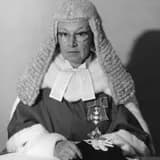
Elizabeth Lane became the first woman appointed as a County Court judge in England and Wales, a landmark breakthrough for women in the judiciary.
In 1962, Elizabeth Lane achieved a historic milestone by becoming the first woman appointed as a judge in the County Court in England and Wales. This appointment shattered a barrier that had stood since the courts' modern establishment, as the judiciary at every level had remained an exclusively male domain despite decades of women practising as solicitors and barristers following the Sex Disqualification (Removal) Act 1919.
Lane's appointment came after a distinguished career at the Bar, including her earlier appointment as Queen's Counsel in 1950 — only the third woman ever to take Silk — and service on government committees such as the 1948 Home Office Committee of Enquiry into the use of Depositions in Criminal Cases. Her elevation to the County Court bench demonstrated that women could hold judicial office with the same authority, wisdom, and impartiality long assumed to be the preserve of men.
The significance of this appointment cannot be overstated: it opened the door for future generations of women judges and served as a proof of concept for the higher judicial appointments that would follow. It positioned Lane as a natural candidate for further judicial firsts, culminating in her appointment to the High Court just three years later.
Though the precise calendar date of her appointment is not recorded in surviving accessible sources, the year 1962 and her status as the first woman in this role are firmly established across multiple biographical and legal-historical references.