← All women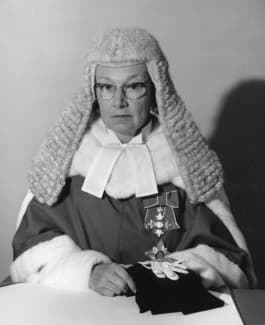
British · Law
Elizabeth Lane
August 9, 1905 – June 17, 1988
Early life and background
Dame Elizabeth Kathleen Lane (née Coulborn) was born on 9 August 1905 in Bowdon, Cheshire, England, into what she later described as an upper‑middle‑class family.[1][3][10] Her father, Edward Alexander Coulborn, was a mill owner, and her mother, Kate Wilkinson, presided over a comfortable household in which high expectations were placed on education and social responsibility.[1][3][10] Growing up in this milieu in the years before and after the First World War, Lane benefited from a quality of schooling unavailable to most girls of her generation.
Lane was privately educated and attended Malvern Girls’ College, an independent school known for preparing young women for university and professional life.[4][9] This education cultivated both academic discipline and self‑confidence. Yet when she left school, the legal profession was still formally closed to women; only after the Sex Disqualification (Removal) Act 1919 could women enter the Inns of Court and qualify as barristers. Lane’s adolescence therefore coincided with the last years of explicit statutory exclusion and the first generation of women breaking into the Bar.
In 1926 she married Henry (Harry) Lane, an accountant, and for several years her life followed the expected pattern of a middle‑class married woman, centered on home, voluntary work, and child‑rearing.[1][4][10] The couple had one son.[4] It was personal tragedy—the death of that son in childhood—that precipitated a profound reassessment of her life and ambitions.[4][10] In later accounts, she suggested that this loss and the experience of navigating institutions as a bereaved mother shaped her sympathy for litigants and her determination to pursue law despite her age and gender.
Decision to study law and career beginnings
Lane’s turn to the law came unusually late by the standards of her male peers. In her early thirties, after years of domestic life and voluntary service, she decided to read for the Bar examinations.[4][10] Her choice was both unconventional and demanding: she had no family background in law and would have to combine intensive study with the responsibilities of marriage and household management at a time when few facilities existed for women students at the Inns of Court. Nevertheless, Lane embarked on legal training with characteristic rigour.
Around 1937, she was admitted to one of the Inns of Court, beginning the formal path towards qualification as a barrister.[10] Sources differ slightly on the precise Inn associated with her early career, but biographical reference works emphasize that she would later practise from Inner Temple and is often described as a barrister of that Inn.[4] Admission meant that she could attend lectures, dine the requisite number of times in Hall, and sit for the Bar examinations, all while navigating a culture still dominated by male students and barristers. Contemporary accounts note the modest number of women then at the Inns, underlining the social isolation she likely experienced.
Lane was called to the Bar in the summer of 1940, qualifying as a barrister in England and Wales at the age of about 35.[2][4][10] Her call came in the early months of the Second World War, when London and the legal system were already affected by wartime disruption. The war years posed particular challenges for a new female barrister seeking work: male practitioners were absent on military service, courts were reconfigured, and expectations about women’s suitability for advocacy remained conservative. Nonetheless, the altered circumstances also opened opportunities, as judicial and administrative systems were forced to rely more heavily on the women who were available and qualified.
Initially, Lane found it difficult to build a substantial practice, encountering the same skepticism that had greeted earlier women at the Bar. Over time, however, she developed expertise primarily in family law and criminal law, areas in which women practitioners sometimes found clients and solicitors more willing to instruct them.[1][4][10] Her diligence, careful preparation, and calm courtroom manner contributed to a growing reputation, and she gradually attracted more complex and serious cases.
Development of her practice and early public roles
Lane’s practice expanded steadily through the 1940s. By the late 1940s, she was sufficiently established to come to the attention of government. In 1948 she received her first official appointment as a member of the Home Office Committee of Enquiry into the use of Depositions in Criminal Cases.[11] This appointment signaled official recognition of her analytical capabilities and her familiarity with criminal procedure. The committee examined whether written depositions taken in lower courts were being used appropriately in higher criminal proceedings, and Lane’s presence on it illustrated the slowly increasing willingness to draw on the expertise of women barristers in matters of law reform and criminal justice.
Through the late 1940s and into the 1950s, Lane continued to consolidate her standing at the Bar. She handled complex family disputes and serious criminal trials and became known for her clear exposition of evidence and her practical understanding of the social realities underlying legal conflict.[1][4][10] Her competence earned her the confidence of solicitors who might previously have hesitated to brief a woman on significant matters.
By mid‑century, a tiny cohort of women had begun to reach senior rank in the profession. Lane joined their number when she was appointed Queen’s Counsel (QC), or took Silk, in 1950 (some specialist sources cite 1960, but legal‑history projects place her promotion in 1950).[11] She thereby became the third woman KC in England and Wales, following the trailblazing Helena Normanton and Rose Heilbron.[11] The appointment recognized not only her professional skill but also her resilience in forging a practice in a system structurally shaped against women.
In 1961 she was appointed Commissioner of the Crown at Manchester—a role broadly comparable to a modern Deputy High Court Judge—and simultaneously Recorder of Derby.[11] These part‑time judicial posts, which she undertook while still practising at the Bar, provided regular experience in presiding over trials and managing courts. According to Encyclopedia.com, Lane was also notable as the first judge to work part‑time, a status that highlights the experimental nature of her early judicial responsibilities and the flexibility required to accommodate her existing professional obligations.[4]
First woman County Court judge
Lane achieved a historic breakthrough in 1962 when she was appointed the first woman judge in the County Court in England and Wales.[1][3][7][11] The County Courts were key forums for civil litigation, including family disputes, small‑scale commercial conflicts, and personal injury claims. Her appointment—widely noted in the press and later highlighted in women’s legal‑history projects—represented the first time a woman had been entrusted with full‑time judicial responsibility in this branch of the civil courts.
As a County Court judge, Lane was praised for her efficiency, courtesy, and clarity of reasoning. Legal‑history scholarship has emphasized that her work helped normalize the presence of women on the bench for litigants, lawyers, and court staff accustomed to all‑male judicial panels.[10][11] She often heard matrimonial and family cases, where her combination of technical proficiency and sensitivity to human dynamics made a distinctive contribution. Her judgments and courtroom management demonstrated that women judges could discharge the role with the same authority and impartiality as their male colleagues, challenging lingering stereotypes.
The County Court appointment also had structural consequences. By showing that a woman judge could handle a heavy and varied caseload successfully, Lane’s service removed an oft‑cited practical objection to appointing women to higher courts. Her performance thus laid the groundwork for her own eventual elevation to the High Court and for the future appointment of other women.
First female High Court judge in England and Wales
In 1965 Lane reached another landmark when she was appointed the first female judge of the High Court of Justice in England and Wales.[1][2][3][7][10] She was assigned to the Probate, Divorce and Admiralty Division, which in 1971 became part of the newly created Family Division.[1][2][4] Her appointment ended the all‑male history of the High Court bench and was widely reported as a milestone for women in the legal profession.
Upon her elevation to the High Court, Lane was created a Dame Commander of the Order of the British Empire (DBE), the customary honor corresponding to the knighthood bestowed on male High Court judges.[1][4] The dual recognition—judicial appointment and damehood—publicly signaled that her professional standing was fully equivalent to that of her male peers. In court she was styled Mrs Justice Lane, a form of address reflecting then‑current practice for women High Court judges.[4]
As a High Court judge, Lane handled complex family matters, including divorce, custody, maintenance, and matters of wardship, at a time when family law was undergoing significant reform. The Matrimonial Causes Acts and subsequent legislation in the 1960s and 1970s were redefining the legal framework for marriage and divorce, introducing concepts such as irretrievable breakdown and altering the social meaning of marital dissolution. Lane’s judgments therefore contributed to the interpretation and implementation of a rapidly evolving body of law. Her court also heard some probate and admiralty matters, though her legacy is most closely associated with family jurisdiction.
Contemporaries noted her practical common sense, patience with litigants, and insistence on clear, fair procedure. She was neither a radical reformer nor an unthinking defender of tradition but a judge who sought to apply the law in a humane and comprehensible way. Legal historians have described her as a “powerful female legal role model in a profession dominated by men”, emphasizing how her very presence on the High Court bench reshaped expectations of what a judge could look like.[10]
First female bencher of an Inn of Court
Lane’s trailblazing path continued in 1966, when she became the first woman bencher of any Inn of Court.[3][7][10] Benchers are senior members responsible for the governance of the Inns, including the admission, education, and discipline of barristers and students. Historically, these positions had been held exclusively by senior male judges and leading silks, and they played a central role in shaping the culture of the Bar.
Her election or appointment as bencher signified that the male‑dominated leadership of the Inns now formally accepted a woman among its governing ranks. This change had symbolic and practical importance. Symbolically, it indicated institutional acknowledgment that women were not merely peripheral participants but could share in guiding the profession’s future. Practically, it gave Lane a platform to influence policy on legal education, admission standards, and the support structures available to students and junior barristers—including women facing the obstacles she had herself encountered.
Women’s legal‑history scholarship highlights this achievement as one of Lane’s most enduring institutional legacies.[3][10] The barriers she broke as a bencher helped open the way for subsequent generations of women to assume leadership roles in the Inns and professional bodies, contributing to the gradual diversification of the Bar’s governance.
Committee on the Abortion Acts (Lane Committee)
In the early 1970s Lane took on a significant public role beyond the courtroom. From 1971 to 1973 she served as chair of the Committee on the Abortion Acts, often referred to as the Lane Committee.[2][4][10] Established by the government to review the operation of the Abortion Act 1967, the committee was charged with examining whether the law was working as intended, assessing medical, ethical, and social implications, and recommending any necessary changes.
The Abortion Act, which liberalized access to abortion in Great Britain under specified conditions, remained highly controversial. The Lane Committee’s work was therefore scrutinized by both supporters and opponents of legal abortion. Under Lane’s leadership, the committee gathered evidence from medical professionals, legal experts, clergy, women’s organizations, and others. Its final report, issued in 1974, broadly concluded that the Act was operating satisfactorily and did not recommend major retrenchment.[2][4]
Britannica notes that Lane “headed a controversial inquiry (1971–73) that upheld the 1967 Abortion Act”, underscoring the political and social sensitivity of her task.[2] Her appointment reflected confidence in her ability to conduct a fair, thorough, and balanced review. For women seeking access to lawful abortion and for health professionals navigating the Act, the committee’s endorsement afforded a measure of stability and reassurance at a time when legislative rollback was a real possibility.
The Lane Committee also demonstrated how women judges could contribute to major questions of social policy. As a senior female jurist leading a high‑profile public inquiry, Lane provided a visible example of women’s expertise in areas traditionally dominated by male politicians and administrators. Her work helped entrench the 1967 framework, which would shape reproductive healthcare in Britain for decades.
Awards, honors, and recognition
Lane’s most prominent formal honor was her appointment as Dame Commander of the Order of the British Empire (DBE) in 1965, conferred on her High Court appointment.[1][4] The DBE placed her among a small group of women who had been recognized for distinguished public service at that time. As with knighthoods for male judges, it combined recognition of professional merit with acknowledgment of her role in the national administration of justice.
In addition to her damehood, Lane’s leadership roles themselves functioned as a form of professional recognition. Her appointments to the Home Office committee in 1948, to the part‑time judicial posts in 1961, as the first female County Court judge in 1962, as the first female High Court judge in 1965, and as the first female bencher in 1966 all signaled institutional confidence in her abilities and judgment.[1][3][4][10][11]
Legal historians and contemporary commentators have also highlighted her pioneering status in specific forensic roles. Encyclopedia.com records that she was the first woman barrister to appear in the House of Lords on a murder case.[4] Although detailed case information is not widely available in general reference sources, this note underscores her involvement in serious criminal appellate work before her full‑time judicial career, and it indicates the breadth of her practice beyond family law.
In later decades, Lane’s life and career became subjects of scholarly analysis and public commemoration in projects dedicated to women in law. Initiatives such as the First 100 Years/Next 100 Years project and the Women’s Legal Landmarks series have profiled her as a central figure in the history of women’s entry into the senior judiciary.[10][11][6] These projects, together with biographical entries in Britannica, Encyclopedia.com, and national legal histories, ensure that her achievements remain visible to new generations of law students and practitioners.[2][4][10][11]
Personal life
Lane married Henry (Harry) Lane on 14 January 1926, according to data collated in biographical reference databases.[5][4] He was an accountant by profession, and together they formed a partnership that would endure throughout her demanding career. Sources indicate that Lane and her husband had one son, whose death in childhood was a formative tragedy in her life.[4] This loss is often cited by biographers as one of the experiences that deepened her empathy for families in crisis and influenced her eventual specialization in family law.
Throughout her career, Lane balanced the expectations of a mid‑20th‑century marriage with the extraordinary demands of legal practice and judicial office. While detailed records of her domestic life are limited, accounts stress that she confronted the same logistical challenges—childcare, travel, and household management—that deterred many married women from professional careers.[6][10] That she managed to build a successful practice and ascend to the High Court under these conditions reinforces the significance of her achievements.
Lane was generally regarded as reserved but approachable, with a dry sense of humor and a reputation for fairness and courtesy. She did not publicly align herself with feminist movements, but her career had unmistakably feminist implications. Her success demonstrated that women could not only enter but also lead the legal profession, and she quietly mentored younger women barristers and students.[10][11] Her memoir, In My Own Time, published in the 1980s, offered reflections on her professional journey and the changes she had witnessed in the status of women in law, though detailed discussion of the book’s contents lies beyond the scope of the present sources.[9][15]
Later career and retirement
Lane continued to sit as a High Court judge throughout the 1960s and 1970s. She was involved in the transition of the Probate, Divorce and Admiralty Division to the Family Division in 1971, which consolidated most family‑related jurisdiction in a single unit.[1][4] Her experience in matrimonial and child law made her a key figure in this new division, where she adjudicated cases involving divorce, financial provision, child custody, and wardship.
During this period she also chaired the Committee on the Abortion Acts (1971–73), as noted above, balancing the demands of her judicial workload with those of the public inquiry.[2][4][10] Her dual role illustrates the extent to which government and the judiciary relied on her expertise in areas involving sensitive questions of morality, medicine, and social policy.
Lane retired from the High Court in 1979, ending nearly two decades of service on the senior bench.[1][4] Her retirement coincided with a wider generational shift in the judiciary and the gradual, though still limited, increase in the number of women judges in the lower courts. At the time of her retirement, she remained one of only a handful of women who had reached comparable judicial rank in the United Kingdom.
Even after retirement, Lane’s example continued to resonate. She was consulted informally on matters of legal history and women’s advancement, and her life became a point of reference in debates about judicial diversity.[10][11] The publication of her memoir and subsequent academic work on women in the legal profession further solidified her reputation as a pioneer.
Legacy and historical impact
Lane’s legacy rests on a combination of symbolic firsts and substantive contributions to law and public policy. Her status as the first woman County Court judge, the first female High Court judge in England and Wales, and the first female bencher of an Inn of Court marked watershed moments in the gendered history of the legal profession.[1][2][3][7][10] These breakthroughs undermined the longstanding assumption that senior judicial office and professional governance were intrinsically male domains.
At the same time, Lane’s daily work—as advocate, trial judge, and appellate judge—had concrete effects on thousands of litigants, particularly in family and criminal law. Her judgments helped shape the interpretation of mid‑20th‑century reforms to divorce and family law, and her leadership of the Committee on the Abortion Acts helped secure the continued operation of the 1967 Abortion Act.[2][4] In both respects, she contributed to the gradual modernization of English law in ways that were especially consequential for women.
Legal historians situate Lane within a small but influential cohort of women—alongside figures such as Helena Normanton and Rose Heilbron—who transformed the possibilities for women in legal practice and on the bench.[4][10][11] Her career demonstrated that a woman could not only enter the Bar but also ascend to its highest ranks, chair major committees, and participate in the governance of the Inns. This example was instrumental for the generations of women who followed, including those appointed to the Court of Appeal and, later, to the House of Lords and the Supreme Court of the United Kingdom.
In contemporary Britain, Lane is commemorated in digital exhibitions, scholarly works, and professional heritage projects. The Women’s Legal Landmarks project, for example, identifies her 1965 High Court appointment as a key milestone in the legal history of women, and the First 100 Years/Next 100 Years initiative has produced biographical materials and public talks highlighting her story.[10][11][6] Her life thus forms part of a broader effort to document and celebrate the contributions of women who reshaped the legal landscape in the 20th century.
Death
Dame Elizabeth Lane died on 17 June 1988 in Winchester, Hampshire, England, aged 82.[1][2][3][7] Her death marked the end of a life that had spanned the period from the pre‑suffrage era, when women were barred from the legal profession, to a late‑20th‑century judiciary in which women, though still under‑represented, were increasingly present on the bench and at the Bar.
By the time of her death, Lane’s pioneering role was widely recognized. Biographical entries in major reference works, evaluations by legal historians, and the emergence of dedicated projects on women in law all attest to the enduring importance of her career.[1][2][4][10][11] She left no dynastic legal family behind, but her influence is evident in the many women who followed her into law and who have cited the example of early pioneers as a source of inspiration. In this sense, her legacy extends far beyond her own lifetime, contributing to the continuing transformation of the legal profession she helped to open.
Dated achievements
6 indexed.
- Aug091905Science
Birth of Elizabeth Kathleen Coulborn
Elizabeth Kathleen Coulborn, later Dame Elizabeth Lane, was born in Bowdon, Cheshire, England.
View details Elizabeth Lane - Wikipedia - Jan011962Science
First woman appointed as a County Court judge in England and Wales
Elizabeth Lane became the first woman appointed as a County Court judge in England and Wales, a landmark breakthrough for women in the judiciary.