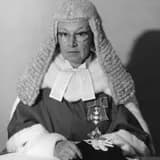
Lane became the first woman appointed a High Court judge in England and Wales, assigned to the Probate, Divorce and Admiralty Division.
In 1965, Dame Elizabeth Lane was appointed as the first female High Court judge in England and Wales, one of the most consequential moments in the history of women in the British legal profession. She was assigned to the Probate, Divorce and Admiralty Division, later reorganised as the Family Division of the High Court — a fitting placement given her subsequent influential work on family and reproductive law issues.
This appointment came at a time when the upper echelons of the judiciary remained almost entirely closed to women, more than four decades after women were first permitted to practise law in Britain. Lane's promotion built directly on her earlier landmark as the first woman County Court judge in 1962, proving that her initial appointment had not been an isolated exception but the beginning of sustained institutional change.
Her appointment to the High Court carried enormous symbolic and practical weight: it demonstrated to the legal establishment, to aspiring women lawyers, and to the wider public that women were fully capable of exercising the highest judicial authority in the land. It paved the way for future women judges, including eventual appointments to the Court of Appeal and the Supreme Court decades later.
Lane would go on to serve on the High Court bench for fourteen years, retiring in 1979, during which she also chaired the influential Committee on the Abortion Acts (1971–73). Her 1965 appointment remains one of the most cited milestones in the history of women in law.