← All women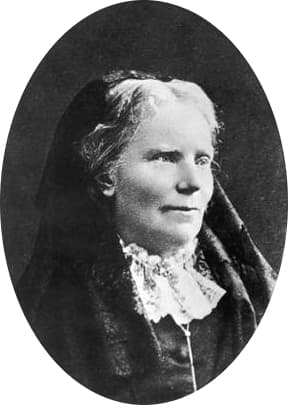
British, American · Medicine · Activism
Elizabeth Blackwell
February 3, 1821 – May 31, 1910
Early Life and Family Background
Elizabeth Blackwell was born on 3 February 1821 in Counterslip, Bristol, Gloucestershire, England, the third of nine children of Samuel Blackwell and Hannah (Lane) Blackwell. Her father was a sugar refiner of liberal religious views, influenced by Quaker and nonconformist traditions, and an outspoken abolitionist who opposed slavery and engaged in reform causes.[1][3][5]
The Blackwell household was unusually progressive for its time. Both parents believed in serious education for daughters as well as sons, encouraging reading, languages, and discussion of politics and ethics.[1][3] This insistence on intellectual development for girls formed a crucial foundation for Elizabeth’s later insistence that women could master rigorous professional study, including medicine.
Economic and political circumstances soon uprooted the family. In 1832, driven by financial difficulties in the sugar business and by Samuel’s opposition to slavery in the West Indian sugar trade, the Blackwells emigrated to the United States, settling in Cincinnati, Ohio when Elizabeth was about eleven.[3][11] In America the family continued to value education and reform, associating with abolitionists and other dissenters. However, Samuel’s death in 1838 left the family in precarious financial circumstances, forcing Elizabeth, her mother, and her sisters to find ways to support themselves.[1][3]
As a young woman, Blackwell initially pursued teaching as one of the few respectable paid occupations open to middle‑class women. She taught in schools in Kentucky and North Carolina, gaining experience in administration and pedagogy but also confronting the limitations placed on women’s careers and the harsh realities of slavery and racial inequality in the American South.[1][3] These experiences deepened her reformist convictions and sharpened her dissatisfaction with the narrow roles available to women.
Choosing Medicine: Motivation and Barriers
Blackwell’s decision to become a physician crystallized in the 1840s. Several accounts attribute her choice to a remark from a dying female friend, who suggested that her suffering might have been lessened if she had been treated by a woman doctor.[1][2] Blackwell later emphasized that she chose medicine in part as a moral mission—to combine scientific work with social reform and to open a new profession to women.
At the time, the idea of a woman doctor was widely regarded as shocking or absurd. American medical schools categorically rejected female applicants, citing concerns about propriety, women’s supposed intellectual inferiority, and potential damage to institutional reputations.[5][11] Undeterred, Blackwell began by reading medicine privately, studying medical texts while supporting herself as a teacher. She arranged apprenticeships with sympathetic physicians in Charleston, South Carolina, and later in Philadelphia, where she studied anatomy and observed clinical practice.[1][2]
Throughout this period she applied to numerous medical schools in the United States, only to receive a series of refusals. Some schools explicitly stated that they could not admit a woman; others ignored her applications. Her persistence, and her readiness to endure social disapproval, became defining traits of her early medical career.
Admission to Geneva Medical College
In 1847, Geneva Medical College, a small institution in Geneva, New York (later associated with Hobart and William Smith Colleges), received her application.[3][11] Unsure how to respond, the faculty reportedly turned the decision over to the all‑male student body, perhaps expecting them to reject the idea. The students, treating the matter as something of a jest and assuming no woman would seriously attend, voted to accept her.[3][15]
When Blackwell arrived, her presence quickly dispelled any sense that her admission was a joke. She was subjected to curiosity, ridicule, and occasional hostility. Some professors refused to allow her into certain lectures—especially those on reproductive anatomy—on grounds of delicacy, and she was at first socially isolated by many classmates.[3][16] Over time, however, her diligence, seriousness, and academic excellence won a measure of respect, and some faculty members became supporters.
Blackwell pursued the same demanding curriculum as male students: lectures in anatomy, physiology, chemistry, and clinical medicine; dissection and laboratory work; and clinical rounds with patients. Her performance consistently ranked near the top of the class, undermining arguments that women could not handle scientific or clinical rigor.[11]
Graduation and the First Woman M.D. in the United States
On 23 January 1849, Elizabeth Blackwell graduated from Geneva Medical College, earning her M.D. with highest honors.[3][6] With this degree she became the first woman in the United States to graduate from medical school and is widely regarded as the first modern woman doctor of medicine.[5][11]
This milestone carried both symbolic and practical significance. Symbolically, it shattered the prevailing belief that medicine was inherently a male profession. Practically, it gave Blackwell the formal credentials needed to practice, though many institutions still resisted employing a woman physician. Her graduation speech and thesis, focusing on typhoid fever, reflected an early interest in hygiene and preventive medicine.[4]
Her thesis was published in the Buffalo Medical Journal and Monthly Review, making it the first medical article by a female medical student published in the United States and giving her an early foothold in professional medical literature.[4] Press accounts of her graduation sparked public debate, with some commentators praising her courage and others denouncing the idea of women doctors as unfeminine or dangerous.
Postgraduate Training and Early Practice
After graduation, Blackwell sought further clinical training, but American hospitals largely refused to admit her. In 1849 she traveled to Paris, where she studied at the Maternité hospital, focusing on obstetrics and midwifery.[1][2] Because she was a woman, she was often classified as a midwife rather than a physician, limiting her access to some teaching but still providing intensive hands‑on experience with childbirth and women’s health.
During this period she suffered a serious eye infection, likely contracted while treating a patient with ophthalmia. The infection left her blind in one eye and forced the removal of that eye, ending any possibility of a surgical career.[1][2] She adapted by emphasizing public health, gynecology, and education rather than operative surgery, turning personal loss into a redirection of her professional focus.
Blackwell then studied briefly in London, where she worked at institutions such as St. Bartholomew’s Hospital, gaining exposure to British medical practice and beginning to build networks that would later support her work in the United Kingdom.[2][4] Returning to New York in the early 1850s, she faced ongoing prejudice from male physicians and difficulty attracting patients, but gradually established a private practice, particularly among women who preferred a female doctor.[1]
New York Infirmary for Women and Children
In the mid‑1850s, Blackwell concluded that women physicians needed institutions of their own, both to serve patients and to train future women doctors. In 1857 she joined with her sister Emily Blackwell, who had also become a physician, and German‑born doctor Marie Zakrzewska to found the New York Infirmary for Women and Children.[2][3]
The infirmary served multiple purposes. It provided medical care, often at low cost, to women and children who might otherwise lack access, particularly among the poor and immigrant communities. It also created clinical positions for women physicians, who were largely barred from staff appointments at established hospitals, and offered supervised training for women medical students and nurses.[2]
Operating entirely under female medical leadership, the infirmary challenged the assumption that women could not manage complex institutions or handle severe illness. Its reputation grew, and it eventually evolved into a broader teaching institution. In 1858, the founders organized a formal Woman’s Medical College of the New York Infirmary, providing a rigorous curriculum designed to equal or exceed that of male medical schools.[2][3] This college became one of the most important training grounds for American women physicians in the late 19th century.
Civil War Service and Public Health Reform
During the American Civil War, Blackwell played a prominent role in organizing medical relief. In the early 1860s she helped create the Woman’s Central Association of Relief in New York City, which trained nurses and coordinated volunteers to support Union soldiers.[3][7] She also participated in efforts that contributed to the establishment of the U.S. Sanitary Commission, an organization that coordinated civilian support for the army’s medical services and promoted better hygiene in camps and hospitals.[1][7]
Blackwell’s work during the war reflected her long‑standing belief that preventive medicine and sanitation were as important as curative treatment. She advocated for hygienic reforms, systematic nursing education, and the inclusion of women in organized medical relief. Although precise dates for her organizational meetings are not consistently recorded, her involvement was central to the early development of professional nursing and public health in the United States.[1][7]
Transatlantic Career and British Medical Registration
Blackwell increasingly divided her time between the United States and Britain. In the late 1850s and 1860s she undertook lecture tours in the United Kingdom, speaking on women’s education, hygiene, and the role of women in medicine.[5][10] Her public lectures attracted both supporters and critics, but they helped galvanize a nascent movement for women’s medical education in Britain.
A crucial milestone came when she was entered on the Medical Register of the General Medical Council under provisions of the Medical Act 1858, which recognized certain practitioners with foreign degrees.[4][10] The process culminated on 1 January 1858, when she became the first woman on the British medical register and thus the first woman doctor officially recognized in Great Britain.[4][10]
This legal recognition was a significant step forward. It confirmed that the British state, through its regulatory body, acknowledged at least one woman as a fully qualified physician. At a time when British women such as Sophia Jex‑Blake and Elizabeth Garrett Anderson were still fighting for access to medical schools and examinations, Blackwell’s registration served as an important precedent and a source of inspiration.[10]
Educational Writings and Preventive Medicine
Blackwell was also a prolific writer and theorist of health. In 1852, she published The Laws of Life, with Special Reference to the Physical Education of Girls, an early work that linked women’s health, education, and moral development.[3] The book argued that girls and young women needed rational physical education, attention to hygiene, and freedom from restrictive clothing and customs that damaged their bodies.
Throughout her career she promoted preventive medicine—the idea that public health, sanitation, and moral reform could prevent disease more effectively than individual treatment alone.[3] She is often credited with helping establish the first chair of hygiene in any medical college, reflecting her commitment to integrating public health into medical education.[3] Her writings frequently intertwined scientific observations with religious and ethical reflections, advocating a holistic view of health that encompassed body, mind, and society.
Later Work in Britain: National Health Society and London School of Medicine for Women
In the latter part of the 19th century, Blackwell increasingly resided in Britain. She helped found the National Health Society, an organization dedicated to public health education and the dissemination of information on hygiene and preventive care to the general public.[3][5] This work aligned with broader Victorian campaigns for sanitary reform, improved urban conditions, and reduced disease.
Blackwell also became associated with efforts to establish formal medical education for women in Britain. She supported and taught at the London School of Medicine for Women (later part of the Royal Free Hospital School of Medicine), England’s first college of medicine for women.[5][11] Although her influence sometimes clashed with other leaders over strategy and ideology, her presence lent authority and international visibility to the enterprise.
Her teaching and lecturing in Britain, combined with her earlier work in the United States, gave her a truly transatlantic role in the history of women in medicine. She bridged reform movements in both countries, sharing experiences and strategies for overcoming institutional resistance.
Personal Life and Beliefs
Elizabeth Blackwell never married and had no biological children. She instead cultivated intense friendships, close family ties, and mentor‑student relationships, especially with younger women pursuing medicine and reform work. She adopted an Irish orphan, Kitty Barry, who became her companion and housekeeper for many years, and who remained with her into old age.[4]
Blackwell’s religious and moral views strongly influenced her life. Raised in an environment shaped by dissenting Protestant traditions, she developed a personal theology that emphasized moral purity, self‑discipline, and social responsibility.[1][3] She opposed slavery, supported women’s education, and advocated for temperance, yet she was sometimes skeptical of more radical elements of the women’s suffrage movement, preferring reforms grounded in what she saw as women’s distinctive moral mission.[4]
Her writings reveal both progressive and conservative strands. She championed women’s right to professional education and public engagement but often framed this in terms of women’s special role as moral and domestic guardians. This complexity has made her a subject of ongoing historical debate, as scholars examine how she navigated Victorian gender norms while pushing their boundaries.
Awards, Honors, and Institutional Recognition
During her lifetime, Blackwell received significant public recognition, though often less than her groundbreaking achievements warranted. Honorary memberships, invitations to lecture, and leadership roles in reform organizations acknowledged her prominence as a physician and social critic.[2][10]
After her death, institutional honors multiplied. In 1949, a century after her graduation, the American Medical Women’s Association established the Elizabeth Blackwell Medal, awarded annually to a woman physician who has made outstanding contributions to the advancement of women in medicine.[4][8] The medal cemented her symbolic status as a patron figure for women doctors.
Universities and medical schools have also commemorated her through lectureships, prizes, and named facilities. Hobart and William Smith Colleges celebrate her as one of their most distinguished alumni, emphasizing her pioneering degree from Geneva Medical College.[3][6] The University of Bristol recognizes her as one of the city’s most influential women, highlighting her role in global medical history.[14]
Legacy and Historical Impact
Elizabeth Blackwell’s legacy encompasses multiple domains: medical education, women’s rights, and public health. As the first woman to receive a medical degree in the United States and the first woman on the British medical register, she broke through institutional barriers that had excluded women from formal medical practice.[4][5][10]
Her most enduring institutional legacy includes the New York Infirmary for Women and Children and its associated Woman’s Medical College, which trained generations of women physicians when other schools remained closed to them.[2][3] In Britain, her involvement with the London School of Medicine for Women and the National Health Society helped legitimize women’s medical education and public health advocacy.[5]
Blackwell’s emphasis on preventive medicine and hygiene anticipated later public health movements. She argued that proper sanitation, education, and moral reform could prevent many diseases, a perspective that aligned with but also sometimes preceded mainstream medical opinion.[3] Her writings on the physical education of girls contributed to changing attitudes about women’s bodies, exercise, and health.
As a symbol, Blackwell has become an icon of women’s entry into the professions. Historians and feminist scholars note that her path—rooted in individual perseverance and moral conviction—differed from later collective campaigns, but her success provided crucial proof that women could excel in rigorous scientific fields.[1][10] Her life continues to be cited in discussions of gender equity in medicine, and her name remains attached to awards, scholarships, and educational programs encouraging women’s participation in science and healthcare.
Later Years and Death
In her later years, Blackwell gradually withdrew from active medical practice but remained intellectually engaged. She continued to write, lecture, and correspond on topics including ethics, women’s role in society, and public health. A fall in 1907 left her physically weakened, with partial paralysis, and she spent her final years living quietly in Hastings, Sussex, cared for by companions including Kitty Barry.[12]
Elizabeth Blackwell died on 31 May 1910 in Hastings at the age of 89.[3][4][13] By the time of her death, women were entering medical schools in increasing numbers in both the United States and Britain, and many of the institutions she had helped establish were flourishing. Obituaries recognized her as a pioneer whose achievements had altered the landscape of medical education and women’s professional possibilities.
Today, Blackwell is remembered not only for her "firsts" but also for her sustained efforts to build enduring institutions, to articulate an ethical and public‑health‑oriented vision of medicine, and to mentor and inspire the women who followed her. Her life, spanning nearly a century of social transformation, remains a touchstone in the history of women in medicine and in broader narratives of gender and professionalization.
Dated achievements
8 indexed.
- Feb031821Science
Birth of Elizabeth Blackwell
Elizabeth Blackwell was born in Counterslip, Bristol, Gloucestershire, England, to Samuel and Hannah Blackwell.
View details Elizabeth Blackwell Biography - HWS - Jan231849Medicine
First woman to earn an M.D. from a U.S. medical school
Blackwell graduated from Geneva Medical College with highest honors, becoming the first woman to earn a regular M.D. from an American medical school.