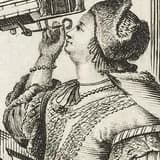
She edited and published the posthumous Hevelius works, preserving a major star catalog and atlas.
1690 was the year Elisabetha Hevelius edited and published Prodromus astronomiae and Firmamentum Sobiescianum, sive Uranographia, the two great posthumous works of Johannes Hevelius. The exact month and day are not verified in the supplied sources, but these publications are repeatedly identified as her most important accomplishments.
Prodromus astronomiae preserved the catalog of 1,564 stars compiled from the Hevelius observations, while Firmamentum Sobiescianum presented an atlas of constellations in engraved plates. Together they turned decades of observation into printed scientific authority. Elisabetha’s role was crucial because posthumous publication in the seventeenth century was labor-intensive and vulnerable to loss, especially for a widow managing a scientific estate. Her work ensured that Johannes Hevelius’s astronomical legacy was not dispersed or forgotten. For women in early modern science, this was a barrier-breaking form of intellectual labor: editorial control, archival preservation, and publication management at the center of a major scientific enterprise, even if formal authorship conventions obscured her contribution.