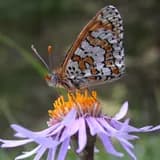
English entomologist Eleanor Glanville died at her home in Tickenham, Somerset, on 1 January 1709.
Lady Eleanor Glanville died on 1 January 1709 at her family estate in Tickenham, Somerset. By the time of her death, she had become one of the most important, if unofficial, contributors to the early study of British butterflies and moths, having spent decades collecting specimens across Lincolnshire and the West Country and corresponding with the leading naturalists of her day, including James Petiver.
Her death, however, did not bring her the quiet recognition her scientific contributions might have warranted. Instead, it triggered a bitter and highly public legal dispute. Relatives contesting her will argued that no person of sound mind would spend her time and money chasing, collecting, and studying insects — a pursuit they characterized as evidence of lunacy. This argument, deeply revealing of the era's attitudes toward women who stepped outside prescribed domestic roles, was ultimately used to overturn her testamentary wishes.
The controversy surrounding her death and estate became as much a part of her historical legacy as her scientific work itself, illustrating the precarious position of women naturalists in the late seventeenth and early eighteenth centuries. Despite this posthumous indignity, her specimens survived in collections and eventually reached institutions such as the Natural History Museum, London, preserving her contribution to entomology long after her death and the slander of her sanity.