← All women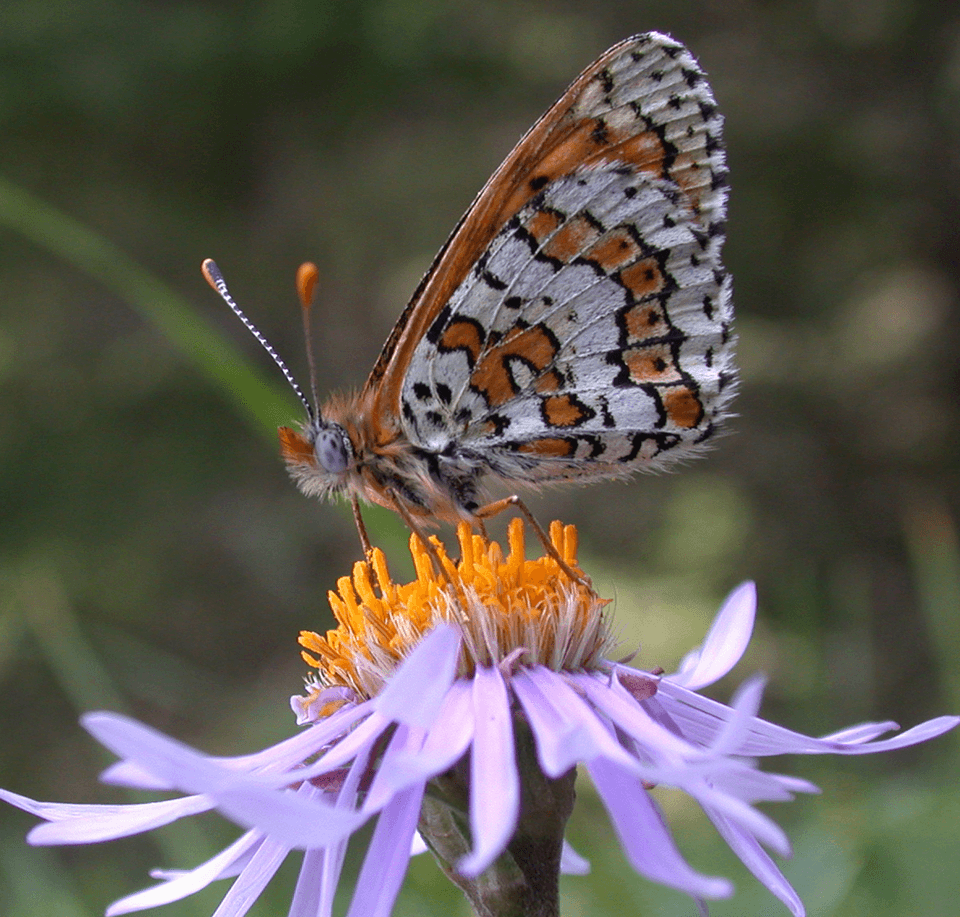
English · Science
Eleanor Glanville
1654 – January 1, 1709
Early Life and Background
Eleanor Glanville, born Eleanor Goodricke, was an English gentlewoman and pioneering entomologist whose life is generally dated to c.1654–1709.[3][11][12][13] Most modern biographical references give her birth year as about 1654, but no precise birth date has been documented in surviving records.[3][11][12][16] She is commonly associated with Tickenham, Somerset, though some accounts mention Yorkshire in connection with the Goodricke family.[3][13] The lack of detailed parish records, the disruptions of the mid‑17th century, and later confusion about her first name (some sources once called her "Elizabeth") have hindered efforts to fix her exact birthplace and date.[16]
Eleanor was born into a landed family, and her upbringing would have been shaped by the expectations placed on a provincial gentlewoman during and after the English Civil Wars. As a member of the gentry, she likely received an education sufficient for household management and social correspondence, but not formal academic training.[3][6] Her later correspondence with leading naturalists such as James Petiver and John Ray demonstrates a high level of literacy and observational skill, suggesting that she cultivated intellectual interests beyond those usually encouraged for women of her class.[3][12][16]
The Goodricke family’s status gave Eleanor access to estates and rural landscapes in Lincolnshire and Somerset. These environments would become crucial to her scientific work, providing marshes, meadows, and hedgerows rich in insect life. In an era when natural history was beginning to systematize plants and animals, she found in these surroundings the living material for her later studies of butterflies and moths.[1][2][6]
Marriages, Family, and Social Position
Eleanor’s name appears in the historical record under several surnames. Born Goodricke, she became Ashfield upon her first marriage, and later Lady Eleanor Glanville through her second marriage.[3][13] Sources agree that she married a Lincolnshire landowner, which rooted her for a time in the Lincolnshire Wolds, an area that would prove significant for her entomological discoveries.[2][6][13]
Her second husband, Glanville, is described in later research as a violent man, and the couple eventually separated.[12] Over roughly the last decade of her life, after this separation, Eleanor lived independently and dedicated substantial energy to building an important butterfly collection and corresponding with London naturalists.[12] This period of partial autonomy was unusual for a woman of her station and likely enabled the intense fieldwork and specimen rearing that made her scientifically notable.
Biographical summaries indicate that Eleanor had children, as evidenced by the relatives and heirs who later contested her will.[3][18] However, surviving sources focus more on her legal and scientific activities than on her domestic life, and there is little detailed information about her children’s identities, ages, or relationships to her work. What is clear is that some family members regarded her devotion to insects as socially improper, which would have serious consequences for her posthumous reputation.
Beginnings in Natural History and Entomology
By the late 17th century, Eleanor Glanville had become deeply immersed in the study and collection of insects, especially butterflies and moths. Entomology itself was only just emerging as a specialized field, and interest in insects was often dismissed as eccentric or trivial.[9][15][16] For a woman to pursue such work was considered even more unusual. According to institutional and scholarly accounts, she collected widely, kept careful records of larvae and food plants, and undertook rearing experiments that allowed her to observe metamorphosis in detail.[3][4][16]
Her activities were not limited to casual collecting. Research into her surviving notes and specimens shows that she understood the importance of precise observation and description. She documented the stages of butterfly development and the plants on which larvae fed, information that would later prove valuable to more formally trained naturalists.[4][16] At a time when many still associated insects with decay and superstition, Glanville treated them as legitimate subjects of empirical study.
Eleanor’s reputation grew among London-based naturalists. By the turn of the 18th century she was regarded as an astute collector, especially of butterflies from the South West of England, including the wetland regions of Somerset.[1][5][8] Her work exemplified the way provincial observers could supply specimens and data to metropolitan scientific networks, contributing to early efforts to catalogue British fauna.
Collecting in Lincolnshire and Somerset
Much of Glanville’s scientific activity took place in two regions: Lincolnshire, where she lived when married to a local landowner, and later Somerset, where estates near Tickenham offered rich collecting grounds.[2][6][13] In Lincolnshire, she explored the Wolds and surrounding countryside, assembling a notable series of butterflies that included rare species and forms.[2][7][9]
In Somerset, Glanville collected in marshes and meadows, particularly in wetlands that were little studied at the time. Modern accounts emphasize that her observations formed the earliest surviving written records of butterflies and moths in that region.[1] She often captured specimens across seasons and kept them alive to monitor their behaviour and development. These practices were demanding: rearing lepidopteran larvae requires knowledge of appropriate host plants, careful timing, and protection from predators and disease.
Her work was not confined solely to local fauna. Recent research indicates that she may have collected specimens from abroad as well, or at least handled exotic insects that circulated through natural history networks.[1][5] Whether native or foreign, the insects she catalogued reflected a growing culture of collecting and classification that would later underpin more systematic entomology.
Correspondence and Collaboration with Naturalists
Eleanor Glanville’s contributions to science were amplified by her participation in correspondence networks that linked provincial collectors to London-based naturalists and to emerging scientific institutions. She is known to have corresponded with James Petiver, an apothecary and entomologist who compiled extensive catalogues of British and foreign insects, as well as with figures such as John Ray and Joseph Dandridge.[3][10][12]
Glanville sent Petiver multiple specimens that became the first-known British examples of their species in collections. Her butterflies contributed to his catalogue Gazophylacium naturae et artis, one of the pioneering attempts to organize and describe British insects systematically.[3] Among the specimens she supplied was the earliest known example of the green hairstreak butterfly, demonstrating her access to and accurate identification of local species.[10]
These exchanges were not one-sided; Petiver and others provided her with identifications, advice, and scientific context, integrating her observations into broader debates about classification and nomenclature. Through this network, Glanville’s work reached London and continental Europe, where naturalists such as Carl Linnaeus would later rely on specimens originating from her collections.[7][10]
Discovery of the Glanville Fritillary
Glanville’s most famous scientific association is with the butterfly species now known in English as the Glanville fritillary, Melitaea cinxia.[3][7][9][11] In the early 18th century she collected a fritillary in Lincolnshire, probably around c.1702, and sent a specimen to her correspondents.[7][5][14] This insect was initially referred to as the Lincolnshire fritillary, reflecting the locality where she first captured it.[7]
The specimen Glanville provided was later used by Carl Linnaeus when he described the species scientifically, indicating that her fieldwork directly supported the foundational taxonomic work of the 18th century.[7][10] In the decades after her death, roughly within forty years, the vernacular name of the butterfly shifted, and it became widely known as the Glanville fritillary.[7][5][15] This renaming commemorated her role in bringing the species to the attention of naturalists and ensured that her surname—and, implicitly, her work—would be remembered in association with British lepidoptera.
The Glanville fritillary is today notable not only for its ecological characteristics but also for its symbolic value. It is described as one of only two native British butterflies named after British entomologists, and the only one named after a woman.[2][10][14][15] In some commentary it is even suggested that it may be the only British butterfly named after a person at all.[14] Through this naming, a woman whose scientific contributions were once overshadowed by accusations of eccentricity became permanently embedded in the nomenclature of British natural history.
Experimental Rearing and Early Scientific Methods
Beyond collecting, Eleanor Glanville made important methodological contributions through her experiments in rearing butterflies. She systematically raised larvae to adulthood, observing the transitions between egg, caterpillar, chrysalis, and imago. Her careful notes produced some of the earliest detailed descriptions of butterfly rearing in Britain.[3][4][16]
Biographical research by entomologists and historians indicates that she may have been the first person recorded to have reared Coleoptera (beetles), applying similar methods to other insect orders.[16] She kept accurate records of larvae and their food plants, allowing later scholars to identify the species she described from her observations alone.[4][16] These practices were an early example of experimental natural history, in which living organisms were observed under controlled conditions.
Her work predated and in some ways paralleled that of more widely known figures such as Maria Sibylla Merian, who illustrated insect life cycles. While Glanville did not publish lavish illustrated volumes, her specimens and manuscripts fed into the collections and texts of male naturalists who did, thereby influencing the developing science of entomology.[10][16]
Reputation, Gender, and the Charge of Madness
In her own time, Eleanor Glanville’s devotion to collecting butterflies and other insects was viewed with suspicion by some contemporaries. Interest in insects was uncommon, and for a respectable woman, it was often regarded as improper. Institutional accounts note that women who showed unusual curiosity about the natural world risked accusations of madness or witchcraft.[9][15]
This prejudice had lasting consequences. After her death, her relatives contested her will, arguing that her passion for butterflies proved she was not sane. According to later summaries, the court accepted this reasoning, and her will was overturned on the basis that "no sane person" would go "in pursuit of butterflies".[1][3][18] Although sources do not provide an exact date for the case, it became central to her historical image, illustrating how gendered notions of respectability could be weaponized to undermine a woman’s property rights.
Modern historians and writers have revisited this episode, reframing Glanville not as a madwoman but as a remarkable woman of genius and passion whose scientific engagement defied social norms.[4][17][18] The contrast between contemporaneous legal judgments and current appreciation underscores the broader shift in how women’s intellectual pursuits are evaluated.
Later Life and Death
In the last decade of her life, following separation from her second husband, Eleanor Glanville lived largely independently and intensified her scientific work. French-language sources emphasize that over these ten years she built an important collection of butterflies and corresponded with leading naturalists such as Petiver, Ray, and Dandridge.[12] Her estates in Somerset provided both the physical space and social autonomy needed to focus on natural history.
Her life ended in 1709, with a German biographical blog and subsequent research citing 1 January 1709 as her date of death in Tickenham, Somerset.[15] Most English and institutional sources provide only the year, but they agree on the location and approximate time.[3][11][12][16] Upon her death, her collections and notes entered the complex world of inheritance and scientific circulation. Some specimens found their way into major institutions, contributing to the holdings of what is now the Natural History Museum, London.[1][11][13]
Within roughly forty years of her death, the fritillary she had discovered in Lincolnshire was commonly known as the Glanville fritillary, marking her gradual re-emergence from the obscurity imposed by the will litigation.[7][5] Her life story would later attract the attention of entomologists and biographers, particularly in the mid‑20th century, when researchers such as P. B. M. Allan, R. S. Wilkinson, and W. S. Bristowe undertook detailed studies of her correspondence and collections.[16]
Legacy and Historical Impact
Eleanor Glanville’s legacy unfolds along several intertwined lines: scientific contribution, gender history, and cultural memory. Scientifically, she is recognized as a distinguished early entomologist whose fieldwork and experimental rearing advanced knowledge of British butterflies and beetles.[3][10][16] Her specimens formed some of the earliest recorded examples of particular species in museum collections, and her data fed into the taxonomic work of Petiver and Linnaeus.[3][7][10]
From a gender-history perspective, Glanville appears frequently as the "first lady of British natural history" or the "first lady of British butterflies".[2][5] These titles, while honorary rather than formally defined, reflect the recognition that she pursued entomology at a time when it was rare for anyone—let alone a woman—to do so.[2][4][16] She carved out a space for herself in a male-dominated scientific culture, using correspondence and specimen exchange to participate in knowledge production without institutional affiliation.
Her legacy is powerfully symbolized by the Glanville fritillary, which remains the only native British butterfly named after a British naturalist and the only one named after a woman.[2][10][14][15] Ecological organisations emphasize that the name "Glanville" is a tribute to her work as a 17th‑century naturalist.[15] The species today is closely associated with places such as the Isle of Wight, keeping her story alive in conservation and educational materials.
Modern institutions have further solidified her memory. The Eleanor Glanville Institute at the University of Lincoln is named in her honour and describes her as the first lady of British natural history, using her story to promote inclusion, diversity, and equality in higher education.[2] Articles, museum blogs, and educational websites for children, such as Kiddle, introduce her as a pioneering butterfly collector whose work was long underappreciated.[1][9][10][13]
Her life has also inspired cultural works, including historical novels like Lady of the Butterflies, which dramatize her experiences as a woman whose scientific passion conflicted with social expectations.[4][17][18] These narratives, alongside scholarly articles, contribute to a richer understanding of how early modern women engaged with science despite legal, social, and familial barriers.
Recognition and Continuing Scholarship
Although Eleanor Glanville published no major scientific treatise under her own name, her reputation has grown steadily due to continued historical research. Entomological biographical dictionaries summarize her as a distinguished early entomologist and note that her life and work have been subjects of intense study.[16] Key mid‑20th‑century publications by Allan, Wilkinson, and Bristowe reconstructed her biography from scattered documents and specimens, clarifying her role in early entomology and correcting earlier misidentifications of her name.[16]
Museums and scientific organisations now highlight her contributions in public outreach. The Linda Hall Library has featured her as a "Scientist of the Day", emphasizing her pioneering role and her early records of butterflies in Somerset wetlands.[1] The Horniman Museum and other institutions present her as a significant figure in the history of women in natural sciences, stressing her discovery of the green hairstreak specimen and the Glanville fritillary.[10]
Academic interest continues, as seen in recent symposium papers that situate her insect collecting within the broader context of empire, material culture, and gender in the early 18th century.[5] These studies use her case to explore how women interacted with scientific objects and networks, and how their work was recorded—or obscured—in the historical record.
Through this ongoing scholarship and commemoration, Eleanor Glanville has moved from the margins of natural history to a more central place in narratives of both science and women’s history. Her story illustrates how careful archival work can recover the contributions of individuals whose scientific achievements were long overshadowed by social prejudice, and how the naming of a single butterfly can carry forward the memory of a woman who "loveth butter-flies" across centuries.[4][7][15][18]
Dated achievements
1 indexed.
- Jan011709Science
Death of Lady Eleanor Glanville in Tickenham, Somerset
English entomologist Eleanor Glanville died at her home in Tickenham, Somerset, on 1 January 1709.
View details Frauenfiguren: Eleanor Glanville biographical entry