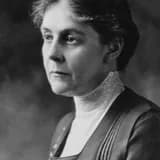
Hamilton's 1911 Illinois survey findings directly influenced the passage of new workers' compensation and occupational disease laws.
Following the submission of the Illinois Commission's report, Alice Hamilton's findings on industrial lead poisoning and other occupational illnesses became a driving force behind legislative reform. In 1911, Illinois moved to enact new workers' compensation and occupational disease statutes, informed directly by the scientific evidence Hamilton and her colleagues had compiled.
Prior to this period, workers who fell ill due to hazardous workplace conditions had little to no legal recourse; employers bore minimal liability, and the burden of proof for connecting illness to occupation rested almost entirely on the affected worker, who typically lacked the medical or scientific expertise to make such a case. Hamilton's evidence-based approach changed this dynamic by providing concrete, medically validated documentation that regulators and legislators could not easily dismiss.
The Illinois reforms became an influential model that other states began to study and, in some cases, replicate. Hamilton's insistence on rigorous field investigation rather than theoretical argument gave the reform movement scientific legitimacy it had previously lacked. Her work in this period effectively laid the intellectual and evidentiary groundwork for the modern American system of occupational safety regulation, decades before the creation of federal agencies such as OSHA. It remains one of the earliest documented instances of epidemiological research directly translating into protective labor legislation in the United States.