← All women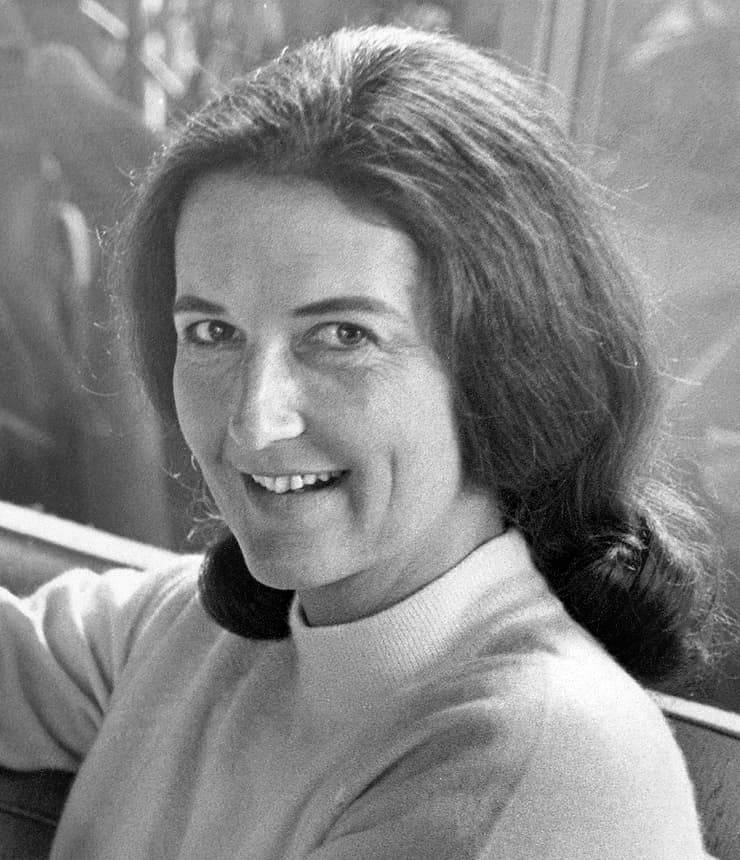
United States · Science · Exploration · Activism
Dian Fossey
January 16, 1932 – December 26, 1985
Early Life and Background
Dian Fossey was born on January 16, 1932, in San Francisco, California, United States.[1][3][5] Her parents, George E. Fossey and Kathryn "Kitty" Fossey, divorced when she was young, and her mother later married businessman Richard Price.[3][16] Fossey grew up primarily in a middle‑class household headed by her mother and stepfather, who reportedly discouraged close relationships with animals inside the home and emphasized conventional social success.[16] This environment, combined with her own shyness, contributed to a sense of isolation that later found expression in her deep attachment to animals and wilderness.
As a child, Fossey developed a strong interest in animals, particularly horses, and became an accomplished equestrienne.[3][16] Despite this passion, she did not initially pursue formal training in zoology. She attended the University of California, Davis, briefly studying business, but struggled academically and socially.[16] She later transferred to San Jose State College (now San José State University), where she earned a degree in occupational therapy in 1954.[3][5] After graduation, she worked as an occupational therapist in California and later in Kentucky, focusing on pediatric patients.
While her early career was rooted in clinical work, Fossey continued to nurture a fascination with animals and far‑off places through extensive reading. In the early 1960s, she encountered the writings of naturalist George Schaller and the work of British‑Kenyan paleoanthropologist Louis Leakey, whose encouragement of women field researchers would later prove decisive.[3][15] These influences set the stage for a dramatic shift from hospital wards in the United States to remote African mountaintops.
First Journey to Africa and Career Beginnings
In 1963, Fossey used her savings and a bank loan to make her first trip to Africa, a journey that would redirect the trajectory of her life.[3][16] She traveled through Kenya, Tanzania, Zimbabwe, and the then‑Belgian Congo (later the Democratic Republic of the Congo), visiting archaeological sites and wildlife reserves. During this trip, she met Louis Leakey at his dig at Olduvai Gorge in Tanzania.[3][15] Leakey, who had already supported Jane Goodall’s chimpanzee research, saw in Fossey another potential long‑term field worker.
It was on this 1963 trip that Fossey first encountered wild mountain gorillas, reportedly during a trek in Congo.[3][16] The experience of observing the animals in their natural habitat left a powerful impression on her, and she resolved to return to Africa and study them more systematically. However, financial constraints and health issues delayed immediate action. Fossey returned to the United States, resumed work as an occupational therapist, and spent several years planning a more permanent return.
Guided by Leakey’s advice and her own determination, Fossey secured modest funding and, in 1966, traveled again to central Africa, initially to the Kabara region of the Congo to observe mountain gorillas.[3][11] There she began rudimentary behavioral observations, attempting to follow gorilla groups and document their daily activities. Her time in Congo was cut short by political instability; in July 1967, civil unrest and changing local attitudes forced her to leave abruptly.[3][16] Leakey encouraged her to relocate across the border to Rwanda, where the Virunga Mountains offered similar habitat for the same gorilla subspecies.
Establishing Karisoke and Long-Term Gorilla Research
In 1967, Fossey arrived in Rwanda and began what would become her life’s central work: long‑term, close‑range study of the endangered mountain gorilla (Gorilla beringei beringei) in the Virunga Mountains.[3][15] On September 24, 1967, she established the Karisoke Research Center, setting up two small tents in a remote saddle between Mt. Visoke (Bisoke) and Mt. Karisimbi.[13][15] She coined the name "Karisoke" by merging the volcano names, anchoring the camp’s identity in the landscape.
Karisoke was the first research station devoted specifically to long‑term, daily observation of mountain gorillas.[13][15] Working largely alone in its early years, Fossey developed field techniques designed to reduce gorillas’ fear of her presence. She used vocalizations such as grunts and contented "belch" sounds, avoided direct eye contact, and imitated non‑threatening behaviors to gain the animals’ trust.[3][5] Gradually, several gorilla groups allowed her to approach within a few meters, an unprecedented level of tolerance for a human observer.
From 1966 until her death in 1985, Fossey undertook an extensive, nearly continuous study of mountain gorilla groups, often in physically demanding and emotionally taxing conditions.[3][10][11] Her records documented social structures, dominance hierarchies, inter‑group encounters, infant development, and patterns of communication. She noted that gorillas formed stable family groups centered on a dominant silverback male, and that their interactions were typically peaceful rather than violent.[14] These observations challenged popular depictions of gorillas as aggressive and dangerous.
In 1970, Fossey’s work reached a broader audience when she appeared on the cover of National Geographic magazine. The cover featured photographer Bob Campbell’s now‑iconic image of a gorilla touching Fossey’s hand.[3][5] The article and image dramatically raised public awareness of mountain gorillas and highlighted her intimate relationship with the animals she studied.
Fossey’s field research culminated in academic recognition. In 1974, she completed a Ph.D. in zoology at the University of Cambridge, based on her dissertation "The Behaviour of the Mountain Gorilla."[3][16] Although she remained physically based in Rwanda for much of her career, this degree formalized her scientific contributions and helped legitimize long‑term fieldwork within academic primatology.
Conservation Activism and The Digit Fund
As Fossey’s research deepened, she became increasingly aware of the threats facing mountain gorillas: poaching for bushmeat and trophies, habitat encroachment, and political instability in the region. The turning point in her activism came with the death of Digit, a young male gorilla she had closely studied and photographed.[3][5] Digit was killed and decapitated by poachers, and his hands were severed as trophies. The loss was both scientifically and personally devastating for Fossey.
In response, she founded The Digit Fund in 1978 to finance anti‑poaching patrols, support park guards, and directly protect gorilla habitat.[3][9][5] The Fund later evolved into the Dian Fossey Gorilla Fund International, which remains active in Rwanda and the Democratic Republic of the Congo.[2][15] Unlike many conservation efforts that worked primarily through government channels, Fossey’s approach was often confrontational and hands‑on. She organized patrols to locate and destroy poachers’ snares and supported efforts to arrest individuals involved in illegal hunting.
Her uncompromising style generated controversy. Some park officials and local residents viewed her tactics as heavy‑handed, and she developed a reputation for being fiercely protective and at times difficult to work with.[3][16] Yet her activism contributed significantly to the survival of mountain gorillas, whose numbers, though still small, began to stabilize and eventually increase in the decades following her interventions.[6][15]
Major Works and Scientific Contributions
Fossey’s most widely known work is her book Gorillas in the Mist, published in 1983 by Houghton Mifflin.[5][3] The book interwove detailed field observations with narrative accounts of her daily life at Karisoke, her relationships with individual gorillas, and the threats posed by poachers and tourism development. While the exact day of publication is not uniformly documented, 1983 is firmly established as the publication year.[5]
In Gorillas in the Mist, Fossey presented mountain gorillas as intelligent, socially complex beings with distinct personalities. She described silverbacks, females, and infants in terms that emphasized their emotional lives and social bonds, challenging dehumanizing stereotypes. The work drew heavily on her long‑term data set, which was unusual in primatology at the time and particularly rare for a species living in such difficult terrain.
Her scientific contributions extended beyond this book. Through Karisoke’s continuous observations, Fossey and her team documented:
- Gorilla group formation and dispersal, including how males and females leave their natal groups.[14]
- Patterns of dominance and leadership among silverbacks.
- Inter‑group interactions, including surprisingly peaceful encounters.[14]
- Daily ranging patterns and dietary habits in high‑altitude forests.
These findings helped reframe mountain gorillas from marginal curiosities to central subjects in primate behavioral science. By 1980, her work had significantly redefined global understanding of the subspecies Gorilla beringei beringei, especially regarding its social behavior and ecological needs.[13]
Awards, Honors, and Recognition
Fossey’s work was recognized during her lifetime primarily through professional esteem, media coverage, and support from scientific institutions rather than formal prize lists. Her relationship with National Geographic included not only the 1970 cover story but ongoing funding and logistical support for Karisoke.[3][5] The magazine’s backing, coupled with Leakey’s endorsement, gave her research an influential platform.
While specific awards with exact presentation dates are less thoroughly documented in publicly accessible sources, Fossey’s scientific reputation is reflected in descriptions of her as the world’s leading authority on mountain gorillas by the time of her death.[1][16] Later honors have been largely institutional and posthumous: the continued operation of the Dian Fossey Gorilla Fund, memorials in Rwanda’s Volcanoes National Park, and frequent inclusion in lists of pioneering women scientists and environmental heroes.[6][15]
In popular culture, her life story gained wider recognition after her death through the 1988 film adaptation of Gorillas in the Mist, starring Sigourney Weaver.[3][9] Although dramatized, the film contributed to public awareness of her work and reinforced her image as a fierce protector of gorillas.
Personal Life and Character
Fossey never married and had no children.[3][16] Biographical accounts describe her as intensely dedicated to her work, often to the exclusion of close human relationships. She maintained correspondences and professional friendships with colleagues, including Louis Leakey and various visiting researchers and photographers, but her deepest attachments were to individual gorillas and to the Virunga landscape itself.
Her personality has been portrayed as complex: compassionate toward animals yet sometimes abrasive or suspicious toward people.[3][16] She struggled with periods of loneliness and ill health, including respiratory problems associated with the high altitude and damp climate of the Virungas. She also faced constant logistical challenges related to funding, equipment, and relations with park authorities.
Despite these difficulties, Fossey’s resilience and willingness to live for years in an isolated, demanding environment are central to understanding her achievements. Her personal choices—remaining unmarried, focusing on fieldwork, and rejecting more secure academic positions—represented a departure from mid‑twentieth‑century expectations for women, particularly in the United States.
Later Life, Conflict, and Death
By the early 1980s, Fossey’s relationship with some Rwandan officials and segments of the local population had deteriorated. She opposed certain forms of gorilla tourism, fearing that close human contact and commercialization would harm the animals and their habitat.[3][16] Her aggressive anti‑poaching measures, which included supporting arrests and occasionally publicizing names of suspected poachers, created enemies.
Nevertheless, she continued her research and conservation efforts at Karisoke. On December 26, 1985, Fossey was murdered in her cabin at the research center in Volcanoes National Park, Rwanda.[1][3][13] She suffered fatal head injuries from a machete. Her body was discovered the following morning, December 27, 1985
Rwandan authorities arrested a former research assistant, who was later convicted in absentia, but he maintained his innocence and was never extradited.[3][16] Many observers have speculated that the murder was linked to her confrontations with poachers or local economic interests, though definitive evidence has not been publicly established. Fossey was buried near Digit and other gorillas in the graveyard at Karisoke, in accordance with her wishes.[3][15] Fossey’s legacy is multifaceted, encompassing scientific discovery, conservation impact, and the broader history of women in science. Her long‑term study at Karisoke helped dismantle myths of gorillas as violent creatures and reframed them as gentle, socially complex animals worthy of protection.[1][3][5] By documenting their behavior over nearly two decades, she provided one of the most detailed records of any great ape species in the wild. From a conservation perspective, her work contributed directly to the survival of mountain gorillas. At the time she began her research, the species was on the brink of extinction. Her activism, including the establishment of The Digit Fund in 1978 and its evolution into the Dian Fossey Gorilla Fund International, laid the foundation for sustained anti‑poaching and habitat‑protection efforts.[2][3][15] Today, the Fund continues research, conservation, and community programs in Rwanda and the Democratic Republic of the Congo, often explicitly citing Fossey’s example as its guiding inspiration. Historically, Fossey is also significant as one of "Leakey’s Angels," the trio of women primatologists—Jane Goodall, Biruté Galdikas, and Fossey—encouraged by Louis Leakey to conduct long‑term field studies of great apes in their natural environments.[8][11] Their collective work helped redefine primatology and demonstrated that women could lead major scientific expeditions, challenge institutional norms, and produce landmark research. Her book Gorillas in the Mist and its film adaptation entrenched her in global environmental consciousness.[3][5] They inspired generations of conservationists, scientists, and eco‑tourists and helped elevate the moral status of nonhuman primates in public discourse. At the same time, debates over her methods—particularly her opposition to certain tourism initiatives and her confrontational tactics with poachers—continue to inform discussions about how best to balance animal protection with community livelihoods. Fossey’s story has often been told in heroic terms, but she also exemplifies the tensions inherent in conservation work in former colonial contexts: the presence of Western scientists in African landscapes, the complexities of local politics, and the risks of unilateral action against entrenched economic interests. Her life and death highlight both the power and peril of deeply committed environmental activism. In the decades since her death, mountain gorilla numbers have slowly increased, a rarity among great apes.[6][15] While this recovery is attributable to many organizations and individuals, Fossey’s pioneering work at Karisoke and her insistence on direct, field‑based protection remain central to the narrative. She is frequently cited as a "climate hero" and conservation icon whose efforts helped shift global attitudes toward wildlife and ecosystems.[6] For women’s history, Fossey stands as a figure who broke gender barriers in field science, demonstrating that a woman could not only participate in but lead grueling, high‑risk research projects and shape an entire scientific subfield. Her legacy endures in scientific literature, conservation policy, environmental education, and the ongoing work of the Dian Fossey Gorilla Fund.Legacy and Historical Impact
Dated achievements
5 indexed.
- Jan161932Science
Birth of Dian Fossey
Dian Fossey was born in San Francisco, California, later becoming the world's foremost authority on mountain gorillas.
View details Britannica: Dian Fossey - Sep241967Science
Establishment of Karisoke Research Center
Fossey founded the Karisoke Research Center in Rwanda's Virunga Mountains, the first long-term field station dedicated to mountain gorilla research.