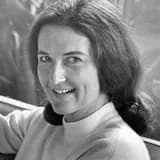
Fossey founded the Karisoke Research Center in Rwanda's Virunga Mountains, the first long-term field station dedicated to mountain gorilla research.
On September 24, 1967, Dian Fossey established the Karisoke Research Center, situated in a saddle area between Mount Visoke (Bisoke) and Mount Karisimbi in Rwanda's Virunga Mountains. The name "Karisoke" was itself a portmanteau of the two flanking volcanoes, reflecting the camp's remote and rugged location deep within gorilla habitat.
This was a genuine first: no dedicated, long-term field research station for mountain gorillas had existed before. Fossey had originally begun her fieldwork in the Democratic Republic of Congo (then Zaire) at the Kabara research site, but political instability from the Congo Civil War forced her to relocate across the border into Rwanda, where she founded Karisoke.
The center became the base for what would become the longest continuous study of any wild great ape population. From this camp, Fossey conducted daily observations of habituated gorilla groups, developed pioneering field techniques—including mimicking gorilla behaviors and vocalizations to gain the animals' trust—and trained successive generations of researchers and students in primatology.
Karisoke also became the operational headquarters for anti-poaching patrols that Fossey organized to protect gorillas from snares and hunters. Today, the center continues to operate under the Dian Fossey Gorilla Fund International, and its establishment is widely regarded as the foundational moment for modern mountain gorilla conservation and research, directly enabling the species' population recovery in subsequent decades.