← All women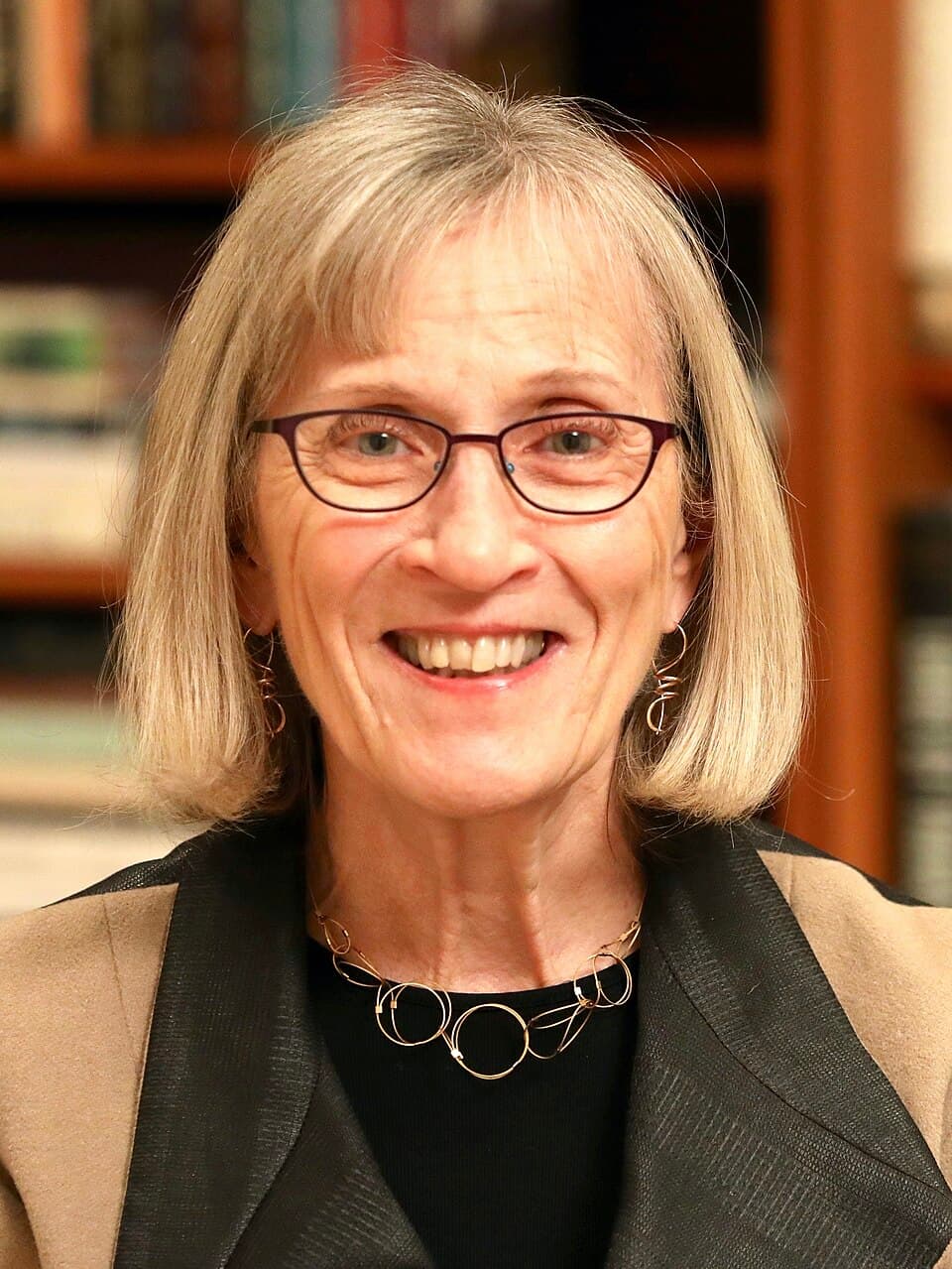
American · Science
Claudia Goldin
December 14, 1946 – present
Early Life and Background
Claudia Dale Goldin is an American economic historian and labor economist whose work has fundamentally reshaped understanding of women’s roles in the labor market over more than two centuries. She was born in New York City in 1946 and grew up in the Bronx, in a postwar United States undergoing rapid economic expansion and social change.[1][2][7] Raised in a Jewish family, she was part of a generation of girls encouraged to pursue higher education but still confronted with entrenched expectations about gender, marriage, and work.[7]
Goldin’s early interests did not center on economics. As a child and teenager she was fascinated by science and initially imagined a career as a microbiologist or archaeologist.[3][7] She entered Cornell University in the early 1960s and first planned to major in microbiology. A transformative experience came when she took an introductory economics course taught by Alfred E. Kahn, a prominent economist known for his later work on airline deregulation. The combination of historical questions and rigorous quantitative methods drew her toward economics and economic history.[3][7]
Goldin graduated from Cornell with a bachelor’s degree in economics in 1967.[2][3] She then pursued graduate study at the University of Chicago, one of the leading centers of economic research. There she studied under influential economists including Gary Becker, whose work on human capital, family, and discrimination, along with that of Robert Fogel in cliometrics (quantitative economic history), helped shape her intellectual trajectory.[2][7] She earned her Ph.D. in economics from Chicago in 1972 with a dissertation that already reflected her interest in long-run historical processes and labor markets.[2][7]
Career Beginnings and Academic Development
After completing her doctorate, Goldin embarked on an academic career that combined economic history, labor economics, and the emerging use of large historical datasets. She held early positions at the University of Wisconsin–Madison and Princeton University before joining the National Bureau of Economic Research (NBER), where she would later play a central role in fostering research on gender and labor markets.[2][7][10]
In the late 1970s and early 1980s, Goldin became a faculty member at the University of Pennsylvania, where she advanced to full professor. Her research during this period examined topics such as slavery and the post–Civil War Southern economy, the role of immigration, and the history of education and labor in the United States.[2][7] She developed a reputation for meticulous archival work combined with quantitative analysis, often constructing new data series from census records and other historical sources.
Goldin’s appointment to Harvard University marked a pivotal step in her career. She joined Harvard’s Department of Economics in the late 1980s and, in 1989, became the first woman to be awarded tenure in that department, a landmark in the history of one of the world’s most prestigious economics faculties.[12][13][14] At Harvard she was later named the Henry Lee Professor of Economics, a chair she continues to hold.[2][7][10] She also served as director of the NBER’s Development of the American Economy program and later as co-director of its Working Group on Gender in the Economy.[10]
Major Works and Research Contributions
Goldin’s scholarship spans a wide array of topics in American economic history and labor economics, but she is best known for her pathbreaking work on the long-run evolution of women’s labor-market outcomes, the gender wage gap, and the interaction between work and family.
Historical labor-force participation and the “quiet revolution”
One of Goldin’s central contributions is her reconstruction of women’s labor-force participation in the United States from the 18th century to the present. Drawing on census data, surveys, and archival records, she documented that women’s work followed a U‑shaped pattern over the course of economic development: participation rates fell as economies moved from agriculture to early industrialization, then rose again with the growth of the service sector and white-collar work.[1][10][12] This insight challenged the assumption of a straightforward, monotonic increase in women’s employment over time, highlighting the roles of structural change and social norms.
In influential articles and essays, Goldin described a “quiet revolution” in women’s labor-market behavior during the latter half of the 20th century. She argued that as women’s educational attainment rose and expectations about work and family shifted, women began to plan for long-term careers rather than intermittent or supplemental work. This change in identity and expectations was a key driver of increased female labor-force participation and professional advancement.[11]
Education, the birth-control pill, and career formation
Goldin’s work has also illuminated how access to education and reproductive technology reshaped women’s economic lives. She documented the rise of women’s college attendance and the growing share of women entering professional and graduate programs in law, medicine, and business over the 20th century.[2][7] In collaboration with economist Lawrence F. Katz, whom she would later marry, Goldin analyzed the impact of the oral contraceptive pill on young women’s choices. Easier access to reliable contraception allowed women to delay marriage and childbearing, encouraging investment in lengthy professional education and altering career trajectories.[2][7]
This research showed that the timing of childbearing is a key factor in women’s career outcomes and that legal and technological changes—such as state-level policies affecting access to contraception—have had lasting economic consequences. By demonstrating the causal links between the pill, educational investment, and women’s professional careers, Goldin and Katz connected demographic behavior to human-capital theory in a novel way.
The gender wage gap and “greedy jobs”
A core theme of Goldin’s work is the persistent gap between men’s and women’s earnings. Her research has documented how this gap has changed over time and identified the primary mechanisms behind it. Using data spanning more than 200 years, she showed that the gender wage gap narrowed significantly in the 20th century but did not disappear, even as women became more educated than men in many countries.[1][5][10]
Goldin has emphasized that the modern gender wage gap is less about differences in human capital and more about how work is organized. She introduced the concept of “greedy jobs”—high-paying occupations that demand long and inflexible hours, such as certain positions in finance, law, and corporate management. Because these jobs reward availability and continuous, uninterrupted work, couples often specialize, with one partner (disproportionately men) taking on the greedy job while the other assumes more caregiving responsibilities. This structure, she argued, generates a large wage penalty for individuals—often women—who seek flexibility or reduce hours after having children.[5][8][11]
Her analysis demonstrated that a substantial portion of today’s wage gap arises within occupations, particularly after the birth of the first child, rather than from women and men working in different fields. This insight shifted attention from individual choices to institutional and organizational features of work, suggesting that greater temporal flexibility and redesigned compensation structures could reduce gender disparities.
Children, family, and work–family trade-offs
Goldin has extensively examined how marriage and fertility affect women’s labor-market participation. She has shown that marriage bars and formal restrictions on married women’s employment were prevalent well into the mid-20th century and that social norms discouraged married women from working outside the home.[2][7] Over time, these formal barriers declined, but motherhood continued to influence earnings trajectories.
In recent work, Goldin has highlighted how the birth of a first child is a critical turning point in couples’ earnings paths. She has documented that earnings gaps between men and women with similar education and occupations widen markedly in the years after childbirth, driven in part by differing responses to employer demands for long hours and continuous availability.[1][4][9][11] Her findings have informed debates on parental leave, childcare policy, and workplace flexibility across advanced economies.
Other contributions in economic history
Beyond gender and labor, Goldin has made significant contributions to the study of American economic history more broadly. Her early work, including her book Urban Slavery in the American South, examined slavery, emancipation, and the Southern labor market.[2][7] She has studied the historical evolution of the U.S. wage structure, immigration, and changes in the demand for education.
Goldin has also written extensively about the history of education in the United States, documenting the expansion of secondary schooling and the rise of mass higher education. Her research on the “high school movement” and the returns to education has influenced how economists and historians think about human-capital formation and economic growth.[2][7]
Awards, Honors, and Professional Leadership
Goldin’s work has been widely recognized with prestigious honors. In 2020, she received the Erwin Plein Nemmers Prize in Economics, awarded by Northwestern University for major contributions to new knowledge in the field.[2][6] She has been elected to leading scholarly bodies, including the American Academy of Arts and Sciences and the National Academy of Sciences, reflecting the breadth and influence of her research.[7]
The pinnacle of her recognition came on 9 October 2023, when the Royal Swedish Academy of Sciences announced that Goldin had been awarded the Sveriges Riksbank Prize in Economic Sciences in Memory of Alfred Nobel for “having advanced our understanding of women’s labour market outcomes.”[1][5][10] She was the third woman ever to receive the economics prize and the first woman to be the sole laureate in this category.[1][5][12][13] At the time of the award, she was the Henry Lee Professor of Economics at Harvard University.[1][10]
Goldin has played important leadership roles within the profession. She served as president of the American Economic Association (AEA) and has been heavily involved with the National Bureau of Economic Research, where she directed the Development of the American Economy program and co-directed the Working Group on Gender in the Economy.[2][7][10] Through these positions she has mentored younger scholars and shaped research agendas on economic history, labor, and gender.
Beyond formal roles, Goldin has been recognized in public-facing venues. In 2024, TIME named her one of its “Women of the Year,” highlighting both her academic achievements and her impact on debates about gender equality in the workplace.[13] Interviews and profiles by institutions such as the International Monetary Fund and UBS have further amplified her influence on global policy conversations.[11]
Personal Life
Goldin’s personal and professional lives are closely intertwined with those of other leading economists. She is married to Lawrence F. Katz, a labor economist and fellow Harvard professor. The couple have collaborated on influential research—most notably on the impact of the birth-control pill on women’s education and careers—and are often cited together in the literature on labor markets and inequality.[2][7]
Goldin has occasionally reflected publicly on her own career experiences as a woman in a male-dominated discipline, though she tends to place emphasis on evidence and broader trends rather than personal narrative. Her role as a mentor to students and junior colleagues, particularly women in economics, is frequently noted by peers and institutional profiles.[5][7][10] She has not emphasized details about children in public biographical accounts, keeping aspects of her private life out of the spotlight while engaging deeply on structural issues facing working parents.
Legacy and Historical Impact
Claudia Goldin’s legacy lies in her transformation of how economists and historians study labor markets, particularly for women. By assembling long-run data series on female labor-force participation and earnings, she made it possible to see patterns that were previously invisible—such as the U‑shaped relationship between economic development and women’s work and the centrality of marriage and motherhood in shaping career paths.[1][10][12]
Her work has changed the terms of debate about the gender wage gap. Rather than viewing the gap as the inevitable result of differences in education, occupation, or “choices,” Goldin has shown that it is deeply connected to how jobs are structured and rewarded. The concept of “greedy jobs” has entered both academic and policy vocabularies as a way of understanding why gender inequality persists even among highly educated professionals.[5][8][11] Policymakers and commentators now routinely draw on her findings when discussing paid leave, childcare, flexible work arrangements, and anti-discrimination policy.
Goldin’s historical perspective has also broadened the scope of economics. By integrating archival research, demographic history, and institutional analysis with modern econometric tools, she has exemplified how economic history can illuminate contemporary policy challenges. Her scholarship demonstrates that current labor-market outcomes are the product of long-running processes, including technological change, legal reforms, and evolving social norms around gender and family.[2][7][10]
As one of the first women to achieve prominence in academic economics at the highest level—gaining tenure at Harvard’s economics department in 1989 and later becoming the first woman to win the economics Nobel solo—Goldin has been a visible role model. Her career has inspired efforts to diversify the economics profession, including initiatives to improve the climate for women and underrepresented groups in graduate programs, professional associations, and research institutions.[5][12][13][14]
Later Career and Ongoing Work
Following the Nobel Prize announcement in 2023, Goldin has continued her research, teaching, and public engagement from her base at Harvard. She remains active in the NBER and participates frequently in conferences, lectures, and interviews on the gender pay gap, demographic change, and the future of work.[10][15][16] In 2024, she reflected publicly on her “pioneering career” in a Harvard Gazette interview, tracing the development of her research program and the changing place of women in the economics profession.[17]
Goldin’s later work continues to explore how shifting fertility patterns, changing marriage norms, and workplace practices shape labor-market outcomes. She has also examined contemporary issues such as low birth rates in advanced economies, arguing that the structure of work and persistent gender imbalances in caregiving help explain fertility decline.[16] Her perspective brings a long-run historical lens to current policy debates in the United States and abroad.
As of the mid-2020s, Claudia Goldin remains an active scholar and prominent voice in discussions about gender, work, and economic policy. Her ongoing contributions ensure that her influence extends well beyond the academic literature to shape public understanding and policy responses to one of the central social and economic issues of the modern era.
Dated achievements
4 indexed.
- Dec141946Science
Birth of Claudia Goldin in New York City
Claudia Goldin was born on December 14, 1946, in New York City, the future economic historian and Nobel laureate.
View details Claudia Goldin - Biographical - NobelPrize.org - Jan011989Science
First woman tenured in Harvard's economics department
Goldin became the first woman ever awarded tenure in Harvard University's economics department, breaking a long-standing gender barrier in academic economics.