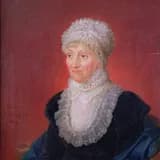
King George III granted Herschel an annual £50 pension for her work as William Herschel's assistant, making her the world's first professional female astronomer.
In 1787, King George III granted Caroline Herschel an annual pension of £50 in recognition of her work assisting her brother William, the King's Astronomer, in his observations and discoveries. This grant is widely regarded as making Caroline the world's first professional female astronomer—and quite possibly the first woman in history to be paid specifically for scientific work.
Although the precise day of the grant is not documented in surviving records, its significance is beyond dispute. Prior to this, women's contributions to science, however substantial, were almost universally unpaid and unrecognized in official or institutional terms. Caroline's pension represented a formal, monarchical acknowledgment that her labor—recording observations, calculating positions, grinding mirrors, and conducting her own independent sweeps of the sky—constituted legitimate professional scientific work deserving of compensation.
This pension freed Caroline from complete financial dependence on her brother and gave her a form of institutional legitimacy rare for women of her era. It set a precedent, however limited, for the possibility of women being formally employed and compensated for scientific labor within royal or state institutions.
The pension came on the heels of the Herschel siblings' fame following William's discovery of Uranus in 1781, which had already elevated the family's status at court. Caroline's role in that discovery and in the ongoing astronomical survey work that followed made her indispensable to the broader Herschel research program.