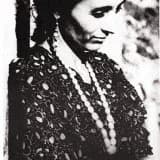
Papusza's songs and poems began reaching wider Polish audiences through ethnographer Jerzy Ficowski, who transcribed her oral compositions.
Around 1949, Papusza's poetic gift came to the attention of the Polish poet and ethnographer Jerzy Ficowski, who had taken refuge with a Roma caravan during the immediate postwar years and became deeply interested in Roma culture and language. Recognizing the extraordinary quality of Papusza's improvised songs and verses — composed and remembered orally in the Roma tradition — Ficowski began transcribing and translating her work into Polish.
This collaboration marked a pivotal turning point: for the first time, a body of Romani oral poetry created by a woman was being systematically documented with the intention of introducing it to a non-Roma literary public. Papusza herself was self-taught in reading and writing, having acquired literacy against the norms of her community, which made her uniquely positioned to eventually write down her own compositions rather than relying solely on oral transmission.
The exact date this circulation began is not precisely documented, but it represents the genesis of her transition from an anonymous oral poet within a nomadic community to a named, published literary figure — a transition that would have profound and ultimately painful consequences for her standing within her own community, who viewed the sharing of Roma customs and language with outsiders as a serious betrayal.