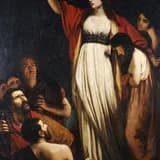
Boudica's husband King Prasutagus died, prompting Rome to annex the Iceni kingdom, seize property, and flog Boudica and rape her daughters.
Following the death of King Prasutagus of the Iceni in AD 60, Roman authorities disregarded his will, which had left half his kingdom to Emperor Nero and half to his two daughters in an attempt to preserve his line's autonomy under Roman rule. Instead, Rome annexed the kingdom outright, treating it as conquered territory.
According to the Roman historian Tacitus, Roman officials and slaves plundered the Iceni nobility, seized estates, and treated the royal family with contempt. Boudica was publicly flogged, and her two daughters were raped by Roman soldiers or associates of the administration, a brutal violation intended to humiliate and subjugate the Iceni elite.
This act of cruelty became the immediate catalyst for the great uprising that followed. It transformed Boudica from a bereaved queen into a symbol of resistance, galvanizing not only the Iceni but neighboring tribes such as the Trinovantes, who had their own grievances against Roman colonization, taxation, and the seizure of ancestral lands. The event is recorded by both Tacitus in his Annals and Cassius Dio, though exact calendar dating is inferred from the broader chronology of AD 60/61.
This moment exemplifies the harsh realities of Roman provincial administration and set into motion one of the most significant revolts against Roman imperial power in Britain.