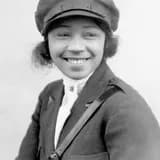
Coleman died at age 34 when a mechanical failure caused her Curtiss Jenny biplane to flip during a rehearsal flight, throwing her from the open cockpit.
On April 30, 1926, Bessie Coleman died tragically during a rehearsal flight for an upcoming aerial show at Paxon Field in Jacksonville, Florida. She was flying as a passenger while her mechanic and pilot, William Wills, piloted the Curtiss JN-4 'Jenny' biplane, scouting the area for an ideal parachute-jump landing spot as part of the next day's performance planning.
Approximately ten minutes into the flight, a wrench that had been left loose in the engine compartment jammed the plane's controls, causing the aircraft to unexpectedly enter a steep dive and then flip completely. Coleman, who was not wearing a seatbelt because she needed to lean out of the cockpit to scout the terrain below, was thrown from the plane at an altitude estimated between 2,000 and 3,500 feet, falling to her death. The plane subsequently crashed, killing Wills as well.
Coleman was only 34 years old at the time of her death, and her passing sent shockwaves through the African American community and the aviation world alike. Thousands attended her memorial services, first in Jacksonville and later in Chicago, where she was laid to rest at Lincoln Cemetery.
Her untimely death cut short her ambitious plans to open a flight school for African American aviators, a dream that would nonetheless inspire the founding of the Bessie Coleman Aero Club in 1929 and generations of Black aviators, including the Tuskegee Airmen, who honored her memory by flying over her grave.