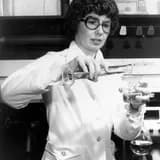
Barbara Askins became the first woman ever named National Inventor of the Year by the Association for the Advancement of Inventions and Innovations.
In 1978, Barbara Askins was honored as National Inventor of the Year by the Association for the Advancement of Inventions and Innovations, becoming the first woman to receive this prestigious individual recognition. The award celebrated her invention of a radioactive image-intensification process that dramatically improved the recovery of faint or underexposed photographic images.
This recognition was historically significant not only because of the technical merit of her invention, but because it broke a long-standing gender barrier in a field of honors that had, up to that point, recognized only male inventors. At a time when women were still underrepresented in engineering, chemistry, and physical sciences broadly, and even more so in patent holding and formal inventor recognition, Askins's achievement served as a powerful symbol of what was possible for women in STEM careers.
The award elevated her invention beyond its aerospace origins into the public spotlight, drawing attention to how NASA-funded research could yield transformative civilian applications in medicine, forensics, and historical preservation. Her recognition as National Inventor of the Year also opened doors for greater visibility of women inventors in subsequent decades, and she has since been cited repeatedly in educational materials, women's history archives, and STEM outreach programs as a pioneering example of a woman achieving top honors in a technical, patent-driven field.