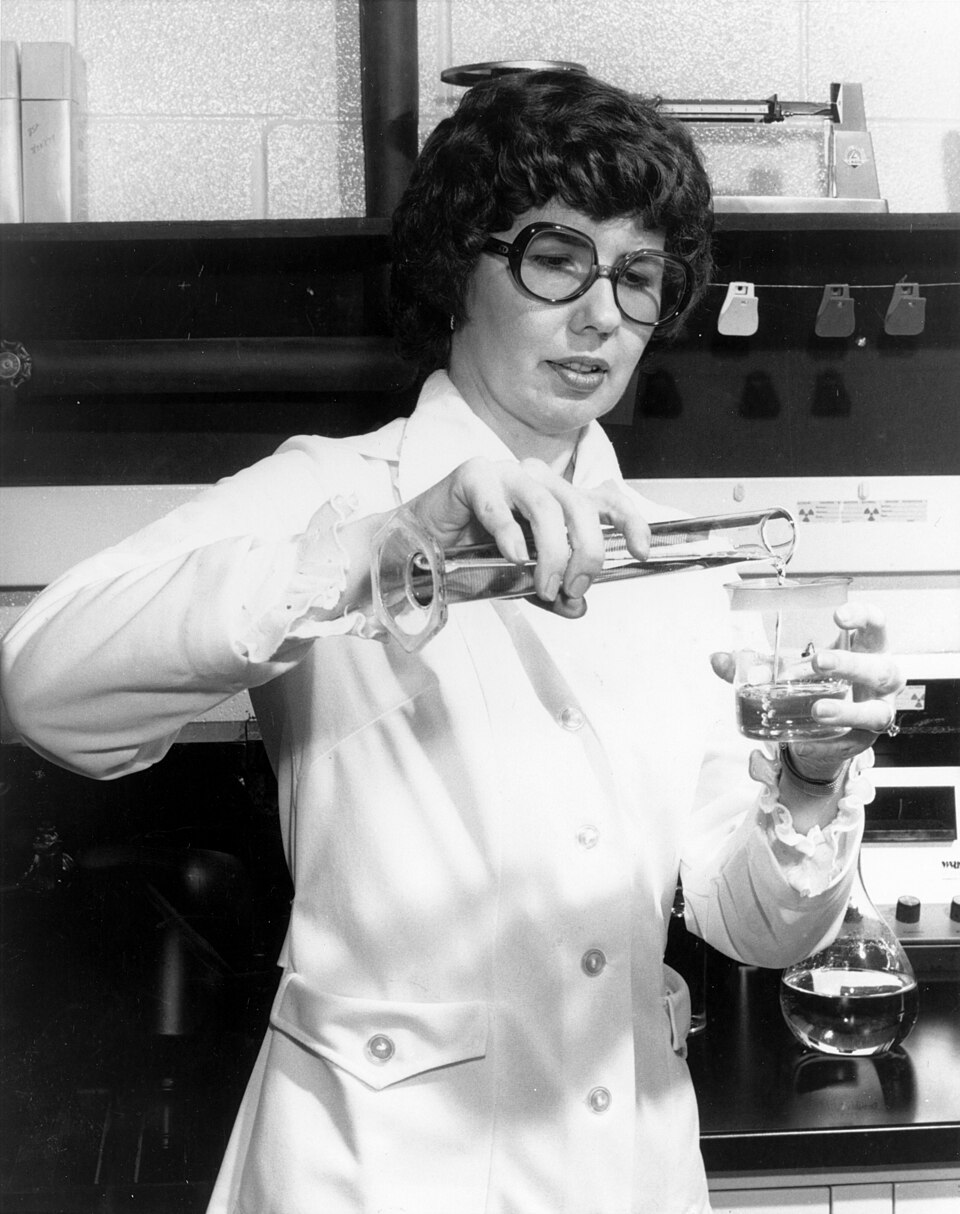
After completing graduate studies in chemistry, Askins joined NASA's Marshall Space Flight Center as a chemist.
In 1975, Barbara Askins was hired as a chemist at NASA's Marshall Space Flight Center in Huntsville, Alabama, after completing her graduate degree in chemistry. This marked the beginning of a career that would lead to one of the most important photographic innovations of the twentieth century.
At the time, opportunities for women in scientific research positions within federal aerospace agencies were still relatively limited, and Askins's hiring reflected both her strong academic credentials and a slowly shifting culture within NASA that was beginning to bring more women into technical roles. Her work at Marshall focused on improving the quality of photographic images used in space exploration, including astronomical photographs and images captured during spaceflight missions, which often suffered from being underexposed due to the extreme and unpredictable lighting conditions of space.
It was in this role that Askins began developing the radioactive chemical process that would later become known as autoradiography for image intensification, a technique that would dramatically improve the usability of faint photographic negatives. Her position at NASA gave her access to the resources, colleagues, and mission-driven purpose that allowed her to pursue an invention with far-reaching consequences, not only for space science but for fields as varied as medicine, archaeology, and criminal forensics. Her tenure at Marshall Space Flight Center is the foundation of her later renown as a pioneering woman inventor in American science.
Images