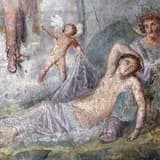
Ariadne became a lasting artistic figure, often shown asleep on Naxos before Dionysus finds her, symbolizing abandonment and divine transformation.
In the long afterlife of Greek mythology, Ariadne became a powerful artistic subject because her story combines love, betrayal, rescue, and divine transformation. Ancient poets and artists often depicted her asleep on the shore of Naxos, a poignant image that freezes the instant before Dionysus discovers her and changes her fate.
This tradition gave Ariadne a cultural significance far beyond the original myth. Artists were drawn to the emotional contrast between abandonment and apotheosis, making her a symbol of feminine suffering redeemed by divine attention. The visual arts, literature, and music repeatedly returned to Ariadne because her narrative allowed later creators to explore desire, loss, and immortality through a single figure.
Her artistic legacy also demonstrates the persistence of myth as a living cultural language. From antiquity through modern European opera, Ariadne has been reinterpreted to reflect changing views of women, agency, and fate. That endurance is itself historically significant: few mythic women have remained so recognizable across such different eras and artistic forms.