← All women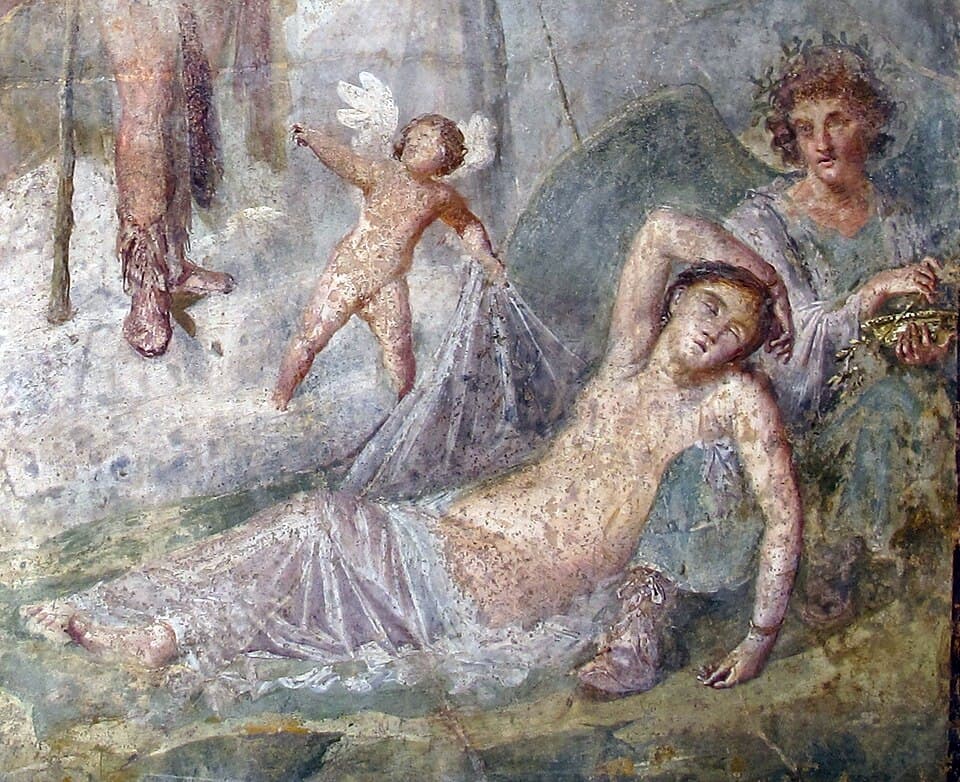
Cretan, Greek · Arts · Literature
Ariadne
Unknown – present
Overview
Ariadne is a major figure in Greek mythology, best known as the Cretan princess who helps Theseus defeat the Minotaur and escape the Labyrinth. In the mythic tradition, she is the daughter of King Minos and Pasiphae, and her story unfolds in the world of Crete, Naxos, and Athens. Because she is a mythological rather than historical figure, no verifiable birth or death dates survive, but her narrative has had a long and durable afterlife in ancient literature, art, religion, and modern retellings.
Ariadne’s significance lies in the way her story combines knowledge, assistance, betrayal, marriage, and transformation. She is remembered first as the woman whose guidance makes Theseus’ victory possible, and second as the abandoned lover who is either left to die or rescued by Dionysus, depending on the version. Ancient sources and later retellings disagree about the details, but they consistently portray her as a figure whose actions shape heroic outcomes and whose fate becomes the subject of artistic and symbolic interpretation.
Mythic background and family
Ariadne is usually identified as the daughter of Minos, king of Crete, and Pasiphae. In the mythic family network surrounding the Cretan royal house, she is the half-sister of the Minotaur, the monstrous creature born of Pasiphae’s union with a sacred bull. The setting of her story is the royal center at Knossos, where the Labyrinth was said to have been built to contain the Minotaur. This background places Ariadne within one of the most famous cycles in Greek myth, one that links kingship, divine punishment, and the dangers of the unknown.
Classical and later sources differ on whether Ariadne should be understood simply as a princess or also as a divine or semi-divine figure. Some traditions connect her with older Minoan and Mycenaean religious imagery, and later interpreters have seen in her a remnant of a fertility or earth goddess. Those readings are speculative, but they help explain why Ariadne has remained so compelling: she stands at the intersection of mythic royalty and sacred symbolism.
Ariadne and Theseus
The best-known episode in Ariadne’s story begins when Theseus, the Athenian hero, comes to Crete as one of the youths sent to the Labyrinth. Ariadne falls in love with him and gives him the means to survive the maze, usually described as a thread or cord that allows him to retrace his steps after killing the Minotaur. In some versions she also provides other practical guidance or magical assistance. Without her help, Theseus would not be able to escape.
This episode made Ariadne one of the most memorable women in ancient storytelling. Her action is both intimate and political: she betrays her father and her city to aid a foreign hero, but she also uses intelligence and foresight in a situation defined by fear. The thread became a lasting metaphor for a solution to a difficult problem, and Ariadne herself became associated with ingenuity, navigation, and the power of women’s practical knowledge.
The immediate aftermath of her aid is deeply tragic. In many versions, Theseus abandons Ariadne on the island of Naxos during the voyage home. Some accounts say he leaves her deliberately; others present the desertion as accidental or ambiguous. Ancient writers did not agree on the exact sequence of events, but all versions preserve the emotional core of the story: Ariadne’s devotion is met with abandonment.
Dionysus and divine transformation
After Theseus leaves, another major version of the myth introduces Dionysus, the god of wine and ecstasy. Ariadne is discovered on Naxos and made Dionysus’ consort or wife. In some retellings, Dionysus grants her immortality; in others, he honors her with a splendid crown that is later placed among the stars as the constellation Corona Borealis. This version transforms Ariadne from a deserted mortal woman into a figure associated with divine marriage and celestial memorialization.
The Dionysus episode gave Ariadne a second life in the mythic imagination. Rather than remaining only a victim of abandonment, she becomes a participant in a sacred union that links her with fertility, celebration, and cosmic order. Ancient Greek poets and artists often favored this version, portraying Ariadne as asleep on the shore while Dionysus gazes at her with admiration. The image emphasizes both vulnerability and transfiguration, making her an especially resonant figure for later art and literature.
Worship, cult, and ancient reception
Although Ariadne is not typically treated as a historical cult figure in the way that major deities were, ancient sources indicate that she was honored in some local traditions. Festivals in Cyprus and Naxos are associated with her name in later accounts. Such evidence suggests that her story may have overlapped with ritual practice, particularly in places that linked fertility, marriage, and seasonal change to Dionysian worship.
Ancient authors also treated Ariadne as a literary subject whose meaning could shift with genre and purpose. Tragedians, poets, and mythographers used her to explore themes of erotic attachment, broken promises, hospitality, kingship, and the border between mortality and divinity. Because her story has multiple endings, Ariadne became a flexible mythic figure: she can be read as tragic lover, betrayed princess, divine bride, or symbol of the soul’s journey through confusion into revelation.
Symbolism and later interpretations
One of the most enduring features of Ariadne’s story is the thread. The object is practical within the myth, but it also became symbolic in broader culture. It represents a guide through complexity, a tool for solving difficult problems, and a reminder that intelligence can be as decisive as force. This symbolism has made Ariadne relevant in philosophy, psychology, literary criticism, and modern popular culture.
Later interpreters have also emphasized Ariadne as an archetype of female abandonment and resilience. Modern retellings frequently highlight her interior life and ask what her own desires and choices might have been, rather than treating her solely as a support figure for Theseus. In this way, Ariadne has become a vehicle for reclaiming women’s voices within mythic traditions that often center male heroes.
Modern legacy
Ariadne’s influence extends well beyond antiquity. She appears in Renaissance and modern painting, in poetry, and in music, including Richard Strauss’s opera Ariadne auf Naxos. Her name and image are repeatedly invoked whenever a story involves guidance through complexity, lost love, or transformation after betrayal. The continued popularity of the myth shows how powerfully her narrative speaks to enduring human concerns.
In modern scholarship, Ariadne is often studied through multiple lenses: classical mythography, comparative religion, gender studies, and reception history. Some scholars stress her possible roots in pre-Greek religious traditions; others focus on the literary evolution of the myth. Whatever approach is taken, Ariadne remains one of the most recognizable women of Greek mythology because her story unites action and suffering, human and divine, betrayal and remembrance.
Historical significance
Because Ariadne belongs to myth rather than documented history, her importance is cultural rather than biographical in the ordinary sense. Even so, she has had a measurable impact on Western storytelling. She supplied one of antiquity’s most famous female interventions in a heroic narrative, and her abandonment by Theseus became a foundational image of broken trust. Her later association with Dionysus added a dimension of divine elevation that ensured her survival in art and ritual memory.
Ariadne’s enduring presence also reflects the ancient Mediterranean world’s willingness to preserve women’s stories when they could illuminate broader ideas about power, love, and fate. The figure of Ariadne has therefore remained historically significant not because of a recoverable life record, but because generations of writers, artists, and audiences have returned to her as a symbol of guidance, loss, and transformation.
Dated achievements
2 indexed.
- Jan010Literature
Helps Theseus escape the Labyrinth
Ariadne’s defining mythic act: she helps Theseus escape the Labyrinth after the Minotaur is slain, making her one of antiquity’s most enduring female figures.
View details Britannica: Ariadne (Greek mythology) - Jan010Arts
Becomes a major subject in art and literature
Ariadne became a lasting artistic figure, often shown asleep on Naxos before Dionysus finds her, symbolizing abandonment and divine transformation.