← All women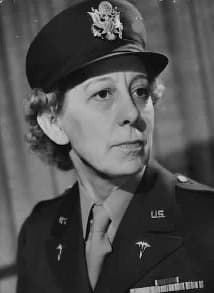
Canadian, American · Medicine
Annie Fox
August 4, 1893 – January 20, 1987
Early Life and Background
Annie Gayton Fox (often recorded as Annie G. Fox) was born on August 4, 1893, in Pubnico, Yarmouth County, Nova Scotia, Canada.13 She was the daughter of Dr. Charles James Fox, M.D., a physician, and Deidamia “Annie” (Gayton) Fox.13 Growing up in a medical household in rural Nova Scotia exposed her from an early age to the realities of illness, injury, and community health care at a time when professional opportunities for women in medicine were limited.
Fox’s childhood coincided with significant changes in nursing as a profession, influenced by late nineteenth-century reforms that emphasized formal training and hospital-based practice. While detailed records of her early education are scarce, available biographical notes indicate that she trained as a nurse and eventually migrated to the United States, where she would build her career within the U.S. Army Nurse Corps.4 Her Canadian birth and later American military service reflect broader patterns of transnational migration and professional mobility among nurses in the early twentieth century.
Coming of age during the First World War era, Fox entered adulthood in a period marked by both global conflict and expanding roles for women in public life. The combination of a medical family background and the growing presence of nurses in military settings created a context in which her eventual decision to join the Army Nurse Corps was both unusual and historically significant.
Career Beginnings and Development
Fox joined the U.S. Army Nurse Corps during World War I. According to documentation from the Wartime Heritage Association, she served in the Corps from July 8, 1918, to July 14, 1920, providing care to servicemembers during the final months of the war and the immediate postwar period.13 This early service introduced her to military hospital systems, the logistics of wartime medicine, and the discipline of Army life.
During the interwar years, Fox remained in military nursing, gaining seniority and experience as the U.S. Army refined its medical services and the Nurse Corps evolved as a professional institution. Over time, she rose through the ranks and took on supervisory roles, reflecting both her clinical competence and her leadership abilities. By the early 1940s, she had attained the rank of major and was serving as chief nurse at Hickam Field, a U.S. Army Air Corps installation adjacent to Pearl Harbor in the Territory of Hawaii.4
Hickam Field served as a critical base for Army Air Corps operations in the Pacific and maintained its own medical facilities to treat pilots, ground personnel, and other staff. As chief nurse, Fox was responsible for overseeing nursing staff, organizing patient care, and ensuring that the hospital could respond to both routine medical needs and unforeseen emergencies. Her position placed her at the center of Hickam’s medical preparedness just as geopolitical tensions in the Pacific were escalating.
Pearl Harbor and Major Wartime Accomplishments
Fox’s defining professional moment occurred on December 7, 1941, when Japanese forces attacked Pearl Harbor and surrounding military installations, including Hickam Field. On that morning, she was on duty as chief nurse at the base hospital when waves of Japanese aircraft began bombing and strafing the airfield.4 The attack resulted in extensive casualties among aircrew and ground personnel, as well as severe damage to buildings and infrastructure.
Contemporary accounts and later historical summaries from the U.S. National Archives describe Fox as responding with exceptional composure and leadership. She quickly organized the available nurses and enlisted medical personnel to receive and triage the wounded, prepared operating rooms for emergency surgery, and coordinated with physicians to ensure that critical cases were treated first.2 This work took place under direct enemy fire and amid ongoing explosions, smoke, and structural danger.
Fox’s actions during the Pearl Harbor attack were subsequently cited in official commendations. A Veterans Affairs publication summarizing Pearl Harbor veterans notes that she "displayed great courage and leadership" in directing her staff through the mass-casualty event.2 Her conduct exemplified the crucial role of nurses in managing battlefield and base-hospital emergencies, highlighting that they were not simply auxiliary caregivers but central figures in life-saving operations during combat.
Beyond the immediate impact on wounded personnel at Hickam, Fox’s service on December 7 had broader significance. The Pearl Harbor attack galvanized U.S. public and political support for entering World War II, and narratives of heroism from that day became part of national memory. By featuring an Army nurse among those formally recognized for bravery and meritorious service, the military contributed to reshaping public perceptions of women’s roles in wartime.
Awards, Honors, and Recognition
In recognition of her actions at Hickam Field, Fox was awarded the Purple Heart. Sources focused on women’s military history and commemorations of Pearl Harbor report that she received this decoration on October 26, 1942, making her the first woman in the World War II era to be awarded the Purple Heart for combat-related service.5 The citation acknowledged her "gallantry and meritorious service" during the attack, emphasizing leadership and courage under hazardous conditions.
The Purple Heart had been re-established in 1932 and, by the early 1940s, was being awarded both for wounds received in action and, in certain cases, for other forms of combat-zone merit. Fox’s award, however, later intersected with evolving policy. As the U.S. Army refined the criteria, the Purple Heart became strictly reserved for those physically wounded in action. Because Fox had not herself been wounded, the Army converted her decoration to a Bronze Star Medal, with the change documented as taking place on October 6, 1944.5
The Bronze Star, established in 1944, honors heroic or meritorious achievement or service in a combat zone. By reissuing Fox’s recognition as a Bronze Star, the Army affirmed that her Pearl Harbor actions fit squarely within this category of meritorious combat-zone service. Although the conversion technically rescinded her Purple Heart, historians and commemorative organizations continue to highlight her pioneering status as the first woman to have been awarded the Purple Heart for World War II service before the criteria were tightened.5
Contextualizing her "first" is important. Scholarship on the Purple Heart notes that Beatrice Mary MacDonald, a nurse wounded by enemy fire in World War I, was retroactively awarded a Purple Heart after the decoration was revived, making MacDonald the earliest-known female recipient.4 Fox’s distinction, therefore, lies in her status as the first woman in America to be awarded the Purple Heart for World War II combat-related service and the first Army nurse so recognized in the modern era.4
In addition to these decorations, Fox achieved the rank of major in the Army Nurse Corps, reflecting a career of sustained leadership and responsibility.5 Postwar publications, including National Archives exhibits and veterans’ newsletters, have featured her story as an example of women’s contributions to the U.S. war effort, particularly in medical roles.
Personal Life
The surviving public record on Fox’s personal life outside of her military service is relatively limited, a common situation for early twentieth-century women whose primary fame derived from wartime roles. Available biographical notes indicate that she was deeply identified with her profession and spent the majority of her working life in the Army Nurse Corps.13
After retiring from military service, Fox settled in northern California, suggesting a personal preference for continuity with the West Coast region where she had served during World War II.5 She lived in or near San Francisco, a city with a significant veteran population and close institutional ties to military medical facilities. This location placed her within a community where her experiences as a nurse and veteran were likely recognized and valued.
There is no widely cited documentation of marriage, children, or other family details in mainstream historical or archival sources specifically focused on her wartime contributions. As a result, most accounts emphasize her professional identity and public service rather than private relationships. This absence of detailed personal information itself reflects historical patterns: women who served in uniform were often memorialized primarily through the lens of their official roles, with private lives left undocumented or treated as secondary.
Later Career, Retirement, and Death
Fox continued to serve in the Army Nurse Corps through the remainder of World War II. Accounts from commemorative sites report that she retired at the rank of major on December 31, 1945, after the war’s conclusion.5 Her retirement marked the end of a career that had spanned U.S. participation in both World Wars and encompassed decades of service in military medicine.
Following retirement, Fox lived in northern California, remaining part of a region with strong military and veteran communities. Over the ensuing decades, she witnessed substantial changes in the recognition of nurses and women in the armed forces, including the integration of women into more varied roles and the gradual expansion of veterans’ benefits and commemorative practices to include female personnel.
On January 20, 1987, Fox died in San Francisco, California, at the age of 93.13 She was buried in the San Francisco National Cemetery, a federal military cemetery that houses the graves of servicemembers from numerous conflicts.13 Her grave situates her among other veterans, providing a physical site of memory for a woman whose wartime service had long been part of military medical history but only later entered broader public consciousness.
Legacy and Historical Impact
Major Annie G. Fox’s legacy rests on her role as a pioneering figure in the recognition of women’s combat-zone service and on her leadership during one of the most pivotal events in U.S. history, the attack on Pearl Harbor. As chief nurse at Hickam Field, she exemplified the critical function of nurses in emergency military medicine, managing mass casualties under direct enemy attack.2
Her October 26, 1942 Purple Heart award is widely cited in women’s history narratives as a barrier-breaking moment. Organizations such as the Purple Heart Foundation and educational websites focused on Pearl Harbor have highlighted her as the first woman in America to receive the Purple Heart for World War II combat-related service, emphasizing how this recognition challenged contemporary gender assumptions in the military.3 Even after the award was administratively converted to a Bronze Star in 1944, her pioneering status remained an important reference point in discussions of women and military honors.
Fox’s story also contributes to ongoing debates about how to categorize and honor the experiences of medical personnel in combat zones. Nurses like Fox operated in environments of extreme danger, often under bombardment, while performing life-saving work. Yet award criteria historically focused on direct injury or frontline combat roles, leaving some acts of bravery and leadership outside conventional frameworks. The evolution of her decoration—from Purple Heart to Bronze Star—illustrates these tensions and underscores the importance of flexible, inclusive recognition systems.
In recent decades, institutions such as the U.S. National Archives have featured Fox in exhibits on "Women Who Served," using her biography to illuminate the broader contributions of women in the U.S. military during World War II.2 Veterans Affairs publications commemorating Pearl Harbor have likewise included her among notable figures whose actions on December 7, 1941, shaped both the immediate response and the longer-term narrative of the attack.2
For historians of women’s history, Fox’s life highlights several key themes: the transnational dimension of women’s military service (as a Canadian-born American officer), the progression of nursing from a gendered caregiving role to a recognized professional and leadership position, and the slow but significant expansion of military honors to include women’s courage and expertise in combat zones. Her career also underscores the importance of examining medical and support roles alongside traditional combat narratives when constructing comprehensive accounts of wartime experience.
Today, Fox is remembered as a symbol of dedication, calm leadership under fire, and the struggle for equitable recognition of women’s military service. Her story continues to be cited in educational materials, online histories, and commemorations of Pearl Harbor, ensuring that the contributions of Army nurses and other women in uniform remain part of the public understanding of World War II.
Assessment within Women’s History
Within the broader landscape of women’s history, Annie G. Fox occupies an important place as one of the early twentieth-century women whose professional achievements intersected with major geopolitical events. Her service connects the evolution of nursing and women’s military participation to the history of U.S. engagement in world wars and to the development of military award systems.
By attaining the rank of major and serving as a chief nurse at a major air base, Fox demonstrated that women could hold substantial leadership roles within the military medical hierarchy at a time when women were still formally excluded from many combat positions.4 Her recognition through high-level decorations, coupled with the subsequent adjustments to those awards, sheds light on how institutions negotiated the inclusion of women within frameworks originally designed for male combatants.
Fox’s life also prompts consideration of how women’s stories are preserved and remembered. While her professional accomplishments are relatively well documented, details of her private life are scarce in mainstream sources, reflecting a historical tendency to record women primarily in relation to public events. Efforts by local history organizations and veterans’ groups to compile biographical information about her family background and service years help to fill these gaps and provide a richer understanding of her as a person as well as a professional.13
As scholarship on women in the military continues to expand, Major Annie G. Fox’s biography serves as a case study in the complexities of defining "firsts" and understanding how changes in policy can affect the historical interpretation of awards and honors. Her role at Pearl Harbor and her pioneering Purple Heart and Bronze Star decorations remain central to her significance in the history of women, medicine, and war.
Dated achievements
5 indexed.
- Aug041893Medicine
Birth of Annie Gayton Fox
Birth of Annie Gayton Fox in Pubnico, Nova Scotia, Canada, to physician Charles James Fox and Deidamia “Annie” Gayton Fox.
View details US Army Nurse Annie Fox – Wartime Heritage Association - Dec071941Medicine
Chief nurse leadership during the Pearl Harbor attack
As chief nurse at Hickam Field, Annie G. Fox led emergency medical response during the Japanese attack on Pearl Harbor.