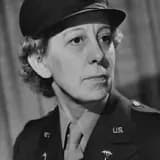
Her earlier Purple Heart was rescinded and converted to a Bronze Star after criteria were changed to require a physical wound.
On October 6, 1944, Major Annie G. Fox’s earlier Purple Heart award was formally rescinded and replaced with the Bronze Star Medal, following changes in U.S. Army policy that restricted the Purple Heart to those physically wounded in action.3 Fox had not been bodily injured during the Pearl Harbor attack, and her decoration had recognized leadership and meritorious service under fire rather than a specific wound.
The Army’s revision of eligibility criteria aimed to standardize the Purple Heart as a wound badge, while creating or expanding other decorations for non-wounded acts of heroism or meritorious achievement. In this context, converting Fox’s award to the Bronze Star acknowledged that her conduct at Hickam Field on December 7, 1941—directing nurses, organizing emergency care, and maintaining order amid bombardment—was best categorized as meritorious service in a combat zone rather than a casualty recognition.3
This administrative change is historically significant because it illustrates how evolving award policies intersected with the recognition of women’s combat-area service. While the rescission might appear to diminish her status as a Purple Heart recipient, the Bronze Star is itself a high-level combat decoration, and Fox remained publicly associated with her pioneering role as the first woman to have been awarded the Purple Heart for World War II service before the criteria shifted.3
For women’s military history, October 6, 1944 underscores the complexity of documenting "firsts" and maintaining honors amid changing institutional rules. Fox’s case draws attention to how nurses’ experiences—often characterized by extreme danger without direct wounding—fit imperfectly into award systems designed with combat soldiers in mind. Her continued recognition, despite the conversion, helped sustain the narrative that women in the Army Nurse Corps faced and met combat-level responsibilities, influencing later debates about decorations, status, and veterans’ benefits for female personnel.