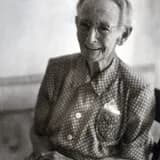
Death of her husband Thomas Salmon Moses, a turning point that led Anna Mary Robertson Moses toward painting.
In 1927, Thomas Salmon Moses died, leaving Anna Mary Robertson Moses widowed after four decades of marriage. His death ended the farm life that had structured her adult identity and eventually created the conditions for her late artistic flowering.
This transition was historically important because widowhood removed one of the major obligations that had anchored her to intensive farm labor and domestic routine. Sources describe her retirement from farming after this loss and her subsequent turn toward painting. That change was not simply personal; it reflected the constrained opportunities available to rural women of her generation, for whom artistic ambition rarely had institutional support or formal training pathways. Moses’s eventual rise demonstrates how creativity could emerge outside established art schools and urban networks, especially when a woman’s later-life circumstances opened time for self-directed work. The 1927 loss therefore became a turning point in American art history: it set in motion the career of a self-taught painter whose nostalgic depictions of rural life would later resonate far beyond the small communities she had known firsthand.