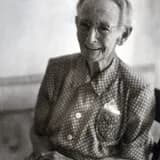
Anna Mary Robertson Moses began painting seriously, launching the late-life artistic career that made her famous.
By 1936, Anna Mary Robertson Moses had begun painting seriously after leaving farm work and giving up embroidery because of arthritis. This was the real start of the artistic practice that would make her famous as Grandma Moses.
The significance of this moment lies in its extraordinary timing. Moses entered serious artistic production in her seventies, at an age when many people of her era were expected to retire from new creative beginnings entirely. Her late start challenged assumptions about who could become an artist and when artistic careers must begin. Working without formal training, she drew on memory, observation, and the visual textures of rural life to create scenes that felt both intimate and culturally expansive. The fact that she began painting after physical limitation forced her away from embroidery also underscores the barrier she overcame: arthritis could have ended her creative expression, but instead it redirected her into a new medium. In retrospect, 1936 marks the moment when private pastime became public art, leading to one of the most remarkable second acts in twentieth-century American culture.